Tzafon Mizrach| Anglo Community
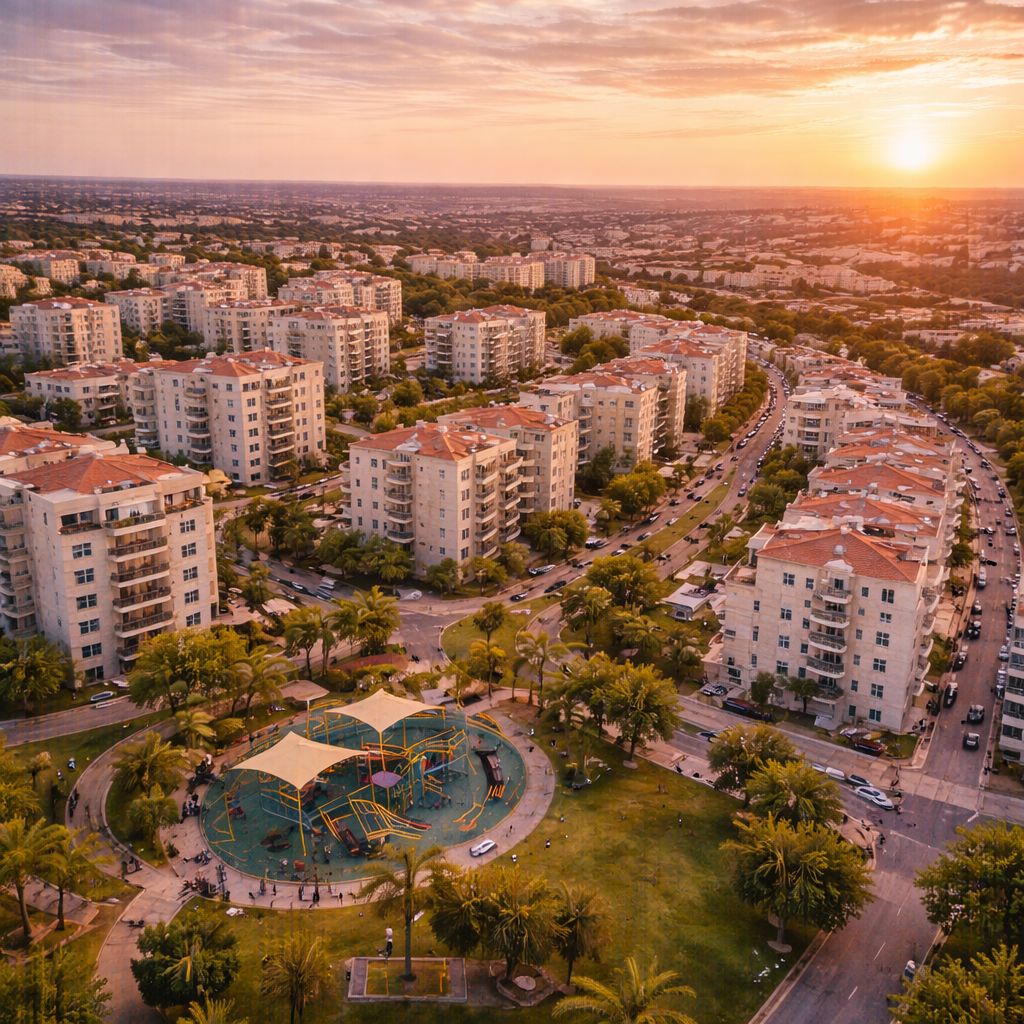
Tzafon Mizrach, which translates literally as North East, occupies a fascinating position in Tel Aviv’s urban landscape and in the imagination of those seeking to make their home in the city. Unlike Neve Tzedek with its historic charm or the Old North with its established Anglo community, Tzafon Mizrach represents something more fluid and harder to pin down, a neighborhood that has been steadily transforming over the past two decades from a somewhat neglected area into one of Tel Aviv’s more desirable addresses, particularly for young professionals and families who want to be close to the center of things without quite being in the thick of the city’s most tourist-heavy zones.
The geographical boundaries of Tzafon Mizrach are somewhat debated even among Tel Aviv residents, which tells you something about the neighborhood’s evolving identity. Generally speaking, it encompasses the area north of Yarkon Park and east of the main north-south thoroughfares, stretching toward the Ayalon Highway that forms Tel Aviv’s eastern boundary. This puts it in proximity to many of the same amenities that make North Tel Aviv attractive, the park, relatively quick access to beaches, and connection to major employment centers, but at somewhat more accessible price points than the premium coastal neighborhoods. For English-speaking immigrants, particularly those working in high-tech or professional services, Tzafon Mizrach has emerged as an appealing compromise between affordability and urban convenience.
The architecture of Tzafon Mizrach reflects multiple waves of development spanning several decades. You’ll find buildings from the nineteen sixties and seventies, modest apartment blocks that were originally built for middle-class families and that now show their age in peeling paint and cracked concrete, standing alongside renovated buildings where developers have modernized interiors while preserving the basic structure. More recently, new construction has been filling in vacant lots and replacing older buildings, bringing contemporary design sensibilities and modern amenities to the neighborhood. This mix creates a somewhat uneven aesthetic, where beautifully renovated properties sit next to buildings that clearly need work, giving the area a transitional character that either feels dynamic and full of potential or merely unfinished, depending on your perspective.
What draws people to Tzafon Mizrach is partly what it offers and partly what it lacks. It offers proximity to the heart of Tel Aviv without the intensity of living on a main commercial street. The neighborhood has a more residential feel than central Tel Aviv, with quieter streets where you can actually hear yourself think, where finding parking, while never easy in Tel Aviv, is at least marginally less impossible than in the densest areas. Yet you’re still close enough to walk or take a short bus ride to Dizengoff Street, to the theaters and restaurants of central Tel Aviv, to the business districts where many people work. For English speakers who want urban life but also need some breathing room, who perhaps have a young child or are planning to start a family but aren’t ready to decamp to the suburbs, Tzafon Mizrach provides that middle ground.
The commercial infrastructure of Tzafon Mizrach has been developing to serve its growing population. While it doesn’t have the dense concentration of cafes and restaurants you’d find on Dizengoff or Rothschild, you’ll find an increasing number of neighborhood spots, local grocery stores, small businesses, and the kinds of services that make daily life convenient. Several streets, particularly Remez and parts of Weizmann, have become mini-hubs with clusters of shops and eateries that draw both locals and visitors from other parts of the city. The vibe is less about being a destination neighborhood and more about serving the needs of people who actually live there, which for residents is precisely the point.
For English-speaking families, Tzafon Mizrach offers certain practical advantages. The neighborhood has several parks and playgrounds scattered throughout, providing outdoor space for children without requiring major expeditions. The proximity to Yarkon Park means that weekend mornings can involve bike rides or playground visits at one of Tel Aviv’s premier green spaces, returning home for lunch without having spent half the day in transit. Schools in the area serve the general North Tel Aviv population and tend to be reasonably strong, benefiting from involved parents and adequate municipal resources, though as with anywhere in Tel Aviv, integration into Hebrew-language schooling requires commitment and can be challenging for children arriving without prior Hebrew knowledge.
The demographic mix in Tzafon Mizrach is notably diverse, even by Tel Aviv standards. You’ll find young Israeli families who grew up in Tel Aviv or nearby and want to stay in the city despite its costs. You’ll encounter immigrants not just from English-speaking countries but from France, which has sent waves of Jewish immigrants to Israel in recent years, from South America, from various European countries, creating a genuinely international atmosphere where hearing multiple languages on any given street is completely normal. This diversity can be appealing to English speakers who want to experience Israel’s cosmopolitan side rather than living in a more homogeneous Anglo enclave.
The social infrastructure for Anglos in Tzafon Mizrach is less developed than in areas with longer histories of English-speaking immigration. You won’t find the established synagogues with English services or the dense networks of Anglo families that characterize places like the Old North or suburban Ra’anana. Instead, English speakers living here tend to be more integrated into the broader Israeli social fabric, developing friendships through work, through their children’s schools, through the gyms and yoga studios and cafes where they spend their time. This can mean a steeper integration curve but also potentially richer cross-cultural connections and faster Hebrew acquisition, as you’re not constantly falling back on English-speaking networks.
The economic reality of choosing Tzafon Mizrach reflects broader patterns in Tel Aviv’s real estate market. Prices here are high by any international standard but somewhat more reasonable than in the most premium areas. A young couple working in tech might be able to afford a two-bedroom apartment here whereas they’d be priced out of Neve Tzedek or beachfront properties entirely. A family relocating from abroad might find that their budget, which wouldn’t go far in central Tel Aviv, can secure them adequate space in Tzafon Mizrach, particularly if they’re willing to look at older buildings or less renovated units. The calculations are always relative, always involve compromise, but for many immigrants this neighborhood hits a sweet spot between aspiration and reality.
Transportation connections in Tzafon Mizrach work reasonably well for navigating Tel Aviv and reaching other parts of the metropolitan area. Multiple bus lines run through and near the neighborhood, connecting to central Tel Aviv, to Ramat Gan and the Diamond Exchange district where many high-tech companies are based, and to other employment centers. The Ayalon Highway running along the eastern edge provides quick access by car to points north and south, though rush hour traffic can be brutal. Many residents bike, taking advantage of Tel Aviv’s growing network of bike lanes, though as anywhere in the city the infrastructure remains incomplete and riding often requires assertive navigation through traffic and pedestrians.
The lifestyle in Tzafon Mizrach tends to be relatively secular and liberal, consistent with North Tel Aviv generally but without any particular ideological identity. People live here because it works for them practically rather than because the neighborhood represents a specific value system or community vision. Shabbat observance varies widely from building to building, family to family, with some keeping traditional practices while others treat Saturday as just another weekend day. This lack of any strong religious character can be either liberating or isolating depending on what you’re seeking in a community.
The evolution of Tzafon Mizrach continues in real time, making it a neighborhood where the future remains somewhat uncertain. Will it continue gentrifying, following the path of areas like Florentin that have transformed from working-class neighborhoods into hip, expensive addresses? Will new construction and rising prices push out the diversity that currently characterizes the area, replacing it with a more homogeneous affluent population? Or will it maintain its current balance, serving as a middle-ground option for people who want to be in Tel Aviv without paying absolute premium prices? For English speakers moving there now, you’re participating in this transformation rather than arriving at some finished product.
The cultural amenities in and immediately around Tzafon Mizrach are decent though not exceptional. You’re close enough to reach the museums, theaters, and concert halls of central Tel Aviv easily, and the neighborhood has a few cultural venues of its own, though nothing on the scale of what you’d find in more established areas. What it offers instead is the possibility of a relatively normal urban life, where you can go about your daily business without constantly navigating tourist crowds, where your local cafe knows your order, where your children can walk to friends’ houses without crossing major thoroughfares. These mundane pleasures of neighborhood life can become surprisingly important once you’re actually living somewhere rather than just visiting.
For English speakers considering Tzafon Mizrach, the decision often comes down to priorities and life stage. If you’re a young professional, single or newly coupled, who wants to be in Tel Aviv but needs to watch your budget while still having reasonable space and livability, Tzafon Mizrach makes sense. If you’re a young family that has outgrown a tiny central Tel Aviv apartment but isn’t ready to leave the city entirely for suburbs like Ra’anana or Modi’in, this neighborhood provides that next step. If you’re someone who values integration with broader Israeli society over the comfort of a concentrated Anglo community, who wants to be pushed toward Hebrew fluency and Israeli cultural immersion, the relative lack of established Anglo infrastructure here might actually be an advantage rather than a drawback.
The practicalities of daily life in Tzafon Mizrach involve the usual Tel Aviv challenges of expensive groceries, complex bureaucracy, and the general intensity of Israeli urban existence, but these are somewhat softened by the neighborhood’s residential character. You’re not fighting tourist crowds to get to your front door, you’re not constantly navigating commercial chaos on your street, you have slightly more breathing room than you would in the absolute center of things. For immigrants adjusting to a new country, a new language, and a new culture, having that bit of extra calm can make a meaningful difference in daily stress levels and overall quality of life.
Ultimately, Tzafon Mizrach represents a particular kind of pragmatic choice in the Tel Aviv housing market, a neighborhood selected not for any romantic notion or ideological commitment but because it offers decent value within a city where value is increasingly hard to find. For English speakers, it’s unlikely to provide the instant community and cultural familiarity of more established Anglo areas, but it offers something potentially more valuable in the long run, a genuine integration into Israeli urban life, a chance to build a normal existence in an extraordinary city, a neighborhood where your immigration status becomes just one aspect of your identity rather than the defining feature of your community membership. That kind of ordinary, integrated urban life might not make for exciting descriptions in promotional materials, but for many people actually living it, it turns out to be exactly what they were seeking when they decided to make their lives in Israel.