Western Ra'anana| Anglo Community
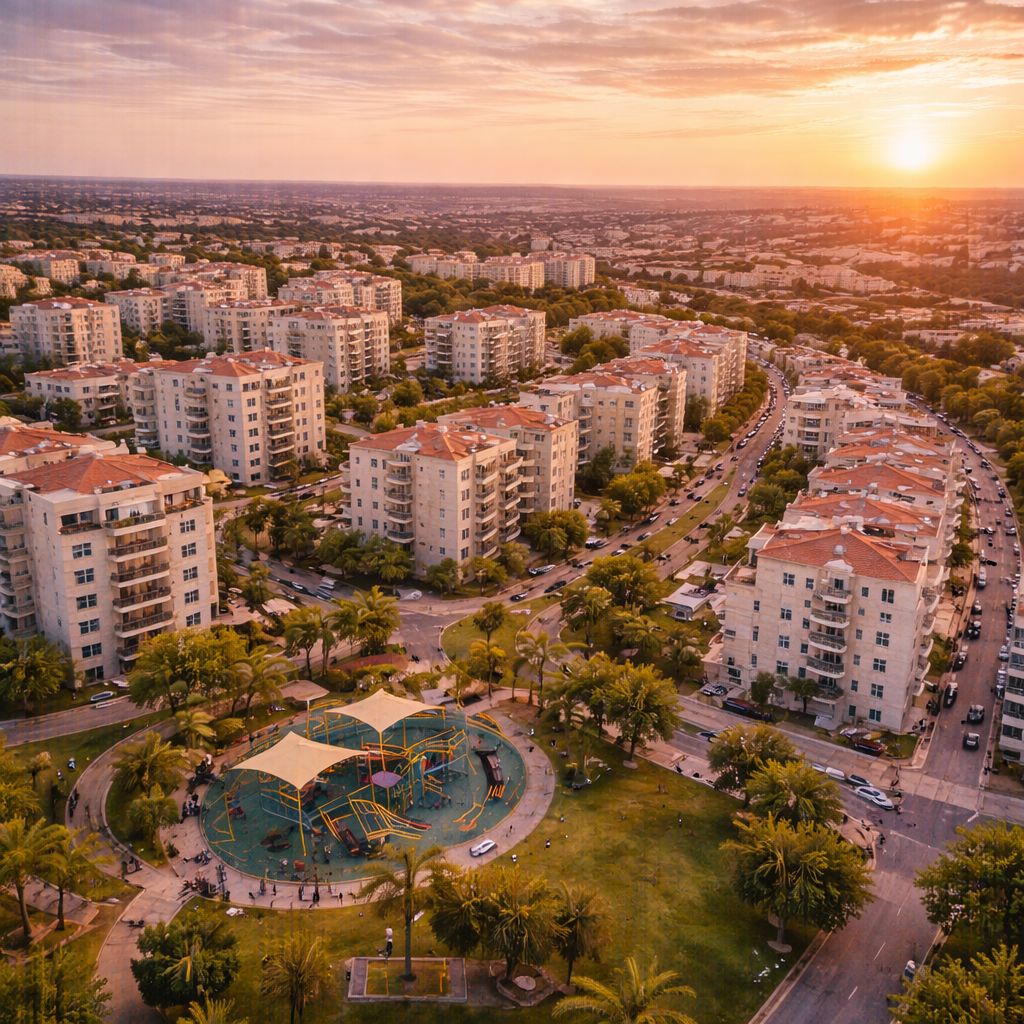
Western Ra’anana unfolds in a different register from the prestigious Park Area, offering a more accessible entry point into this sought-after city while maintaining the essential qualities that draw English-speaking families to Ra’anana in the first place. This is where practicality meets aspiration, where young families just starting out find their footing, and where the realities of Israeli real estate prices force many immigrants to recalibrate their expectations while still achieving a quality of life that makes the compromises worthwhile. The neighborhoods here stretch toward the western edge of the city, away from the central amenities and commercial heart, creating residential pockets that feel quieter and more removed from the urban bustle.
The streets in Western Ra’anana tend to be lined with apartment buildings constructed primarily in the nineteen eighties and nineties, with some newer developments interspersed among the older stock. These buildings lack the architectural flourishes of newer construction near the park, presenting practical facades in the characteristic Israeli style of concrete and stucco, often in shades of beige or light brown that have weathered over the decades. Many buildings show their age with cracked exterior walls, faded paint, and modest landscaping, though interiors often surprise with renovations that transform dated apartments into comfortable modern homes. The buildings typically rise four or five stories without elevators in the older complexes, a feature that gives younger residents pause but doesn’t deter families who prioritize affordability over convenience.
What Western Ra’anana offers most significantly is space at a more manageable price point, at least relatively speaking in a city where real estate commands premium rates throughout. A three-bedroom apartment here might sell for one and a half to two and a half million shekels, still substantial sums but representing hundreds of thousands of shekels less than comparable units closer to the city center or park. For rental families, the difference might mean paying six to eight thousand shekels monthly instead of the nine to twelve thousand demanded in more central locations. These savings accumulate meaningfully over time, allowing families to allocate resources toward other priorities like private schools, family trips abroad to visit relatives, or simply building savings for an uncertain future.
The demographic composition of Western Ra’anana reflects its role as a more accessible neighborhood, attracting younger Anglo families in their thirties and early forties, often with several young children, who are still establishing themselves professionally and financially. You’ll find couples where one or both spouses are building careers in high-tech or other fields, working their way up from entry or mid-level positions rather than arriving as senior executives or entrepreneurs. There are also families who’ve chosen to prioritize having one parent stay home with children during their early years, making a single income work through careful budgeting and acceptance of a smaller living space than they might have enjoyed abroad. The concentration of families with young children creates neighborhoods alive with the sounds of childhood, strollers crowding building entrances, and playgrounds bustling throughout the afternoon hours.
Living farther from the center means adjusting expectations about walkability and convenience. While Ra’anana remains a compact city by American suburban standards, residents of Western Ra’anana find themselves more dependent on cars for daily errands and activities. The local commercial infrastructure consists mainly of small convenience stores, a few minimarkets, and scattered service providers, with most families driving to larger supermarkets and shopping areas elsewhere in the city. This car dependency shapes daily rhythms differently, requiring more planning and coordination, particularly for families with multiple children whose schedules involve various activities, appointments, and social commitments scattered across the city and beyond.
The schools serving Western Ra’anana draw from across the city’s geographic zones, with some families finding excellent options within walking distance while others navigate the complexities of school choice and transportation. The Israeli education system allows for some flexibility in school selection, and many Anglo families research their options extensively, visiting schools, speaking with other parents, and sometimes making housing decisions based specifically on proximity to preferred institutions. The density of young families in Western Ra’anana means the local schools often have strong parent involvement and active PTAs, with English-speaking parents contributing alongside Israeli families to create supportive educational environments.
The synagogue landscape in Western Ra’anana includes several options catering to different religious sensibilities, though families here often find themselves traveling to congregations in other parts of the city that better match their preferences or where they’ve established social connections. Shabbat afternoons might see families walking twenty or thirty minutes to reach friends’ homes for seudah shlishit, the third Shabbat meal, using the journey as an opportunity to enjoy Ra’anana’s pleasant streets and mild climate while children ride scooters or bicycles alongside their parents. These walks create opportunities for spontaneous encounters with neighbors and friends, the kind of unplanned social interaction that builds community bonds over time.
One significant advantage Western Ra’anana offers is a sense of authentic Israeli residential life that more Americanized areas sometimes lack. Here the language of the street is Hebrew, the grocery stores stock primarily Israeli products without extensive international sections, and daily interactions require navigating Israeli bureaucracy and social norms without the buffer of English-language services. For some Anglo families, this immersion accelerates Hebrew acquisition and cultural integration, pushing them toward the adaptation they sought in making aliyah. Children particularly benefit from this environment, their Hebrew developing naturally through constant exposure, their Israeli identity forming through friendships with sabra children whose families have lived in Ra’anana for generations.
The parks and green spaces dotting Western Ra’anana tend to be smaller neighborhood playgrounds rather than the grand central park that defines the city’s heart. These local parks serve crucial functions for families with young children, providing safe outdoor spaces within easy reach where kids can burn energy and parents can socialize with neighbors. The equipment is generally well-maintained by municipal standards, with climbing structures, swings, and sandboxes that occupy children for hours while adults cluster on benches comparing notes on everything from pediatricians to babysitters to the challenges of navigating Israeli banking systems. These informal gatherings often evolve into genuine friendships, providing the social infrastructure that makes immigration sustainable over years and decades.
The financial calculations that lead families to Western Ra’anana often involve complex trade-offs between present comfort and future possibilities. Some families view their time here as temporary, planning to upgrade to more desirable neighborhoods as their incomes increase and their financial situations stabilize. Others settle in happily, deciding that the money saved on housing allows for a quality of life they value more than prestigious addresses or modern amenities. The frequent discussions among Anglo immigrants about real estate prices, neighborhood comparisons, and long-term planning reflect the reality that housing represents one of the most significant economic challenges facing new immigrants, particularly those from countries where salaries often exceeded Israeli norms.
Community organizations serving the Anglo population maintain presence throughout Ra’anana, with Western Ra’anana residents actively participating in ESRA programs, Nefesh B’Nefesh events, and informal social networks organized through WhatsApp and Facebook groups. These connections transcend neighborhood boundaries, creating city-wide networks where families from Western Ra’anana socialize with those from more central areas, united by shared language, immigrant experience, and cultural background rather than divided by geographic location. Shabbat meals rotate among various neighborhoods, with hosts welcoming guests regardless of where in the city they live, and community events draw participants from across Ra’anana’s residential areas.
The infrastructure supporting daily life in Western Ra’anana functions adequately if not exceptionally, with bus service connecting the area to other parts of the city and beyond, though schedules require consultation and planning rather than the frequent service available along more central routes. Families often coordinate carpools for children’s activities, sharing driving duties to music lessons, sports practices, and social events. This carpooling creates additional opportunities for parents to connect, spending time together during drives and waiting periods, discovering common interests and building friendships that extend beyond the immediate necessity of transportation logistics.
For professional parents working in Tel Aviv or other locations requiring commutes, Western Ra’anana’s position means slightly longer travel times than more centrally located neighborhoods, though the differences measure in minutes rather than transformative shifts in lifestyle. The same highways and train stations remain accessible, just requiring an extra ten or fifteen minutes to reach from home. Many residents structure their schedules to avoid peak traffic hours when possible, starting work earlier or later to minimize time spent sitting in characteristic Israeli traffic jams where aggressive driving and limited patience create stressful conditions for newcomers still adjusting to local norms.
The restaurant and entertainment options within Western Ra’anana itself are limited, with most families driving to Ahuza Street or other commercial areas when they want to eat out or see movies. This reality shapes social patterns, with more emphasis on home entertaining rather than meeting at cafes or restaurants, and families developing cooking routines that emphasize efficiency and nutrition while accommodating kosher standards and personal preferences. The multicultural nature of the Anglo community means home meals might feature anything from American comfort food to British Sunday roasts to fusion dishes blending multiple culinary traditions, creating a food culture that reflects the diverse origins of Ra’anana’s immigrant population.
Western Ra’anana ultimately represents a pragmatic choice for many Anglo families, a way to access the city’s excellent schools, safe streets, and supportive immigrant community without stretching beyond financial means or mortgaging future flexibility. The neighborhoods here lack glamour and prestige, the addresses don’t carry the same cachet as Park Area or central locations, and the amenities require more effort to access. Yet for families focused on building lives rather than displaying status, Western Ra’anana provides sufficient foundation. Children grow up bilingual here just as readily as in more expensive neighborhoods, friendships form through shared immigrant experiences regardless of address, and the essential qualities that make Ra’anana attractive to English-speaking immigrants remain accessible to those willing to live a bit farther from the center, to climb stairs instead of taking elevators, and to prioritize practical considerations over aesthetic preferences or social positioning.