2005 Neighbourhood | Anglo Community
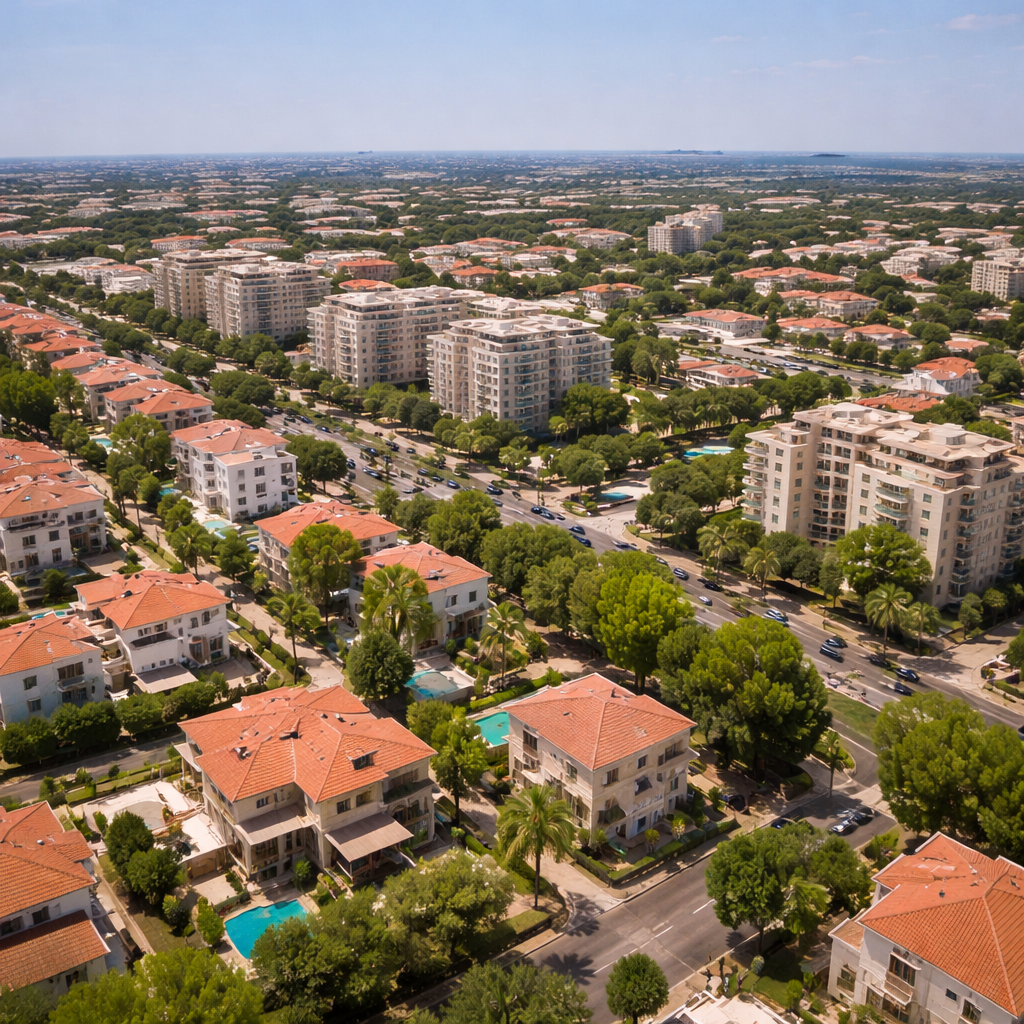
The “2005” Neighborhood carries its name like a timestamp, marking the moment of its creation and forever identifying it as part of Ra’anana’s eastern expansion during the mid-2000s when Israel’s economy was booming and housing developments sprouted across the central region to accommodate growing demand. Located on the far eastern edge of the city, this area represents Ra’anana’s geographical limits, the point where the municipality ends and neighboring jurisdictions begin, creating a neighborhood that technically belongs to the city while feeling somewhat removed from its established center and traditional character. For families considering Ra’anana, the “2005” Neighborhood presents a study in trade-offs between affordability, space, and connection to the amenities and community that define the city’s appeal.
The physical layout of “2005” follows the master-planned aesthetic common to Israeli developments from that era, with apartment buildings arranged along curving streets designed to create visual interest and pedestrian-friendly circulation patterns. The buildings themselves rise five to eight stories typically, constructed in the utilitarian style that characterizes Israeli residential architecture where function trumps form and cost considerations shape every design decision. The facades present variations on beige and cream with occasional accent colors, balconies jutting from each unit providing outdoor space and storage that Israeli families consider essential. Nearly two decades after construction, the neighborhood has settled into itself, the initial newness worn away but not yet aged into the patina that makes much older neighborhoods charming, existing in that awkward middle period where everything looks slightly dated without qualifying as vintage.
The demographic composition of “2005” skews toward young Israeli families, often first-time buyers stretching financially to purchase in Ra’anana rather than accepting cheaper alternatives in less desirable cities. You find couples in their late twenties and thirties, frequently with multiple young children, where one or both partners work in relatively modest professional or white-collar positions rather than the high-tech executive roles more common in western or central Ra’anana. The concentration of young families creates neighborhoods alive with the chaos of childhood, strollers blocking building entrances, playgrounds perpetually crowded, and the particular soundscape of Hebrew-speaking children that marks authentic Israeli residential life rather than the Anglo-inflected environments found closer to the city center.
For English-speaking immigrants, the “2005” Neighborhood represents a less traveled path, attracting smaller numbers of Anglos compared to more established areas where existing community infrastructure and networks make initial settlement easier. The families who do choose this location tend to be either particularly price-sensitive, willing to sacrifice convenience and community for housing affordability, or deliberately seeking more authentic Israeli integration away from Anglo enclaves where English remains the dominant social language. These pioneers find themselves navigating daily life with less linguistic and cultural buffer than areas with higher Anglo concentrations provide, forcing faster Hebrew acquisition and deeper engagement with Israeli social norms, for better and worse.
The practical realities of living in “2005” begin with its distance from Ra’anana’s central amenities and commercial areas. Ahuza Street, the city’s main commercial thoroughfare, sits several kilometers away, too far for casual walking particularly during summer heat or winter rains, making car ownership essentially mandatory for families living here. Local commercial infrastructure exists but remains limited, with small convenience stores and perhaps a minimarket providing basic necessities while serious shopping requires driving to larger supermarkets elsewhere in Ra’anana or even in neighboring Kfar Saba. This car dependency shapes daily rhythms differently from more walkable neighborhoods, requiring greater planning and coordination, particularly for families managing multiple children’s schedules involving schools, activities, and social commitments scattered across the region.
The housing prices in “2005” reflect its peripheral location and the age of its building stock, offering relative affordability within Ra’anana’s generally expensive real estate market. Apartments here might sell for one and a half to two million shekels for three-bedroom units, representing meaningful savings compared to central neighborhoods where similar space commands significantly higher prices. For rental families, monthly costs might range from five to seven thousand shekels, again substantially below the rates demanded closer to the city center. These financial differences accumulate meaningfully over years, allowing families to allocate resources toward other priorities or simply manage on more modest incomes than would be feasible in pricier areas.
The schools serving “2005” children draw from Ra’anana’s municipal system, with neighborhood schools providing convenient options for elementary-age students while older children might attend institutions elsewhere in the city based on academic track, religious orientation, or specific programs. The Israeli education system’s complexity challenges all parents but particularly immigrants unfamiliar with terminology, frameworks, and unwritten rules governing school selection and placement. Families in peripheral neighborhoods sometimes find themselves at disadvantage in these processes, lacking the established networks and accumulated knowledge that concentrate in areas with higher immigrant populations and longer histories of Anglo settlement.
Transportation from “2005” involves navigating Ra’anana’s bus system or driving to reach most destinations, with the neighborhood’s eastern location providing relatively quick access to Highway 531 and other major roads connecting to Tel Aviv, Herzliya, and beyond. Many residents commute daily for work, their relationship to Ra’anana focused primarily on residential benefits like safety, municipal services, and school quality rather than employment opportunities or urban amenities. The commute times remain manageable by Israeli standards, though traffic congestion during peak hours tests patience and adds unpredictability to scheduling, particularly for families where both parents work outside the home and coordination of school pickups and childcare requires precise timing.
The community infrastructure in “2005” lacks the organizational depth found in more established neighborhoods, with fewer formal institutions and less developed informal networks providing support and social connection. Residents often find themselves creating community through organic interactions in playgrounds and building stairwells rather than joining existing structures, which appeals to some personalities while leaving others feeling isolated and disconnected. For Anglo families accustomed to the robust support systems available in areas with concentrated English-speaking populations, this difference can feel particularly stark, requiring greater initiative to build social connections and find practical resources ranging from English-speaking service providers to fellow immigrants who understand the particular challenges of cultural adjustment and system navigation.
The parks and recreational spaces within “2005” follow standard Israeli municipal planning, with playgrounds featuring climbing structures, swings, and slides serving different age groups, though the equipment and maintenance may show wear after nearly two decades of intensive use by successive cohorts of children. These spaces function as crucial social infrastructure for families with young children, providing safe outdoor environments where kids burn energy and parents exchange information and commiseration about the challenges and joys of raising families in Israel. Weekend afternoons transform these parks into impromptu community centers, families spreading blankets for picnics, children forming spontaneous play groups that transcend their parents’ social networks, creating the organic community building that makes neighborhoods livable rather than merely functional.
Religious life in “2005” reflects the predominantly secular and traditional Israeli population with several synagogues serving different denominations and styles, though Anglo-oriented congregations remain largely absent given the limited English-speaking population. Families seeking specifically Anglo religious communities typically travel to other Ra’anana neighborhoods on Shabbat, the walks stretching thirty minutes or more each direction, a manageable but meaningful commitment that shapes social life and community identification. This distance from Anglo religious infrastructure influences who chooses to live in “2005,” effectively selecting for families either less invested in English-speaking religious community or willing to accept geographic separation from their spiritual homes in exchange for housing affordability and other benefits.
The commercial development within “2005” has proceeded slowly and incompletely, with ground-floor retail spaces that remain partially vacant or occupied by marginal businesses struggling to achieve viability given the neighborhood’s relatively small population and competition from established commercial areas elsewhere in the city. The few restaurants and cafes that have opened cater primarily to utilitarian needs rather than creating destination dining or social spaces, serving the quick meals and basic coffee that busy families require without attempting the atmosphere or culinary ambition found along Ahuza Street or in other Ra’anana commercial zones. This commercial underdevelopment contributes to the neighborhood’s somewhat sterile character, lacking the vitality and texture that mixed-use areas with thriving retail create.
For Anglo families, the decision to live in “2005” often involves explicit prioritization of financial considerations over community amenities and social infrastructure. These are typically families where housing costs represent such a significant portion of budget that savings of several hundred thousand shekels in purchase price or a thousand or two in monthly rent materially impact quality of life and financial security. The calculation accepts longer drives to reach friends, Anglo community events, and preferred service providers as reasonable trade-offs for affordable housing in a safe, well-managed city with good schools and municipal services. Whether this trade-off proves satisfying depends enormously on individual family circumstances, temperament, and the specific contours of their social and professional lives.
The trajectory of “2005” over its nearly two decades of existence illustrates the unpredictable evolution of planned neighborhoods. Some aspects of the original vision have materialized, with the residential areas functioning adequately and families establishing roots, while other elements like robust commercial development and vibrant community life have lagged behind projections. Property values have appreciated modestly, following Ra’anana’s general upward trend without the exceptional gains seen in more desirable neighborhoods, providing reasonable investment returns without generating the wealth effects that sometimes transform real estate decisions into financial windfalls. Residents who purchased in the mid-2000s have seen their mortgages become more manageable as inflation erodes real debt values while their homes’ market values increase, creating equity that provides financial security even if not spectacular returns.
Living in “2005” means occupying a particular position in Ra’anana’s social and geographic landscape, benefiting from association with a desirable city while existing at its margins both literally and metaphorically. The neighborhood provides access to Ra’anana’s schools, municipal services, and general quality of life while demanding greater effort and travel to reach the community amenities, commercial offerings, and social networks that make the city particularly attractive to English-speaking immigrants. For families willing to accept this peripheral position, “2005” offers viable Ra’anana living at prices that expand access beyond the affluent professionals and established immigrants who dominate more central neighborhoods, creating opportunities for younger families, more modest earners, or those prioritizing financial flexibility over prestigious addresses and walkable convenience. Whether this trade-off proves worthwhile depends entirely on individual circumstances, priorities, and the specific texture of life each family seeks to build in their adopted homeland.