Ness Ziona | Anglo Community
Welcome to this exploration of what it's really like to live in Ness Ziona as an English-speaking immigrant. Whether you're deep into aliyah research or just starting to look beyond the usual Anglo destinations, I want to give you an honest picture of daily life in a city that quietly delivers one of central Israel's best quality-of-life propositions—without ever making anybody's top-ten list.
Ness Ziona is the city nobody talks about at the aliyah fair. It doesn't have Jerusalem's magnetism or Tel Aviv's glamour. It hasn't undergone the dramatic transformation narrative of a Be'er Ya'akov or the beachfront allure of an Ashkelon. What it has, and has had for over a century, is something more understated: a genuinely pleasant place to raise a family, ten kilometers from the Mediterranean and twenty from Tel Aviv, with green spaces, decent schools, a growing tech economy, and an atmosphere that residents describe—without a trace of irony—as feeling like a small town even as the population approaches fifty-five thousand. For English-speaking immigrants willing to look past the flashier options, Ness Ziona offers a central Israel life that's both livable and surprisingly affordable relative to its neighbors.
Let me start with the geography, because location is Ness Ziona's quiet superpower.
The city sits on the coastal plain south of Tel Aviv, bordered by Rishon LeZion to the north, Rehovot to the south, and Be'er Ya'akov to the east. You're firmly inside the Gush Dan metropolitan area—central Israel by any definition. Ben Gurion Airport is about fifteen to twenty minutes by car. Tel Aviv is reachable in seventeen minutes by car on a clear day, thirty to forty minutes by bus, or about thirty-five to forty minutes by train from the nearby Rishon LeZion HaRishonim or Rehovot stations. Ness Ziona doesn't have its own train station within the city proper, which is one of its genuine infrastructure gaps—you're dependent on buses, cars, or a short drive to neighboring stations. But the bus service to Tel Aviv runs frequently, roughly every ten to thirty minutes depending on the route, and the commute is manageable in a way that Ashkelon's or even Modi'in's simply isn't.
The Weizmann Institute in Rehovot is practically next door. Rishon LeZion's extensive shopping and entertainment options are a five-minute drive. You're surrounded by options without needing to generate them all internally. This matters more than people realize when choosing a city to live in.
Now let's address the Anglo community question directly, because this is where Ness Ziona requires honest expectations.
Ness Ziona does not have a significant Anglo community. Several hundred English-speaking olim have settled in the broader area over the past decade, but they're dispersed throughout the city rather than concentrated in identifiable neighborhoods. There's no Anglo shul to walk into on Shabbat morning and hear familiar accents. There's no English-language book club meeting on Tuesday nights. The community infrastructure that makes Ra'anana or Baka feel like a soft landing for American and British immigrants doesn't exist here. You'll find a few Facebook groups, the occasional English speaker at the park, and perhaps a neighbor or two who made aliyah from the States. But your daily social life will be conducted overwhelmingly in Hebrew, with Israelis, on Israeli terms.
For some people, this is exactly what they want. For others, it's a dealbreaker. Be honest with yourself about which camp you're in before you sign a lease.
Let's talk about housing, because Ness Ziona occupies an interesting middle ground in the Israeli market.
This is not a cheap city. It's not Be'er Ya'akov or Ashkelon pricing. Property values have risen roughly thirty percent in recent years, and Ness Ziona is now firmly in the upper-middle tier of Israeli real estate. A three- to four-room apartment runs approximately two to three million shekels—that's roughly five hundred fifty thousand to eight hundred fifty thousand dollars. Larger units and penthouses push well above three million. Private houses with gardens, which are more common here than in many Israeli cities thanks to the moshava roots, can range from three and a half to eight million shekels depending on size and location. Rentals for a three- to four-room apartment sit around four thousand to six thousand shekels monthly.
These numbers are meaningfully lower than Ra'anana or Herzliya, roughly comparable to parts of Rehovot, and higher than Be'er Ya'akov or Ramla. You're paying a premium over the truly affordable alternatives, but what you're getting in return is significant: a well-maintained city with established infrastructure, strong schools, abundant green space, and a population that skews educated and professional. This isn't a city in transition hoping to become something—it already is what it is.
Here's what makes Ness Ziona genuinely distinctive: the city has deliberately chosen to remain low-rise and green.
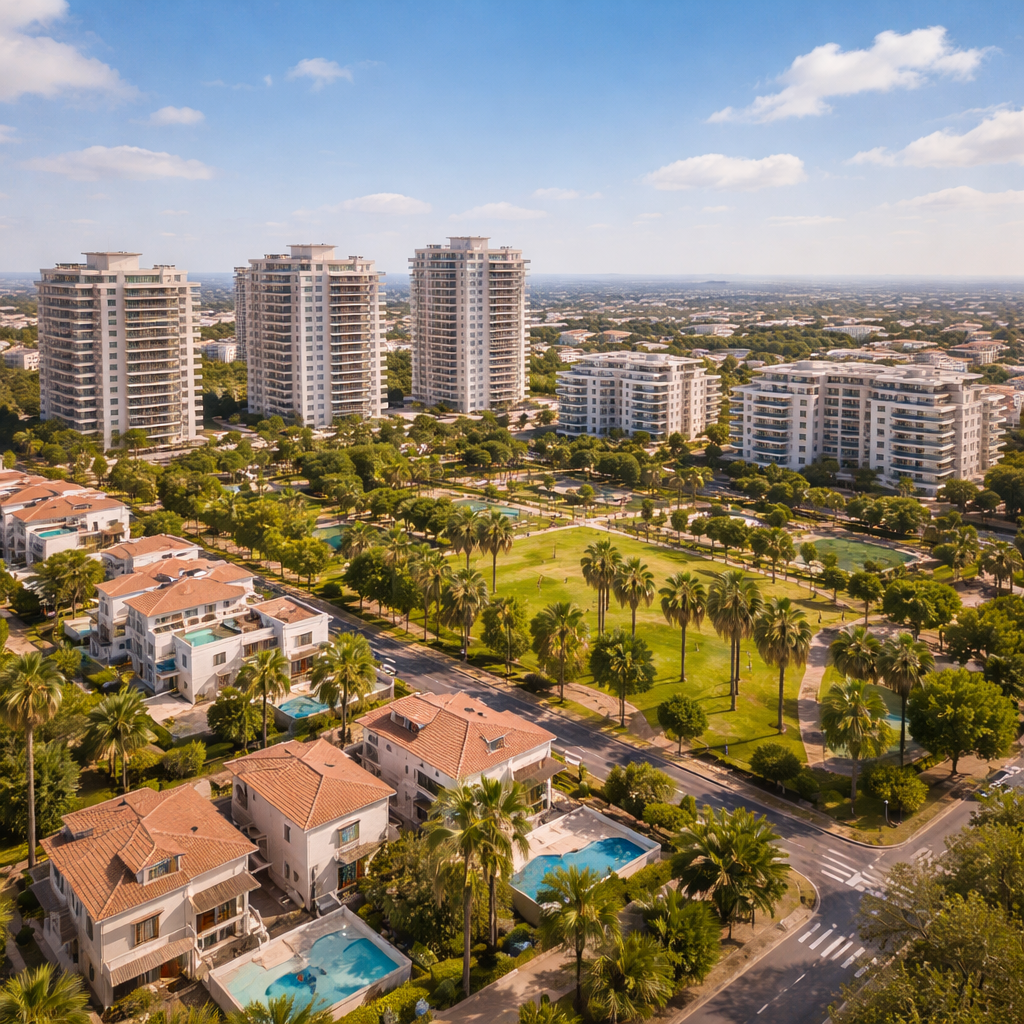
Urban planning regulations ban buildings higher than eight stories. This is extraordinary in the Israeli context, where every municipality within commuting distance of Tel Aviv is racing to build as high and as dense as possible. Ness Ziona has sixty-six public parks and gardens. The Kurkar Hills nature reserve sits within the municipal boundaries, offering walking trails through unique sandstone formations where you might spot hedgehogs, foxes, and chameleons. The Rubin Stream National Park is nearby for longer hikes through dunes and along the coast. Tree-lined streets are common, particularly in the older neighborhoods. The city's own slogan translates roughly to "a city with the heart of a farming community," and while marketing slogans deserve skepticism, this one has a genuine basis in reality. Ness Ziona feels different from the tower-forest developments transforming neighboring cities. Whether that appeals to you or frustrates you depends on your priorities.
The flip side of the low-rise policy is that housing density is lower, which means the city grows more slowly and can't absorb population the way its neighbors do. This keeps the small-town feel but also limits the development of large-scale commercial and cultural infrastructure.
Let me describe daily life honestly, because texture matters as much as data.
Mornings in Ness Ziona are quiet. This isn't Tel Aviv's buzzing energy or Jerusalem's purposeful bustle. It's suburban in the best and most literal sense—families getting kids to school, commuters heading to cars or bus stops, dog walkers in the parks. The city center has a modest commercial area with cafés, restaurants, and everyday shopping. The Kenyoter mall serves basic retail needs. For anything more ambitious—serious shopping, diverse dining, cultural events—you'll drive to Rishon LeZion or Tel Aviv. This is a fifteen-minute drive, not an expedition, but it's an honest part of the daily reality. Ness Ziona serves your domestic needs well but relies on its neighbors for urban excitement.
Weekends revolve around the parks, family activities, and the easy access to everything else the center of the country offers. The city recently joined the weekend bus service to Tel Aviv, meaning you can get to the beach or the city center on Shabbat without a car—a meaningful quality-of-life detail for secular and traditional families.
The high-tech economy deserves specific attention because it affects who lives here.
The Kiryat Weizmann Science Park has attracted a serious cluster of technology companies, and major multinationals have established operations in or near Ness Ziona. The Israel Institute for Biological Research, a significant government facility, is headquartered here. The proximity to the Weizmann Institute and the broader Rehovot science ecosystem creates genuine local employment opportunities in technology and research. This matters for Anglo immigrants because it means you may be able to work locally rather than commuting to Tel Aviv—a possibility that dramatically changes your quality of life and your relationship with the city. If you're in tech, biotech, or research, Ness Ziona's local job market is surprisingly relevant.
Schools are solid without being spectacular from an Anglo perspective.
Ness Ziona has a well-regarded public school system with multiple elementary schools, religious state schools, and several high schools including the respected science-track Park HaMada school. The city invests meaningfully in education, and the socioeconomic profile of the population—cluster eight to nine on the CBS rankings, which is high—means school environments tend to be stable and achievement-oriented. What you won't find are Anglo-friendly schools, bilingual programs, or a critical mass of English-speaking children in any given classroom. Your kids will integrate into the Israeli school system fully, for better and for worse. Families who've done this in Ness Ziona generally report that their children's Hebrew acquisition is rapid and thorough—the immersion is total.
Religious life in Ness Ziona reflects a city that's predominantly secular and traditional.
The city has synagogues across the spectrum—Orthodox, traditional, Chabad—but the overall atmosphere is secular Israeli. Shops and restaurants operate on Shabbat in many areas. There's no eruv politics or Shabbat-related tension that characterizes more religiously mixed cities. For dati leumi families, there are religious state schools and Orthodox options, but you won't find the dense Anglo-Modern-Orthodox ecosystem of a Baka or an Efrat. For secular families, the city's atmosphere is comfortable and uncontentious. The religious character is simply less of a defining feature here than in many Israeli cities—religion is present but doesn't dominate the public space.
The Rehovot connection is worth emphasizing because it effectively extends what Ness Ziona offers.
Rehovot borders Ness Ziona to the south, and the boundary between the two cities is essentially invisible in daily life. The Weizmann Institute's Clore Garden of Science is a popular family destination. Rehovot's train station serves Ness Ziona residents. The two cities share commercial areas and services. In practical terms, living in southern Ness Ziona and living in northern Rehovot are nearly indistinguishable experiences. This matters because Rehovot has a somewhat larger Anglo presence and more institutional depth. You can live in Ness Ziona's green, quiet environment while accessing Rehovot's resources easily.
Here's my bottom-line assessment: Ness Ziona is a city for people who want to live well in central Israel without needing their city to be exciting.
It's the responsible choice. The sensible choice. The choice that, five years in, tends to generate quiet satisfaction rather than dramatic stories. You won't tell people at dinner parties about your thrilling life in Ness Ziona. You'll tell them about the park where your kids play every afternoon, the reasonable commute, the apartment that's bigger than what your friends in Tel Aviv could afford, and the fact that you've barely thought about your city's name because it simply works.
If you're a family with children who wants central Israel location, green surroundings, good schools, and a professional community, and you're comfortable building social life through work, school, and neighborhood rather than Anglo institutions—Ness Ziona is worth serious consideration. If you work in tech or research, the local employment options make the proposition even stronger. If you value outdoor space and a low-density urban environment over tower living, the city's deliberate planning philosophy will feel like a gift.
But Ness Ziona is not for everyone. If you need Anglo community—real community, not just occasional encounters—look to Ra'anana, Modi'in, or Jerusalem. If urban energy and cultural richness matter to your daily happiness, Tel Aviv remains the honest answer. If you want the absolute lowest price point in central Israel, Be'er Ya'akov next door delivers more value per shekel. If you need a train station you can walk to, Ness Ziona's transit gap is a real inconvenience.
The decision comes down to what you're optimizing for. Ness Ziona optimizes for livability—that unglamorous but deeply important quality that means your daily life feels manageable, your surroundings are pleasant, your children are thriving, and your commute doesn't destroy you. It's Israel's green, quiet, well-run city that almost nobody outside the country has heard of. And for the right family, that anonymity is precisely the point.