Buchman | Anglo Community
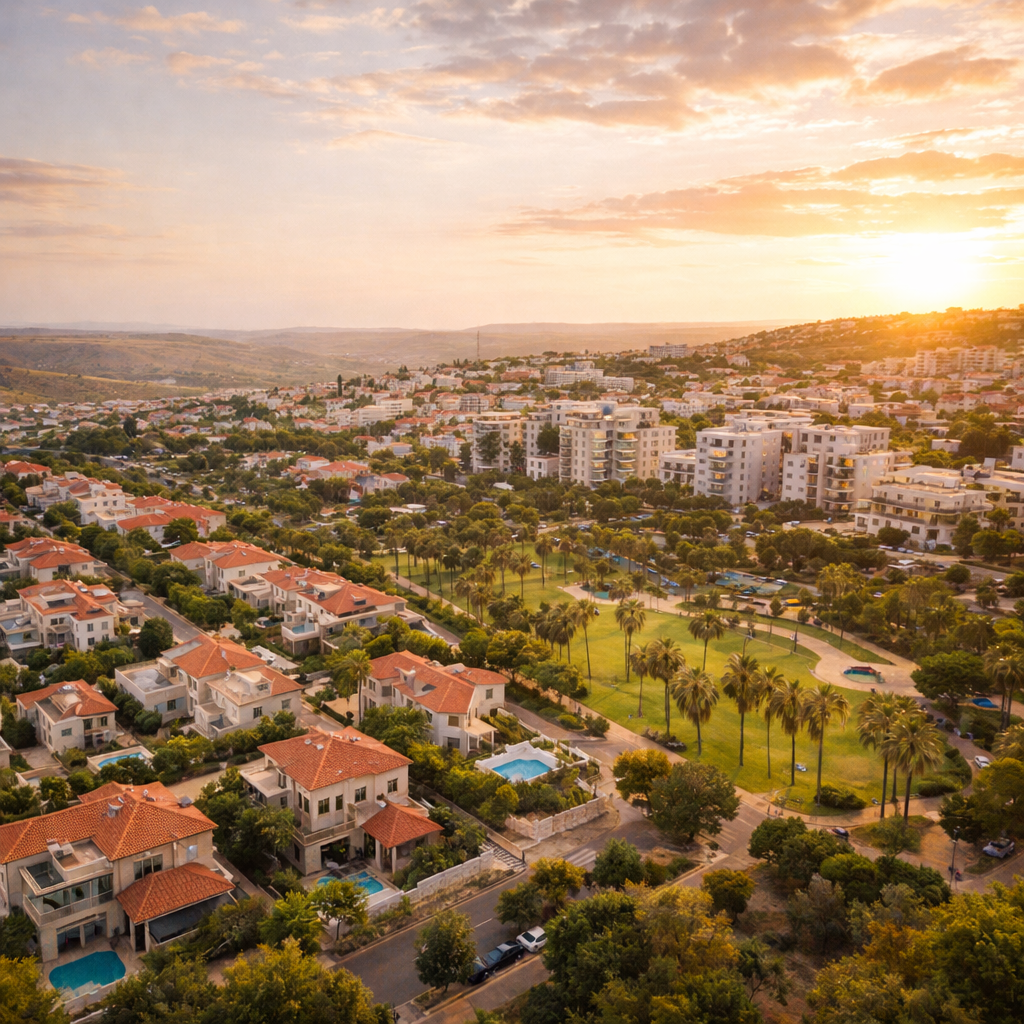
Picture yourself standing in the heart of Buchman, one of Modiin’s most sought-after neighborhoods. The air is crisp, the Mediterranean sun filters through carefully planned boulevards, and around you, you hear a symphony of languages—Hebrew mixing seamlessly with English, accented by British inflections, American drawls, and South African lilt. This is Buchman, where thousands of English-speaking families have found not just a place to live, but a place to truly call home in Israel. Today, we’re going to take you on a journey through this remarkable neighborhood—exploring why it’s become the top choice for Anglo families making aliyah, what daily life really looks like here, and whether Buchman might be the right fit for your own Israeli dream.
Buchman wasn’t always the thriving Anglo hub it is today. Established in the early 2000s as part of Modiin’s master plan, this neighborhood was designed with a vision—to create a modern, walkable community that could accommodate Israel’s growing population while maintaining a high quality of life. What the planners perhaps didn’t fully anticipate was how powerfully Buchman would resonate with English-speaking immigrants. By the mid-2010s, word had spread through synagogues in Teaneck, community centers in London, and Jewish day schools in Johannesburg: there was a place in Israel where you could have it all—authentic Israeli living with the comfort of an English-speaking support network.
The timing was perfect. Modiin itself was maturing into a well-established city, no longer the “new development” that required pioneering spirit. The high-speed rail to Tel Aviv and Jerusalem was operational, making commutes manageable. And Buchman’s infrastructure—the supermarkets, the parks, the medical clinics—were already in place and functioning smoothly. Today, as of late 2025, Buchman stands as one of the most mature and established Anglo neighborhoods in all of Israel. It’s no longer a neighborhood where you’re taking a chance—it’s a neighborhood with a proven track record of successful absorption and community building.
Let me paint you a picture of a typical morning in Buchman. It’s 7:30 AM on a Wednesday. You step out of your apartment building—a well-maintained, modern structure with clean stairwells and working elevators—and you’re immediately struck by the walkability. Within a ten-minute walk from almost anywhere in Buchman, you can reach three different supermarkets. There’s the Mega, where you can find your familiar Western brands alongside Israeli products. There’s the local makolet for quick pickups. And there’s the Shufersal for your weekly shop.
You pass families walking their children to school. The schools are close—within the neighborhood itself, you’ll find options for both religious and secular education, with strong English-language tracks that ease the transition for new immigrant children. Parents chat in English at the school gates, but you also hear them switching effortlessly to Hebrew with Israeli neighbors. This is the integration that Buchman does so well—you’re never isolated in an Anglo bubble, but you’re also never left struggling alone without English-speaking support.
As you continue your walk, you pass several synagogues. Buchman is known for its religious infrastructure—multiple minyanim to choose from, representing different styles and traditions. Some are distinctly Anglo in character, with North American-style davening and English-language divrei Torah. Others are more mixed, Israeli-Anglo hybrids where you might hear announcements in both languages. The architecture around you is quintessentially Israeli modern—clean lines, Jerusalem stone accents, balconies with succah possibilities. But the neighborhood planning is decidedly Western in its orderliness. The streets are wide, the sidewalks are well-maintained, and there’s greenery everywhere. Parks dot the neighborhood, and you can see children playing, mothers with strollers, and retirees sitting on benches.
By mid-morning, the neighborhood has a different energy. The professionals have commuted out—many to the train station just minutes away, heading to high-tech jobs in Tel Aviv or government positions in Jerusalem. Others work locally in Modiin itself, or work from home in the growing remote-work culture that’s taken hold since the pandemic years. The cafes fill up with a different crowd—young mothers meeting for coffee after morning drop-off, retirees enjoying a leisurely breakfast, freelancers tapping away on laptops. And the conversations are fascinating—sometimes in Hebrew, often in English, frequently code-switching between the two as native Israelis and Anglos share their lives together.
Let’s talk numbers, because this is where reality meets aspiration. As of October 2025, the average apartment price in Buchman sits at approximately 4.4 million shekels. For those calculating in dollars, that’s roughly $1.2 million, though exchange rates fluctuate. The typical property is a four-room apartment—in Israeli parlance, that’s usually three bedrooms plus a living room—spanning about 110 to 120 square meters. If you’re renting rather than buying, you’re looking at an average monthly rent of around 7,200 shekels, or approximately $1,950. These are the October 2025 figures, and they’ve been relatively stable, though anyone familiar with Israeli real estate knows that prices tend to trend upward over time.
Now, let’s be honest—these are not bargain prices. Buchman is expensive, and it’s expensive precisely because it’s desirable. You’re paying for the established community, the proven infrastructure, the Anglo networks, the proximity to schools and services, and the overall quality of life. But here’s what you’re getting for that investment. Unlike buying in a new development where you’re gambling on future infrastructure, in Buchman everything is already here and working. The supermarkets are open. The medical clinics are staffed. The community is established. You’re not waiting five years for the commercial center to be built or hoping that enough families will move in to start a minyan.
You’re also buying into a neighborhood with strong resale value. Because Buchman’s reputation is so solid among the Anglo community, there’s consistent demand. Properties here tend to hold their value well, and when families do sell—usually to upgrade or relocate for work—they typically find buyers relatively quickly. For many families, the calculation comes down to this: Is it worth paying a premium to live in a proven community with strong English-speaking networks, or would you rather save money by choosing a less established area and building community from scratch? There’s no wrong answer—it depends on your priorities, your budget, and your risk tolerance.
What truly sets Buchman apart isn’t the physical infrastructure—it’s the social infrastructure. This is where the neighborhood shines. The WhatsApp groups alone are legendary. There’s “Buchman Anglos,” “Buchman Babysitters,” “Buchman Buy and Sell,” “Buchman Health Recommendations,” and countless others. These aren’t just digital bulletin boards—they’re the nervous system of the community. Someone posts that they’re looking for a pediatrician who speaks English—within minutes, they have five recommendations with detailed reviews. A family needs a ride to the airport at 4 AM—someone volunteers. A newcomer has questions about arnona payments—experienced olim provide detailed guidance.
This level of mutual support is invaluable, especially in your first years in Israel. The Israeli bureaucracy can be daunting, but in Buchman, you’re never navigating it alone. Someone has already dealt with whatever issue you’re facing, and they’re willing to help. The religious life in Buchman is particularly rich. Weekly shiurim in English cover everything from Talmud to Jewish philosophy to parenting. There are women’s groups, couples’ learning programs, and youth activities. The shuls host scholars-in-residence, organize community Shabbatonim, and coordinate chesed initiatives.
But it’s not just about organized activities. It’s about the informal networks that develop. Shabbat meals where new immigrants meet veteran olim who can share hard-won wisdom. Playground conversations where parents swap school recommendations and work leads. The sense that you’re not alone in this aliyah journey—you’re part of a community that’s walking it together. The social calendar is full. There are community Purim parties, Lag B’Omer bonfires, communal succahs, and Chanukah celebrations. Israeli holidays take on new meaning when you’re celebrating them with a community that understands both the Israeli context and your Anglo background.
For children, this is particularly powerful. Kids in Buchman grow up with friends from similar backgrounds—other children of olim who understand what it’s like to have grandparents who live far away, parents who speak accented Hebrew, and homes where English and Hebrew mix freely. Yet they’re also integrated with Israeli children, learning Hebrew naturally, absorbing Israeli culture, and becoming fully Israeli themselves. Many parents in Buchman speak of watching their children become the Israelis they themselves will never quite be—and there’s something beautiful about that. The children are native Hebrew speakers with American or British passports, who understand American baseball references but whose hearts beat for Maccabi Tel Aviv.
But let’s be honest about the challenges, because every neighborhood has them. The cost is real. Buchman is expensive, and that can be prohibitive for many families. Young couples just starting out, families with single incomes, or those coming to Israel without significant savings may find Buchman out of reach. There’s no shame in that—it’s simply the reality of supply and demand. There’s also the question of the “Anglo bubble.” Some critics argue that Buchman is too insular, that it’s possible to live here and never fully integrate into Israeli society. You can shop at English-speaking stores, pray at English-speaking minyanim, socialize entirely with other Anglos, and hardly speak Hebrew beyond basic interactions. For some, this is a feature—it’s exactly what they want. For others, it’s a concern. If your goal is deep Israeli integration, you’ll need to be intentional about pushing beyond the comfortable Anglo networks.
The commute is another consideration. While Buchman benefits from Modiin’s central location and excellent train service, you’re still commuting. If you work in Tel Aviv, you’re looking at 35-40 minutes each way, longer during rush hour or if there are train delays. If you work in Jerusalem, similar timing applies. For some people, this is fine—it’s reading time, podcast time, work-from-train time. For others, especially those used to short commutes, it can wear on you over time. Finally, there’s the cultural question. Buchman is very much an American-influenced neighborhood. If you’re British, South African, Australian, or Canadian, you may find the predominant culture a bit different from what you’re used to. It’s not that you won’t find other Brits or South Africans—you will—but the overall flavor tends to skew American.
It’s worth zooming out and seeing where Buchman fits in the larger Modiin landscape. Modiin itself is a success story of Israeli urban planning. It’s clean, it’s safe, it’s well-maintained. Crime rates are low. Public services function well. The municipality is responsive. Schools are good. Parks are plentiful. All of this benefits Buchman residents. The city is also strategically located. You’re 25-30 minutes from Ben Gurion Airport—invaluable when you have visiting family or when you’re traveling abroad. You’re close enough to Tel Aviv for urban amenities, close enough to Jerusalem for cultural and religious institutions, but you live in neither. For many families, this balance is ideal. Modiin is also continuing to grow. New neighborhoods are being developed, the light rail expansion is planned, and the economic base is diversifying. This means Buchman isn’t isolated—it’s part of a thriving, growing city with an eye toward the future.
So who does best in Buchman? The ideal Buchman resident is probably a religious or traditional family with children, coming from North America, with professional careers that provide solid middle-to-upper-middle-class income. They value community, they want their children to grow up with other Anglo kids while still integrating into Israeli society, and they’re willing to pay premium prices for the convenience and comfort of an established neighborhood. But plenty of people outside that profile also thrive here. Young couples who are willing to stretch their budget. Empty nesters who want to be near children and grandchildren who’ve made aliyah. Singles who value the religious community. Families who aren’t particularly wealthy but make it work because the community support is worth it to them. The people who struggle in Buchman tend to be those who feel suffocated by the Anglo density, who find the costs unsustainable, or who discover that the lifestyle is too suburban for their tastes.
As we wrap up our tour of Buchman, the question remains: Is this neighborhood right for you? Only you can answer that, but here’s what I’d suggest. If you’re considering aliyah and Buchman is on your list, visit. Don’t just walk through on a quick tour—spend a Shabbat here. Eat meals with families. Attend services at different shuls. Walk the streets on weekday mornings and Friday afternoons. Talk to people. Ask hard questions. Find out what they wish they’d known before moving here. Ask about the challenges nobody talks about in the promotional materials. Inquire about schools, costs, community dynamics. The Buchman community is generally welcoming and transparent—people will tell you both the good and the difficult.
Because here’s the truth: Buchman is an excellent neighborhood for many people. It offers a quality of life that’s hard to beat, a community that’s warm and supportive, and a genuine opportunity to build a meaningful life in Israel without sacrificing all the comforts of your Anglo identity. But it’s not perfect, it’s not cheap, and it’s not for everyone. And that’s okay. The most important thing is finding the place where you and your family can thrive—where you can build your Israeli story, contribute to the Jewish state, and create the life you’ve dreamed of. For many families, that place is Buchman. Perhaps it will be for you too. Thank you for joining us on this journey through Buchman. May your aliyah journey—wherever it leads—be blessed with success, community, and the fulfillment of your deepest hopes for life in Israel.