North Netanya | Anglo Community
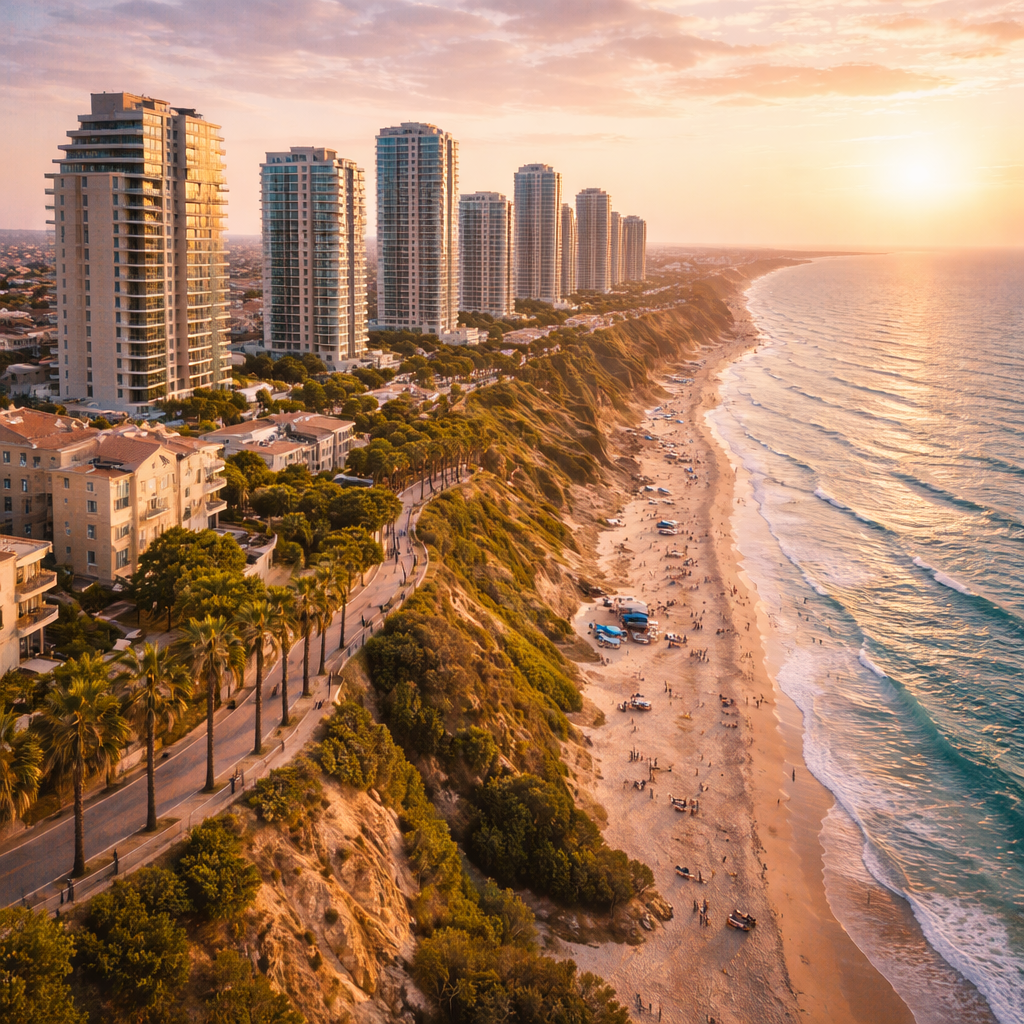
North Netanya doesn’t announce itself with a single dramatic skyline or a unified architectural vision. It’s not a neighborhood in the traditional sense, with clear borders and a defined identity that everyone agrees upon. Instead, North Netanya represents something more dynamic and evolving: a collection of areas in the northern part of the city that have become focal points for new development, growing communities, and particularly, increasing numbers of English-speaking immigrants seeking affordable coastal living. When real estate agents and community organizers talk about North Netanya, they’re describing a phenomenon as much as a place, a recognition that something significant is happening in these northern areas that makes them worth paying attention to if you’re considering making Netanya your home.
The character of North Netanya is diverse because it encompasses multiple distinct areas, each with its own history and current trajectory. There’s Kiryat Sanz, the Haredi neighborhood that’s been home to the Sanz-Klausenburg Hasidic community since the nineteen fifties. There’s the area around Young Israel of North Netanya, which has become a hub for English-speaking Modern Orthodox families. There are newer residential developments being built specifically with immigrant buyers in mind, marketed directly to Anglos and French speakers who want beach proximity without Ir Yamim prices. And there’s Nitza Street and the areas along the northern coastline, where older buildings mix with newer construction, offering some of Netanya’s most dramatic oceanfront positions at relatively accessible prices. Understanding North Netanya means understanding each of these components and how they’re creating a mosaic of residential options.
Let’s start with Kiryat Sanz, because it’s perhaps the most distinctive and established part of North Netanya, with a story that’s both inspiring and unique in Israeli urban development. In the nineteen fifties, Rabbi Yekusiel Yehudah Halberstam, known as the Klausenburger Rebbe, was a Holocaust survivor who had lost his wife and eleven children in the camps. After emigrating to the United States and establishing a community in Brooklyn, he turned his attention to building something permanent in Israel, a Torah community that would restore the glory of Sanz Hasidism that had been destroyed in Europe. In nineteen fifty-six, he purchased land on the Netanya beachfront for one million dollars, using money that the City of New York had paid him for buildings that were being demolished to make way for new roads. This wasn’t just a real estate transaction; it was an act of rebuilding Jewish life from ashes.
The Rebbe established his court in Kiryat Sanz in nineteen sixty, and immediately began building the infrastructure for a complete Torah community. He founded kindergartens, elementary schools for boys and girls, yeshivas for advanced Torah study, seminaries for young women, multiple synagogues, a children’s home for orphaned and needy girls, an old-age home completed in nineteen sixty, and most ambitiously, Laniado Hospital, which finally opened in nineteen seventy-five after years of fundraising and construction. This hospital, which today serves a regional population of over four hundred and fifty thousand people from Netanya and the Sharon plain, embodies the Rebbe’s philosophy of giving to others regardless of their background. Laniado treats patients of all races, religions, and backgrounds, maintains the highest medical standards, and deliberately avoids leaving religious literature in the wards, focusing purely on healing.
Kiryat Sanz today is home to approximately twenty thousand residents, making it one of the largest Hasidic communities in Israel and the world center for Sanz-Klausenburg Hasidism. The current Sanzer Rebbe, Rabbi Zvi Elimelech Halberstam, the eldest son of the founder, leads the community from his home here and directs Sanz institutions not just in Netanya but in Jerusalem, Bnei Brak, Haifa, and communities in the United States. The neighborhood maintains a strictly Haredi character: streets are closed to traffic on Shabbat, signs throughout the area call for modest dress, and the rhythm of daily life revolves around Torah study and religious observance. The Sanz yeshivas educate thousands of students in an unbroken chain of learning that extends from early childhood through advanced rabbinical training.
What’s remarkable about Kiryat Sanz, especially in the context of Israeli society where religious-secular tensions often run high, is its reputation for tolerance and positive relationships with non-religious neighbors. Much of this stems from the founding Rebbe’s approach and the hospital’s example. When your community institution provides excellent medical care to everyone without proselytizing or judging, when the Rebbe himself emphasized helping all Jews regardless of their level of observance, it creates goodwill that extends through generations. Observers consistently note that Kiryat Sanz’s presence has actually improved religious-secular relations in Netanya rather than exacerbating them. The neighborhood even operates a gender-separated beach, the first in Israel to schedule different swimming hours for men and women, with facilities that include kosher food stands, religious supervision, and Hatzalah emergency services.
For Anglo families, Kiryat Sanz isn’t typically where you’d settle unless you’re specifically looking for a Haredi community and have connections to Sanz Hasidism. The community is Yiddish-speaking, intensely religious, and while welcoming to visitors and respectful to neighbors, it’s not designed for people coming from Modern Orthodox or less observant backgrounds. However, understanding Kiryat Sanz is important for anyone considering North Netanya because it’s a major presence in the area, it provides significant infrastructure like Laniado Hospital that serves everyone, and it represents the religious diversity that characterizes Netanya as a whole.
Moving to the areas more directly relevant to English-speaking immigrants, we find Young Israel of North Netanya, which has become a central institution for the Anglo Modern Orthodox community in this part of the city. Young Israel is an English-speaking, multinational synagogue and community center that describes itself as a place where friendship and companionship shape the moments members share together. The services are described as elegant and meaningful, the classes and study sessions are engaging and invigorating, and the community events are creative and exciting. For new immigrants arriving in North Netanya, Young Israel often becomes the first point of connection, the place where you meet other English speakers, find out about housing options, learn where to shop and which doctors speak English, and begin building the social network that makes integration manageable.
The area around Young Israel has developed organically into something of an Anglo neighborhood, though nothing like the concentration you’d find in Ra’anana or certain Jerusalem areas. Families who attend Young Israel tend to buy or rent properties within walking distance, creating clusters of English-speaking residents who support each other, share Shabbat meals, and help newcomers navigate Israeli bureaucracy and daily life. This isn’t a planned community with designated Anglo housing; it’s evolved naturally as people choose to live near their synagogue and near other families who share their language and cultural background. Real estate agents who work with Anglo clients know which streets and buildings have higher concentrations of English speakers, and they often steer new immigrants toward these areas where community support is readily available.
What makes North Netanya particularly appealing to many Anglo families right now is the new development that’s specifically targeting immigrant buyers. Multiple construction projects are underway or recently completed, marketed directly to English-speaking and French-speaking buyers with an emphasis on affordability, beach proximity, and community building. These aren’t luxury projects trying to compete with Ir Yamim’s high-end towers. Instead, they’re positioned as practical, family-friendly housing that makes coastal Israeli living accessible to people without enormous budgets. Developers recognize that there’s substantial demand from immigrants who want to be near the beach, who want to live in a city with established Anglo infrastructure, but who can’t afford the premium prices in Ra’anana, certain Jerusalem neighborhoods, or even Ir Yamim.
These new projects typically offer two, three, and four-bedroom apartments, along with some penthouses for buyers wanting more space. The buildings include standard modern amenities: underground parking and storage units addressing the urban challenge of limited space, elevators that operate on Shabbat for religious residents, safe rooms as required by Israeli building codes, and often communal facilities like gyms, tenant lounges, and shared workspaces that reflect changing ideas about residential amenities. Green areas surround the buildings, providing space for children to play and residents to relax outdoors. The construction quality is solid if not luxurious, designed to provide comfortable, functional homes rather than showcase properties.
The pricing in these North Netanya projects is what really captures attention. While Ir Yamim apartments might start around two point four million shekels and climb considerably higher, North Netanya developments can offer similar-sized apartments for significantly less, sometimes in the range of one point eight to two point two million shekels depending on the specific project, floor, and view. For young families making aliyah, perhaps with some savings but not unlimited resources, this price differential can be decisive. You might get an extra bedroom, or you might simply be able to afford to buy rather than rent indefinitely, giving you stability and building equity in Israeli real estate. The trade-off is that you’re not in the most prestigious address, you’re further from the beach than Ir Yamim residents, and the surrounding infrastructure may still be developing. But for many families, especially those with children, these trade-offs are entirely acceptable.
The community-building aspect of these new developments is worth emphasizing because it’s quite deliberate. When you buy in a project where many units are being sold to Anglos and French speakers, where the real estate agency is actively marketing to English-speaking communities abroad, you’re often moving in alongside other new immigrants who are navigating the same challenges you are. Everyone’s figuring out the Israeli school system simultaneously, everyone’s learning Hebrew together, everyone’s discovering which supermarkets have the products they want and which bureaucratic offices require which forms. This shared experience creates bonds quickly. Within months of move-in, you might find that your building has organized Shabbat meals, that neighbors are carpooling children to the same schools, that someone’s created a WhatsApp group for sharing information and recommendations. It’s community formation in real-time, and while it requires effort and goodwill, it can work remarkably well.
The location of North Netanya relative to the rest of the city creates both advantages and considerations. You’re generally further from the beach than residents of Ir Yamim or Ramat Poleg, though exactly how much further depends on which specific area of North Netanya you’re in. Some of the developments might be a fifteen to twenty-minute walk to the beach, which is still very accessible but not the five-minute stroll that Ir Yamim residents enjoy. You’re also somewhat removed from the city center and the main commercial areas, though Netanya isn’t a huge city and nothing is terribly far. The Ir Yamim Mall is accessible by car or bus, and Highway Two is easy to reach for commuting to Tel Aviv or Haifa. Public transportation exists but isn’t as frequent or comprehensive as in more central areas, making a car fairly essential for most families.
One of the distinctive features of certain parts of North Netanya, particularly along the coastline, is the presence of Nitza Street and similar oceanfront locations that offer first-line sea views at prices considerably lower than you’d pay for comparable positions in Ir Yamim or Ramat Poleg. Nitza Boulevard has become known as a sought-after location despite being in North Netanya, featuring a charming mix of older, well-maintained buildings alongside newer modern construction. The appeal is straightforward: you can wake up to direct ocean views, hear the Mediterranean outside your window, and enjoy the kind of beachfront position that many people associate only with luxury developments, but at prices that reflect North Netanya’s less prestigious status in the city’s hierarchy. For buyers who prioritize the actual lifestyle benefits of beach proximity over the prestige of addresses, these areas can represent exceptional value.
The school situation in North Netanya reflects the broader Netanya pattern: there’s no dedicated Anglo private school, which means families rely on the public school system, often choosing bilingual programs and supplementing with private Hebrew tutoring. Religious families have access to state religious schools that are part of the Hemed system, and the proximity to Kiryat Sanz means there are various Haredi educational options for families seeking that level of religious intensity. Secular families use the standard state schools. The reality is that most children of Anglo immigrants in North Netanya attend primarily Hebrew-speaking schools and become fluent relatively quickly, especially if they arrive at young ages. Parents often struggle more with Hebrew than their kids do. Some families drive to international schools in neighboring communities, trading convenience for English-language education.
The religious character of the Anglo community in North Netanya tends toward Modern Orthodox, largely because of Young Israel’s presence and influence. This isn’t to say there aren’t secular English speakers or people from other religious backgrounds, but the organized community infrastructure centers around Modern Orthodox institutions. There are synagogues catering to different styles of Orthodox practice, regular shiurim and Torah classes in English, community events organized around the Jewish calendar, and a generally religious atmosphere without being Haredi. For families who want their children raised with strong Jewish values and education but within a more modern, Zionist framework, North Netanya provides a welcoming environment. For secular families, the area might feel somewhat more religious than they’d prefer, though Netanya as a whole is fairly mixed.
Healthcare access in North Netanya is excellent, largely because of Laniado Hospital’s presence. This regional medical center provides full hospital services, emergency care, specialized treatments, and everything you’d expect from a major facility. Having a hospital literally in your neighborhood creates peace of mind, especially for families with young children or elderly relatives. Beyond Laniado, all the standard Israeli health funds operate clinics in or near North Netanya, and you can find English-speaking doctors in various specialties. Pharmacies are readily available, urgent care centers like Terem operate in Netanya, and medical tourism companies have even begun using Laniado for certain procedures, testifying to the quality of care.
Shopping and daily services in North Netanya require understanding that you’re in a more residential area rather than a commercial center. For major shopping, most residents drive to the Ir Yamim Mall or to shopping areas in central Netanya. There are smaller local shops, mini-markets, and neighborhood businesses that handle daily needs: bread, milk, basic groceries, pharmacy items. But for serious shopping, whether groceries, clothing, or household goods, you’re traveling to commercial areas. This is fairly typical for suburban neighborhoods in Israel and doesn’t pose major problems for families with cars. The trade-off for living in a quieter, more residential area is accepting that services aren’t immediately outside your door.
The beach access from North Netanya varies significantly depending on exactly where you live. The areas along Nitza Boulevard and the northern coastline obviously have excellent access, with some properties offering direct paths to the beach. But inland areas, especially those around new developments that might be several blocks from the shore, require more of a walk or a short drive. Netanya’s beaches in the northern section tend to be somewhat less crowded than the central beaches, which some people prefer. They’re still beautiful Mediterranean coastline with all the swimming, sunbathing, and water sports you’d expect, just with fewer tourists and a more local feel. The beaches near Kiryat Sanz include the gender-separated beach which operates on a schedule, and there are standard mixed beaches as well.
The demographic profile of North Netanya’s Anglo community skews toward young families and first-time buyers in Israel. These are often people in their thirties and forties, making aliyah with children or planning to start families soon, looking for affordable housing that will let them build equity while enjoying coastal living. There are also retirees, though perhaps fewer than in Ramat Poleg or some Ir Yamim buildings, attracted by the lower prices and the religious community infrastructure. The French-speaking population is significant throughout North Netanya as it is throughout all of Netanya, creating that multicultural European atmosphere that characterizes the city. Young professionals who work in Tel Aviv but want to live near the beach without paying Tel Aviv prices are increasingly discovering North Netanya as a viable option given the train connections.
Transportation infrastructure serving North Netanya connects to the broader city and regional networks. Bus service runs throughout the area, connecting to central Netanya and to the train stations that provide service to Tel Aviv and Haifa. The Netanya train station is accessible, though depending on where exactly you live in North Netanya, you might need to take a bus or drive to the station. Highway Two access is good, making car commutes to Tel Aviv quite manageable at about thirty to forty minutes depending on traffic and your specific destination. For families where one or both parents work in Tel Aviv, this commute is entirely reasonable, especially compared to what people endure in other metropolitan areas globally.
The investment perspective on North Netanya is interesting because you’re essentially betting on continued development and growth rather than buying into an already-established premium market. Property values in the new developments should appreciate as the neighborhoods mature, infrastructure improves, and more amenities appear. The Anglo community is growing, which creates demand and supports prices. Netanya as a whole is on an upward trajectory, with the municipality’s ambitious development plans extending to twenty thirty-five. But there’s also risk: if development stalls, if the Anglo community doesn’t grow as projected, if new projects create oversupply, values could stagnate. For owner-occupiers planning to live in their property long-term, these investment considerations matter less than immediate quality of life. But for investors or people planning to sell within a few years, North Netanya represents a different risk-reward profile than buying in Ramat Poleg or Ir Yamim.
The rental market in North Netanya serves primarily long-term tenants rather than vacation rentals. Families moving to Netanya often rent for a year or two while they learn the city and decide where they want to buy permanently. Young couples just starting out might rent before they can afford to purchase. The rents are lower than in Ir Yamim or Ramat Poleg, which makes North Netanya accessible for people on tighter budgets. A three-bedroom apartment that might rent for eight thousand to ten thousand shekels per month in Ir Yamim could be six thousand to eight thousand in North Netanya, a meaningful difference for families watching their finances. The downside is that rental properties might not have the same amenities or finishes as more expensive areas, but for many tenants, especially those who spend most of their time at work or at the beach anyway, this is perfectly acceptable.
Community organizations and resources for English speakers in North Netanya center around Young Israel but extend beyond just the synagogue. There are various groups and initiatives: English-speaking parent organizations that advocate with schools and municipalities, social committees that organize events and holiday celebrations, chesed committees that help community members in need, and informal networks that develop organically. Someone organizing the community might create a WhatsApp group for North Netanya Anglos where people share recommendations, ask questions, offer items for sale, and coordinate carpools. These grassroots efforts matter enormously for immigrants trying to navigate Israeli life, providing information and support that official channels often don’t.
One aspect that makes North Netanya particularly appealing to certain buyers is the sense of being part of something growing rather than joining something already established. In Ramat Poleg, you’re moving into a neighborhood with decades of history, established hierarchies, and settled patterns. In North Netanya’s new developments, everyone’s figuring things out together. There’s opportunity to shape community culture, to start traditions, to build institutions from scratch. For people with entrepreneurial spirits or those who enjoy community organizing, this can be energizing. For others who prefer joining established communities with clear structures, it might feel uncertain or insufficiently developed.
The parks and recreational facilities in North Netanya vary by specific area. Kiryat Sanz has its own internal parks and playgrounds serving the Hasidic community. The newer developments typically include green areas and playgrounds as part of their planning. The municipality maintains various public spaces throughout North Netanya. But this isn’t an area known for exceptional parks or recreational amenities the way some neighborhoods are. The beach becomes the primary recreational space for most residents, supplemented by whatever facilities their specific building or development provides. Families often drive to Ir Yamim or central Netanya for certain activities, shopping, or entertainment options that aren’t available in their immediate vicinity.
Security and safety in North Netanya are generally good, as they are throughout Netanya. The city has low crime rates compared to larger urban centers, and residential neighborhoods tend to be quiet and safe for children. Kiryat Sanz is closed to traffic on Shabbat, creating extremely safe streets for families walking to synagogue or letting children play. The newer developments often have building security with controlled entrance lobbies, though not necessarily guards around the clock as you might find in luxury Ir Yamim towers. Parents consistently report feeling comfortable letting children play outside, ride bikes through the neighborhood, and walk to friends’ houses, recreating some of the childhood freedom that’s increasingly rare in modern cities.
The future trajectory of North Netanya depends largely on how successfully these new developments attract buyers and build sustainable communities. If the marketing to Anglos and French speakers continues effectively, if families who move in stay and become advocates encouraging friends and relatives to join them, if developers keep building quality projects at accessible prices, North Netanya could become an increasingly important destination for English-speaking immigrants to Israel. The infrastructure will improve as population grows and demand justifies investment. More services will appear, more English-speaking doctors and businesses will locate there, and the community will mature. But this growth isn’t guaranteed; it depends on economic conditions, political stability, and countless individual family decisions about where to make their homes.
For specific types of buyers, North Netanya makes enormous sense. Young families with limited budgets who want coastal living and community support will find few better options in Israel at these prices. Modern Orthodox families seeking English-speaking religious infrastructure centered around Young Israel are discovering a welcoming environment. People who work remotely or have flexible schedules that make commuting manageable can enjoy beach proximity and lower costs. Retirees who want community involvement and religious programming without premium prices find value here. Investors willing to accept somewhat higher risk for potentially higher returns might see opportunity in the growth trajectory.
Conversely, North Netanya probably isn’t ideal for certain other buyers. If you need to be walking distance from the beach rather than a short drive, if you want the prestige and amenities of luxury addresses, if you require dedicated Anglo schools rather than public education, if you prefer established neighborhoods with mature infrastructure, or if you’re secular and uncomfortable in areas with significant religious presence, other parts of Netanya or other cities might suit you better. There’s no universal best choice; there’s only the best fit for your specific situation, budget, and priorities.
The practical reality of living in North Netanya for most Anglo families involves certain patterns and rhythms. You probably drive to the beach several times a week rather than walking there daily. You likely shop at the Ir Yamim Mall for major purchases while handling daily needs at smaller local stores. Your children attend Hebrew-speaking schools and become bilingual faster than you do. You participate in Young Israel activities, attend community events, and build friendships with other English-speaking families navigating similar challenges. You commute to work in Tel Aviv or work remotely from home. Your housing costs are manageable relative to your income, letting you save money or spend it on experiences rather than being house-poor. Your children grow up playing at the beach, learning Hebrew and English, and developing Israeli identities while maintaining connection to your countries of origin through language and culture.
North Netanya represents a particular chapter in Israel’s ongoing story of immigrant absorption and community building. It’s where affordability meets aspiration, where new immigrants create communities rather than joining existing ones, where coastal Mediterranean living becomes accessible to middle-class families rather than remaining the exclusive preserve of the wealthy. The Klausenburger Rebbe who founded Kiryat Sanz once said he believed the day would come when people would say Netanya was near Kiryat Sanz rather than the reverse, reflecting his vision of creating something so significant that it would redefine the region. While that specific prediction may have been optimistic, the broader principle holds: communities are built by visionaries and sustained by people willing to invest in uncertain futures. The Anglo families moving to North Netanya today are, in their own way, making similar bets, believing that by coming together in this less-established part of the city, they can create something special, something worth being part of, something that justifies the risks and challenges that every immigration journey entails. Whether North Netanya becomes the next great Anglo destination in Israel or remains a more modest option, depends largely on whether those bets pay off, whether communities gel, and whether enough families decide that affordable coastal living with community support is worth choosing a neighborhood that’s still writing its story rather than one that’s already established its reputation.