North Tel Aviv | Anglo Community
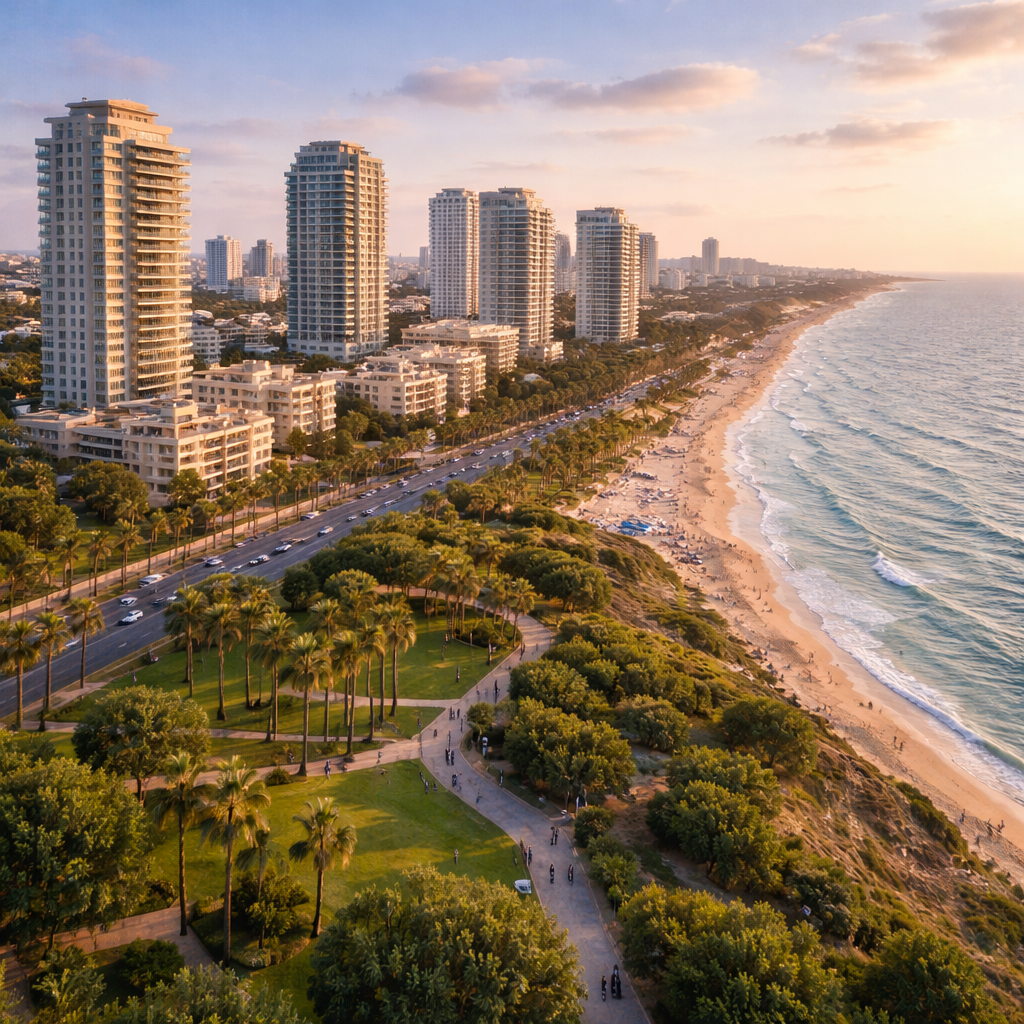
North Tel Aviv represents a different proposition entirely from the more concentrated Anglo enclave of the Old North, spreading across a broader swath of the city’s northern reaches and encompassing multiple neighborhoods with varying characters, price points, and demographics. When Israelis or real estate agents talk about North Tel Aviv, they’re generally referring to everything from the Yarkon River northward to the Tel Aviv-Ramat Aviv border, a zone that includes some of the city’s most desirable and expensive real estate alongside pockets that remain relatively more accessible. For English-speaking immigrants, North Tel Aviv offers a dispersed but growing community of professionals and academics who have chosen this part of the city for its quality of life, green spaces, and proximity to both the beach and major employment centers.
The geography of North Tel Aviv gives it advantages that other parts of the city simply cannot match. The northern neighborhoods sit closer to the coast, meaning residents enjoy better access to the Mediterranean and often benefit from sea breezes that make the brutal Israeli summer slightly more bearable. The area also contains more parks and green spaces than central or southern Tel Aviv, with the massive Park HaYarkon forming a natural southern boundary and smaller neighborhood parks scattered throughout. This greenery, combined with wider streets and less dense construction in certain areas, creates an atmosphere that feels somewhat more spacious and livable than the cramped, chaotic streets of central Tel Aviv, though you’re paying a premium for that extra breathing room.
Ramat Aviv, perhaps the crown jewel of North Tel Aviv, exemplifies the area’s upper-middle-class character. This is where you’ll find Tel Aviv University, one of Israel’s premier academic institutions, which brings a scholarly atmosphere to the neighborhood and attracts a certain type of resident. Professors, researchers, and graduate students populate the area, creating an intellectual community that values education and culture. The presence of the university also means English is more commonly spoken here than in many other parts of Tel Aviv, as international students and visiting academics cycle through each year. The Eretz Israel Museum and the nearby Palmach Museum add cultural depth to the neighborhood, while the streets themselves are lined with well-maintained apartment buildings, many from the nineteen sixties and seventies, interspersed with some newer luxury developments that have been transforming the area’s skyline.
For Anglo families, Ramat Aviv offers particular advantages. The neighborhood hosts several highly regarded schools, both public and private, and the general educational level of residents tends to be high, which translates into competitive, academically oriented schools. The Ramat Aviv Mall, one of Tel Aviv’s major shopping centers, provides convenient access to everything from groceries to clothing to electronics, all in one air-conditioned complex that feels familiar to anyone who grew up with American-style malls. The neighborhood also sits very close to several of Tel Aviv’s best beaches, including the popular Hilton Beach and Nordau Beach, making weekend beach trips an easy proposition rather than a major expedition.
Moving east from the coast, you encounter Tzahala, a neighborhood with a distinctly different character. Originally built as housing for military officers, Tzahala features more spacious properties, including actual houses with gardens, a rarity in Tel Aviv where apartment living dominates. This neighborhood attracts wealthy families, both Israeli-born and immigrants, who want more space and privacy than typical Tel Aviv apartment life provides. The streets are quiet, tree-lined, and feel almost suburban despite being firmly within city limits. English-speaking families who can afford Tzahala often choose it precisely for this quality of life, though the prices reflect the exclusivity and the housing stock is limited, making it difficult to break into unless you’re prepared for serious investment.
Azorei Hen and the area around Yarkon Park offer a middle ground between the expensive exclusivity of Ramat Aviv and Tzahala and the more affordable but less polished neighborhoods further south. These areas attract young professionals, many working in high-tech, who want to live in North Tel Aviv but cannot quite afford the premium neighborhoods. The apartments here are often smaller, the buildings older, and the streets less manicured, but you still benefit from the general advantages of being in the northern part of the city. Parks are accessible, the beach is reachable by bike or a short bus ride, and you’re well-connected to the rest of Tel Aviv by public transportation and major roads.
The professional landscape of North Tel Aviv plays a significant role in attracting English-speaking immigrants. The area sits close to several major high-tech employment centers, including the industrial zones along the Namir Road and the various office complexes that have sprouted up around the university. Tel Aviv’s high-tech boom has created thousands of jobs that often require English language skills and international experience, exactly the profile that many Anglo immigrants bring with them. Companies actively recruit from abroad, and it’s not uncommon to find entire teams within Israeli tech firms where English is the working language, even though the company itself is based in Israel. This creates a somewhat unusual situation where Anglo immigrants can live in North Tel Aviv, work in English-speaking environments, socialize with other English speakers, and maintain a lifestyle that feels international while still technically being fully integrated into Israeli society.
The cultural life of North Tel Aviv reflects this international, educated demographic. You’ll find art galleries, independent bookstores, specialty coffee shops that take their espresso very seriously, and restaurants that range from high-end fusion cuisine to authentic ethnic eateries representing cuisines from around the world. The Reading Power Station, a converted power plant turned cultural center on the northern bank of the Yarkon River, hosts concerts, exhibitions, and events that draw crowds from across the city. Cinematheques and small theaters offer films and performances in multiple languages, often with English subtitles or even in English itself. This creates a cultural ecosystem where English speakers can engage with arts and entertainment without always needing perfect Hebrew comprehension.
The community infrastructure for Anglos in North Tel Aviv is less concentrated than in the Old North but still exists in meaningful ways. Several synagogues throughout the area cater to English-speaking congregations, though they may be spread further apart, requiring residents to travel a bit more to find their community. What you lose in density you potentially gain in diversity, as North Tel Aviv’s Anglo community includes a broader mix of backgrounds, religious observance levels, and life stages. You’ll find everyone from secular young professionals to modern Orthodox families to academics who may have no particular religious affiliation but enjoy the cultural and social aspects of Jewish community life.
For families with children, North Tel Aviv presents both opportunities and challenges. The public school system here is generally considered strong, particularly in neighborhoods like Ramat Aviv where parental involvement and expectations push schools to maintain high standards. However, integration into Israeli schools requires children to become fluent in Hebrew quickly, which can be stressful for both kids and parents. Some families opt for the Tel Aviv International School or other private alternatives that offer instruction in English or provide more gradual language integration, though these choices come with substantial financial costs and may slow down the cultural integration that comes naturally through Hebrew-language schooling.
The practical realities of living in North Tel Aviv include confronting some of Israel’s highest real estate prices. The gap between what your dollar or pound could buy in North Tel Aviv versus what it might get you in a suburban community like Ra’anana is substantial, yet people continue choosing North Tel Aviv for the urban lifestyle it provides. You’re trading space for location, square meters for cultural access, suburban quiet for urban energy. A two-bedroom apartment in Ramat Aviv might cost what a four-bedroom house in Modi’in would run, and that calculation requires careful consideration of what you value most in your daily life.
Transportation in North Tel Aviv works reasonably well by Israeli standards. The area is served by multiple bus lines connecting to central Tel Aviv, Ramat Gan, and other employment centers. Biking is popular and increasingly supported by dedicated bike lanes, though the infrastructure remains incomplete and sometimes poorly maintained. The Tel Aviv light rail, under construction for years, promises to improve connectivity once it’s finally operational, though locals have learned to be skeptical about completion timelines for major infrastructure projects. Many residents own cars despite the parking challenges, finding that car ownership provides essential flexibility for weekend trips outside the city or visits to other parts of the country.
The social dynamics of being an Anglo in North Tel Aviv differ somewhat from the Old North experience. The community is more dispersed, less of a concentrated enclave and more of a scattered network. You might meet other English speakers at the gym, at a cafe, through work connections, or at children’s activities rather than through dense neighborhood proximity. This can feel more isolating initially but also pushes immigrants toward greater integration with Israeli society. You’re more likely to develop friendships with native Israelis, to navigate daily life in Hebrew, and to experience Israel in a more authentically local way rather than remaining within an Anglo bubble.
What ultimately attracts English-speaking professionals and academics to North Tel Aviv is the combination of urban sophistication and Mediterranean lifestyle that this part of the city uniquely offers. You can live in a cosmopolitan city with world-class restaurants, cultural institutions, and professional opportunities while still being ten minutes from the beach. You can raise children with access to excellent schools and parks while exposing them to genuine diversity and international influences. You can maintain your English language and Western cultural touchstones while simultaneously learning Hebrew and integrating into Israeli society. This balance, difficult to achieve and expensive to maintain, represents the particular promise that North Tel Aviv holds for those choosing to make their lives in Israel’s most dynamic and demanding city.