Nofei Aviv | Anglo Community
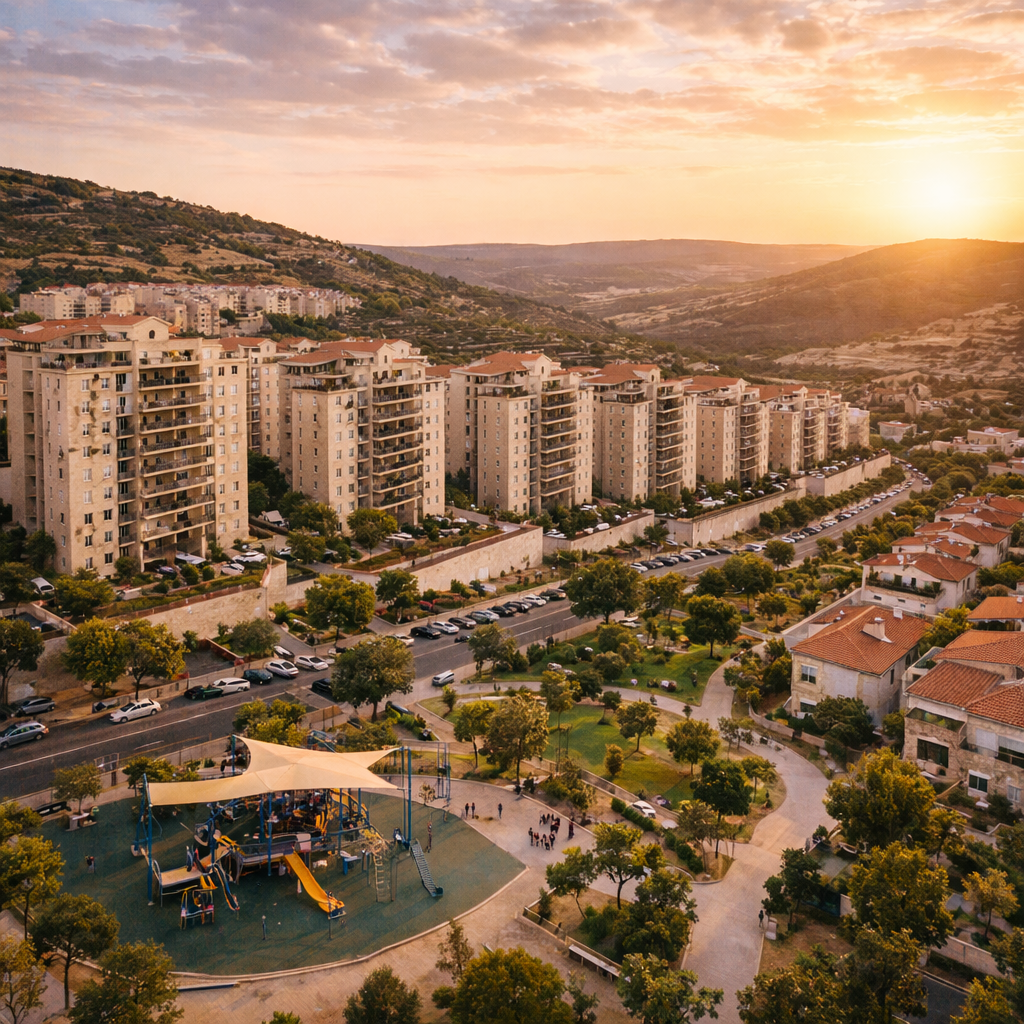
In 1996, when construction workers were just beginning to lay the foundations for what would become one of Beit Shemesh’s most successful Anglo neighborhoods, few could have imagined that this small community of semi-attached cottages would serve as a model for Modern Orthodox aliyah that would influence community building across Israel for decades to come. Nofei Aviv, whose name means “Spring Landscape” in Hebrew, was established in that year as part of the wave of Anglo development in Beit Shemesh that had begun with Sheinfeld in 1991 and would continue with Migdal Hamayim, Nofei Hashemesh, and eventually Ramat Beit Shemesh itself. What made Nofei Aviv distinct from the beginning was its focus on creating not just housing but a genuine kehilla, a community built around a central synagogue and shared values, where families making aliyah from English-speaking countries could maintain their religious and cultural identity while integrating into Israeli life.
The first residents of Nofei Aviv moved into their homes in the fall of 1996, arriving at a moment when Beit Shemesh was just beginning its transformation from a struggling development town into a magnet for religious Anglo immigrants. The neighborhood was conceived as a planned community for Modern Orthodox families, specifically those from the United States, Canada, the United Kingdom, South Africa, and Australia who wanted a suburban lifestyle in Israel with private homes, gardens, and a strong sense of community. The developers understood that for this population, the synagogue would be the heart of communal life, and so from the very beginning, plans were made to build a central beit knesset that would serve not just as a place of prayer but as the organizing principle around which the entire community would cohere.
In those early days, when there were only a handful of families in the neighborhood, they started out davening in people’s homes. This intimate beginning created strong bonds among the founding families, who shared the experience of being pioneers in building something new. As more families moved in and they outgrew people’s living rooms, they created a large tent-like structure in the middle of the community that functioned as a makeshift shul during good weather. One can only imagine those early Shabbatot, families gathering under canvas with the Judean hills visible in every direction, the sound of children playing in Hebrew and English, the pioneering spirit of creating a kehilla from scratch infusing every prayer and kiddush.
The permanent synagogue building, which would become known as Beit Knesset Feigenson, was completed in September 2000, four years after the community’s founding. The completion of the shul marked a turning point, transforming Nofei Aviv from a collection of families into an established community with a permanent home for communal life. Located at the corner of Rehov HaShoshan and Rehov HaNarkis, the beautiful shul building became what residents call “the heart of our community,” and it has remained so for the past two and a half decades.
From the beginning, Beit Knesset Feigenson distinguished itself by embracing diversity within the Modern Orthodox world. The shul is a melting pot that houses both Ashkenazi and Sephardi minyanim, acknowledging the reality that the Jewish people come from many different traditions and that unity doesn’t require uniformity. This dual minyan structure means that families from different backgrounds can all feel at home in the same community, praying according to their own customs while sharing a common beit midrash, social hall, and communal institutions. The shul’s membership grew by leaps and bounds through the years, eventually reaching over 150 families.
The leadership of Beit Knesset Feigenson has been crucial to its success and to the character of Nofei Aviv as a whole. Rabbi Eliezer Schenkolewski has served as the rav of the kehilla, bringing Torah scholarship, pastoral sensitivity, and community-building vision to his role. Rabbi Schenkolewski represents the kind of engaged rabbinic leadership that Modern Orthodox communities in America take for granted but that is relatively rare in Israel, where most neighborhoods have a city-appointed rav who serves an entire area rather than being intimately connected to a specific congregation. His presence has made Nofei Aviv attractive to families who want the American model of a rabbi who knows every family, is available for questions and guidance, and sets the spiritual tone for the community.
Beyond prayer services, Beit Knesset Feigenson offers youth activities, lectures, events, shiurim for both men and women, and numerous programs that bring the community together. The vaad of the shul organizes initiatives like communal Sefer Tehillim programs where families take turns completing the entire book of Psalms, blood drives in partnership with health authorities, and countless chesed projects that serve both the Nofei Aviv community and the broader Beit Shemesh area. This multi-faceted approach to communal life, combining Torah learning, acts of kindness, social connection, and spiritual growth, has created a warmth and cohesiveness that newcomers immediately sense when they visit.
The housing in Nofei Aviv consists primarily of semi-attached duplex cottages with front, back, and side gardens. This housing type has proven extraordinarily popular with Anglo families, offering the suburban feel that many grew up with in America or England while being more affordable than fully detached homes. Each cottage typically has outdoor space on multiple sides, allowing for sukkot, gardens, outdoor play areas for children, and that precious commodity in Israel: privacy. The duplex format means families have neighbors with whom they share a wall, creating natural opportunities for friendship and community while still maintaining separate households.
The gardens that come with these cottages have become defining features of life in Nofei Aviv. Families plant fruit trees, grow vegetables, create flower beds, and build playgrounds for their children. On warm evenings, you can walk through the neighborhood and see families eating dinner outside, children running between yards, neighbors chatting over fences. The outdoor space also means that hosting large Shabbat meals or simchas is easier than in apartments, and the culture of hospitality that characterizes the community is facilitated by housing that makes entertaining manageable even with limited means.
Throughout the community, you will find many beautiful parks with playgrounds. These parks serve multiple functions in Nofei Aviv life. They are gathering places where mothers bring young children during the day, where families congregate after davening on Shabbat morning, where teenagers hang out in the evenings, and where community events like lag b’Omer celebrations or Chanukah parties take place. The parks are well-maintained and carefully designed, with modern play equipment, shaded areas, benches for adults, and green spaces for ball games and running around. They contribute to the family-friendly atmosphere that makes Nofei Aviv so appealing to families with children.
The demographic composition of Nofei Aviv tells an important story about the success of Anglo aliyah to Beit Shemesh. The neighborhood has approximately 150 families, and Anglos make up about 80% of the population. This high percentage of English speakers creates the “soft landing” that many families making aliyah desire, a place where they can hear their native language, find people who understand the cultural references and challenges of transition, and build friendships with others going through similar experiences. At the same time, the 20% Israeli population ensures that the neighborhood is not completely isolated from Hebrew-speaking society, providing opportunities for cultural exchange and integration.
The residents of Nofei Aviv are predominantly Modern Orthodox or Dati Leumi in their religious orientation. This means they take both Torah observance and secular education seriously, they value engagement with the broader world, many of the men and women have professional careers, and army service is generally expected for the children. The community includes many young professionals who made aliyah from English-speaking countries, working in fields like high-tech, medicine, education, law, accounting, and other professions that are portable across borders. The combination of good transportation connections to both Jerusalem and Tel Aviv, a strong community support system, and quality schools makes it possible for these families to maintain professional careers while raising children in a Torah environment.
Education has always been a priority in Nofei Aviv, and families have access to a range of schools serving different educational philosophies within the Modern Orthodox world. Children from the neighborhood attend schools in Nofei Aviv itself, in neighboring Sheinfeld and Nofei Hashemesh, and in various parts of Ramat Beit Shemesh. The ability to choose from multiple educational options while remaining within the same geographic area has been important for families whose children may need different learning environments or whose educational philosophy may shift over time.
Nofei Aviv’s location contributes significantly to its appeal. The neighborhood is situated in the Givat Sharett area of Beit Shemesh, positioned between the older Sheinfeld neighborhood and the newer developments that would eventually become Nofei Hashemesh and parts of Ramat Beit Shemesh. This positioning gives residents easy access to shopping areas, including the Sheinfeld shopping center with its American products and the various malls and commercial areas throughout Beit Shemesh. There are bus stops throughout the neighborhood providing public transportation to Jerusalem, Tel Aviv, and other destinations. The centrality means families aren’t isolated on the outskirts but rather are connected to all the amenities and opportunities that Beit Shemesh offers.
The broader context of Beit Shemesh in the 1990s helps explain why Nofei Aviv emerged when it did and why it succeeded so dramatically. The city was in the midst of massive growth, transitioning from about 30,000 people to what would eventually become over 160,000. Government policy encouraged development in Beit Shemesh as an alternative to building in Judea and Samaria and as a way to absorb the overflow population from overcrowded Jerusalem. The arrival of Russian immigrants in the early 1990s had begun to change the city’s character, and the construction of neighborhoods like Sheinfeld and Nofei Aviv represented a parallel influx of Anglo immigrants who would ultimately transform Beit Shemesh into Israel’s premier destination for English-speaking religious families.
The 1990s were also a time when Anglo aliyah was increasing but the infrastructure to support it was still being built. Nefesh B’Nefesh would not be founded until 2002, and the systems that now make aliyah relatively straightforward were not yet in place. Communities like Nofei Aviv served a crucial function, providing landing pads where families could make aliyah with the confidence that they wouldn’t be alone, that there would be English speakers to help navigate bureaucracy, that their children would have friends who understood what it meant to be American and Israeli simultaneously, and that they could maintain their religious and cultural identity while building lives in Israel.
The community building efforts in Nofei Aviv extended beyond the synagogue to encompass numerous chesed organizations and volunteer initiatives. Residents organized gemachim for lending everything from baby equipment to medical supplies, participated in local Hatzalah emergency medical response teams, contributed to food distribution programs for families in need, and created support networks for everything from new mothers to bereaved families. This culture of mutual aid reflected both the American volunteer tradition that many residents brought with them and the Jewish imperative to care for one’s community.
Nofei Aviv residents have also been active in the broader Beit Shemesh community, working to promote coexistence between different sectors and to advocate for the needs of the Modern Orthodox population. Sharon Raanan, a Nofei Aviv resident, formed the Committee Against Violence in the summer of 2011 after a number of negative incidents occurred in the city, particularly around tensions between Haredi and Modern Orthodox communities. Her willingness to organize and speak out reflected a broader pattern in Nofei Aviv and the Anglo community generally: a sense that active citizenship and community engagement are responsibilities, not just options.
The experience of living in Nofei Aviv has been captured in countless testimonials from residents over the years. They speak of the beauty of walking to shul on Shabbat morning through tree-lined streets, the joy of spontaneous kumzitzes in someone’s garden on warm evenings, the comfort of having neighbors who can relate to the challenges of navigating Israeli systems, the pleasure of their children playing together in the parks and attending school together. They also speak of the gradual process of integration into Israeli life, of Hebrew improving, of friendships forming with Israeli neighbors, of feeling increasingly at home in a country that once felt foreign.
For families considering aliyah or looking to relocate within Israel, Nofei Aviv offers a compelling package. The housing provides suburban comfort with private outdoor space at prices lower than comparable properties in Jerusalem or Tel Aviv. The community is established and welcoming, with systems in place to help newcomers acclimate. The religious orientation is clearly defined as Modern Orthodox, allowing families to find others who share their values and approach to Jewish life. The location provides easy access to employment centers and to the full range of services and amenities that a growing city like Beit Shemesh offers. And the track record of success, with hundreds of families who have made Nofei Aviv their home and raised children here who have grown into contributing members of Israeli society, provides confidence that the model works.
As Beit Shemesh has continued to grow and change over the nearly three decades since Nofei Aviv was founded, the neighborhood has maintained its distinct character while adapting to new realities. The demographics of the city have shifted dramatically toward the Haredi population, and some neighborhoods that were originally planned as mixed have become exclusively ultra-Orthodox. But Nofei Aviv, along with Sheinfeld and other established Modern Orthodox areas, has remained true to its founding vision. The presence of these stable, thriving Modern Orthodox communities has been crucial for maintaining religious diversity in Beit Shemesh and ensuring that families across the Orthodox spectrum can find appropriate communities.
The success of Nofei Aviv has influenced community development across Israel. The model of creating a planned neighborhood with private homes and gardens centered around a strong synagogue with engaged rabbinic leadership has been replicated in various forms in places like Nofei Hashemesh, parts of Ramat Beit Shemesh, and even in newer communities outside Beit Shemesh entirely. Real estate developers and community organizers learned from Nofei Aviv that Anglo families will come in significant numbers if you build communities that meet their specific needs and values, and this lesson has shaped the landscape of Anglo aliyah ever since.
Twenty-nine years after its founding, Nofei Aviv stands as one of the success stories of Modern Orthodox aliyah to Israel. It has proven that it’s possible to create vibrant, sustainable communities of English speakers that maintain their cultural and religious identity while integrating into Israeli life. The children who grew up in Nofei Aviv are now young adults, many serving in the army, attending university, starting careers, and establishing families of their own. Some have stayed in Beit Shemesh, some have moved to other parts of Israel, and some have returned to America, but all carry with them the experience of growing up in a community that successfully bridged two worlds.
For the 150 families who call Nofei Aviv home today, the neighborhood continues to offer what it has always provided: a place to live a Torah life in comfortable surroundings, a community of like-minded families supporting each other through the challenges and celebrations of life, and the opportunity to be part of the great adventure of living in the Land of Israel. As they gather in Beit Knesset Feigenson for Shabbat davening, as their children play together in the parks, as they share meals in gardens surrounded by fruit trees they planted years ago, they are living the vision that the founders had nearly three decades ago, a vision of an Anglo community in Israel that works.