Neve Tzedek | Anglo Community
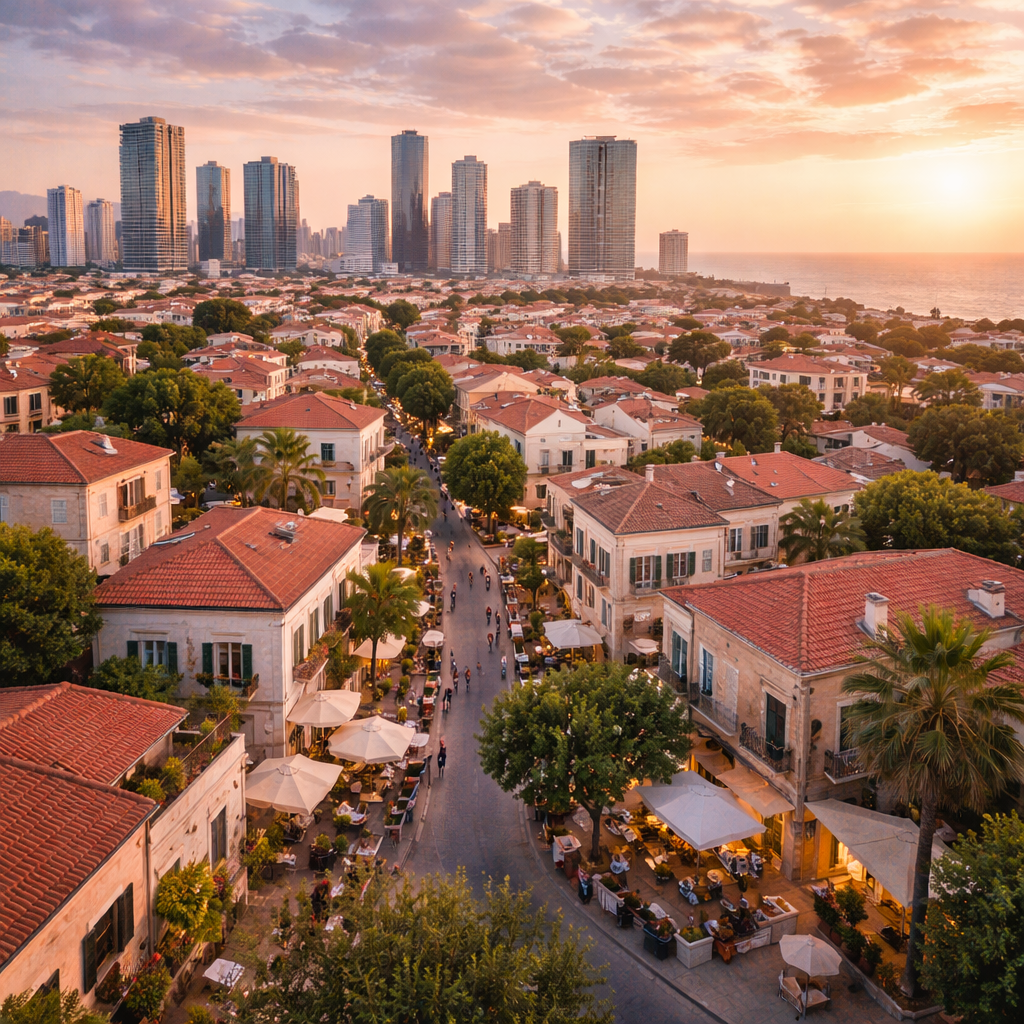
Neve Tzedek holds a special place in Tel Aviv’s urban fabric, representing not just a neighborhood but a piece of living history that has transformed from the city’s humble beginnings into one of its most desirable and expensive addresses. The name itself means “Oasis of Justice,” and while the neighborhood today is more closely associated with boutique hotels and art galleries than with any particular notion of justice, it retains a romantic charm that makes it irresistible to a certain type of resident, including those English-speaking immigrants who can afford its premium prices and appreciate its unique character.
Founded in eighteen eighty-seven, Neve Tzedek predates Tel Aviv itself by more than two decades. It was established as the first Jewish neighborhood built outside the ancient port city of Jaffa, a bold experiment in creating a modern Jewish community beyond the cramped, overcrowded confines of the old city. The founders, a group of idealistic families, built small stone houses along narrow streets, creating an intimate urban village that stood in stark contrast to both the Arab architecture of Jaffa and the European-style boulevards that would later characterize central Tel Aviv. These original structures, with their distinctive architecture featuring arched windows, interior courtyards, and thick stone walls, give Neve Tzedek its unmistakable aesthetic today, though many have been painstakingly renovated and converted into expensive residences and commercial spaces.
Walking through Neve Tzedek today feels like entering a different Tel Aviv entirely, one that has been carefully preserved and curated to maintain its historic character while accommodating contemporary luxury. The main thoroughfare, Shabazi Street, runs through the heart of the neighborhood and has become something of a destination in itself. On any given day, but especially on weekends, you’ll find it packed with visitors browsing boutique shops selling handmade jewelry, designer clothing, artisanal home goods, and the kind of carefully curated merchandise that commands premium prices. Cafes and restaurants line the street, their outdoor seating spilling onto the narrow sidewalks, creating a perpetually social atmosphere where seeing and being seen is part of the experience. The clientele is international, stylish, and clearly comfortable spending money, which gives the area a cosmopolitan feel that appeals to newly arrived English speakers who want to live somewhere that feels sophisticated and worldly.
For Anglos considering Neve Tzedek, the neighborhood represents a particular lifestyle choice. This is not where young families with multiple children typically settle, though you’ll certainly see some. The housing stock consists primarily of renovated historic buildings converted into apartments, often small by modern standards, with high ceilings, original architectural details, and price tags that reflect both the desirability of the location and the costs of historical preservation. Many properties have been converted into two or three-story townhouse-style residences, offering the rare luxury of vertical living space in a city dominated by apartment buildings. These homes often feature rooftop terraces, interior courtyards, and exposed stone walls that create an aesthetic somewhere between Mediterranean villa and urban loft.
The demographic that gravitates toward Neve Tzedek includes successful professionals, artists, creatives, and empty nesters who prioritize location and lifestyle over square footage. For English-speaking immigrants, particularly those arriving from major metropolitan areas like London or New York, Neve Tzedek offers a familiar urban village atmosphere reminiscent of neighborhoods like Greenwich Village or Notting Hill. You can walk everywhere, the streets are pedestrian-friendly, and there’s a genuine sense of community among residents who chose this neighborhood specifically for its character rather than out of practical necessity or affordability concerns.
The cultural life of Neve Tzedek is one of its major draws. The Suzanne Dellal Centre for Dance and Theatre, housed in restored school buildings in the heart of the neighborhood, serves as a major cultural institution not just for the area but for Tel Aviv as a whole. It hosts performances by international dance companies, contemporary theater productions, and various cultural events throughout the year. The complex itself, with its distinctive orange-painted buildings surrounding a central plaza, functions as a gathering place for the neighborhood, where residents meet for coffee before or after performances and where the plaza occasionally transforms into an outdoor venue for concerts or festivals. For English speakers interested in the arts, having this level of cultural programming literally on your doorstep is a significant advantage.
The neighborhood’s proximity to both the sea and to central Tel Aviv gives it exceptional walkability and accessibility. You can reach the beach in about fifteen minutes on foot, strolling along the newly developed promenade that runs from Neve Tzedek north toward the Old North. This path, popular with joggers, cyclists, and evening walkers, provides stunning sunset views and connects residents to the broader Tel Aviv beach culture without requiring them to live directly on the crowded, tourist-heavy beachfront. In the other direction, the hip and increasingly gentrified Florentin neighborhood sits just across the Eilat Street boundary, offering a grittier, more youthful alternative to Neve Tzedek’s polished charm, while central Tel Aviv and all its commercial and business infrastructure lies just a short walk or bike ride to the north.
The food scene in and around Neve Tzedek reflects both its historic roots and its contemporary sophistication. You’ll find traditional Middle Eastern cuisine alongside modern Israeli fare, European-style bistros next to trendy vegan cafes, and everything from casual hummus joints to high-end restaurants where reservations are essential and meals can easily run into the hundreds of shekels per person. The neighborhood’s small size means that locals quickly develop their favorite spots, creating a sense of routine and familiarity even in a city as dynamic and ever-changing as Tel Aviv. For English speakers, many establishments cater to an international clientele and staff often speak excellent English, making dining out feel accessible even before your Hebrew reaches conversational fluency.
Living in Neve Tzedek means accepting certain practical limitations. The historic nature of the buildings means that many lack modern amenities like elevators, air conditioning systems may be retrofitted rather than built-in, and storage space is often limited. Parking is notoriously difficult, with narrow streets that were designed for pedestrians and horses rather than automobiles, and most buildings lack private parking facilities. Many residents either forgo car ownership entirely, relying on walking, biking, and public transportation, or they pay premium rates for monthly parking spots in nearby lots. The cost of living generally is high, not just for housing but for everything from groceries to dry cleaning, as businesses in the area price their services to match the neighborhood’s affluent demographic.
The community dynamics in Neve Tzedek are interesting for English speakers to navigate. Unlike areas like the Old North where Anglo immigrants form a visible, concentrated community, Neve Tzedek’s international residents are more integrated into a broader mix of wealthy Israelis, successful immigrants from various countries, and long-time residents who bought properties decades ago before prices skyrocketed. The neighborhood doesn’t have the same kind of established Anglo infrastructure you’d find in other parts of Tel Aviv, no particular synagogues known for their English-speaking congregations or community centers specifically catering to immigrants. Instead, the social life revolves around the cultural institutions, the cafes and restaurants, and the informal networks that develop among neighbors who cross paths regularly in such a small, walkable area.
For families with children, Neve Tzedek presents challenges. The neighborhood has limited playground space and few family-oriented amenities. Schools are not located within the neighborhood itself, requiring children to travel to other parts of Tel Aviv for their education. The streets, while charming, are narrow and heavily trafficked with pedestrians and vehicles sharing limited space, which can make parents nervous about letting younger children roam freely. The demographic skews older and more professional, meaning children growing up here might have fewer peers in the immediate neighborhood, though of course Tel Aviv as a whole offers extensive educational and recreational opportunities for kids.
What Neve Tzedek offers instead is a romantic notion of urban living, a sense of residing in a place with genuine history and character rather than in one of the anonymous apartment towers that dominate much of modern Tel Aviv. For English speakers who have achieved professional success, who perhaps are past the stage of raising young children or who never planned to have large families, who value walkability and culture and the aesthetic pleasure of living somewhere beautiful, Neve Tzedek represents an ideal. You’re living in what feels like a village while actually being in the heart of a major city, enjoying the intimacy of knowing your local shopkeepers and cafe owners while having access to everything Tel Aviv offers just minutes away.
The transformation of Neve Tzedek over the past few decades mirrors Tel Aviv’s broader evolution from a modest, socialist-minded city into a prosperous, globally connected metropolis. The neighborhood that was once working class and somewhat neglected has become a symbol of successful urban preservation and gentrification, depending on your perspective. For the English-speaking immigrants who choose it today, these historical layers add meaning to daily life. You’re not just living in an apartment, you’re inhabiting a piece of Tel Aviv’s founding story, walking streets that existed before the state itself, living in buildings that have weathered everything from Ottoman rule through British mandate through independence and all the wars and transformations that followed.
The lifestyle in Neve Tzedek is decidedly secular and liberal, mirroring Tel Aviv’s general character but perhaps even more so given the artistic and professional bent of its residents. Shabbat here is marked more by leisurely brunches at packed cafes than by religious observance, though of course individuals practice as they choose. The neighborhood’s proximity to the nightlife of central Tel Aviv and Florentin means that weekend nights can be quite lively, with visitors streaming through to reach bars and clubs, which depending on your perspective is either an exciting pulse of urban energy or an annoying intrusion into residential peace.
Ultimately, Neve Tzedek attracts English speakers who are choosing Israel not primarily for ideological reasons or for the experience of living in a specifically Jewish community, but rather because they want to live in Tel Aviv specifically, and within Tel Aviv, they want the most aesthetically pleasing, culturally rich, historically significant neighborhood available to them. They’re willing to pay premium prices and accept certain inconveniences in exchange for the privilege of saying they live in Neve Tzedek, of having that address, of experiencing daily life in streets that feel curated and special. It’s a choice that reflects a particular set of priorities and values, one that appeals to those who see their immigration to Israel as part of a larger cosmopolitan life journey rather than as a return to roots or a fulfillment of religious destiny, though of course these motivations can coexist in complex ways for different individuals making their way in this ancient-modern neighborhood.