Be’er Ya’akov | Anglo Community
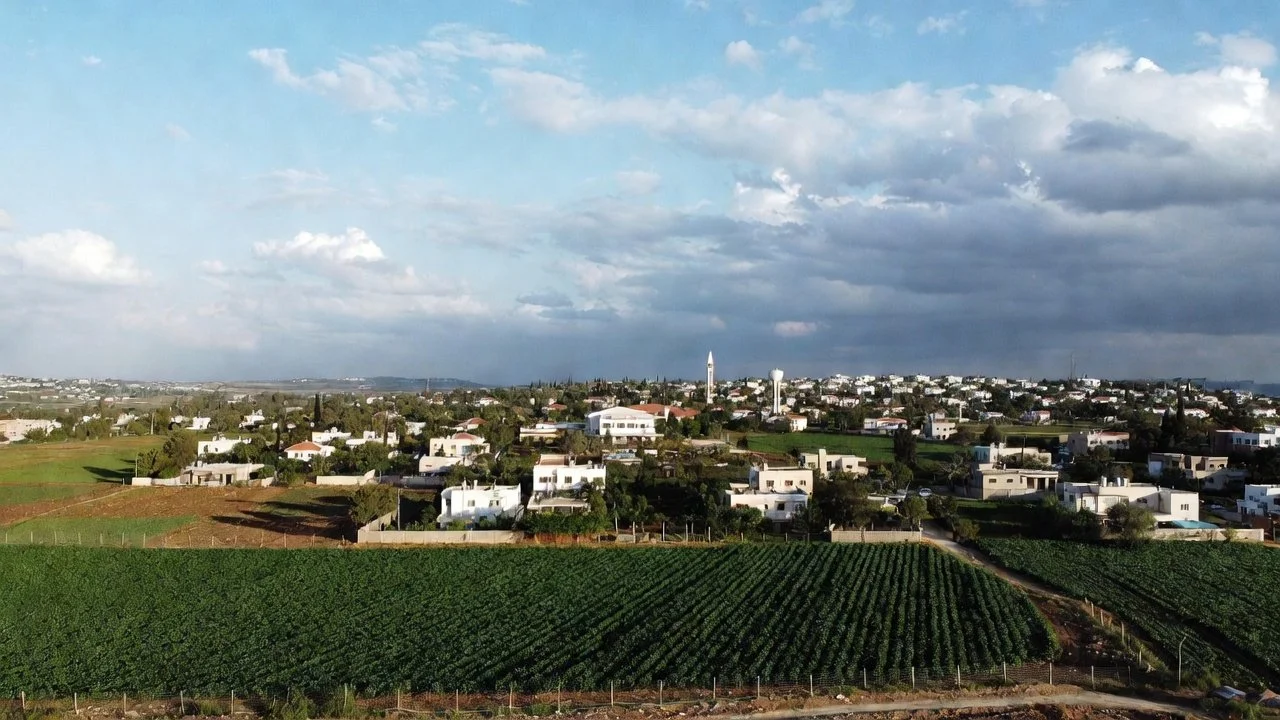
Welcome to this exploration of what it's really like to live in Be'er Ya'akov as an English-speaking immigrant. Whether you're seriously considering aliyah or just trying to figure out where this place even is on the map, I want to give you an honest picture of daily life in one of central Israel's most surprising residential stories.
Be'er Ya'akov is a city most Anglo olim have never heard of—and that's precisely what makes it interesting. Founded in 1907 by Mountain Jews from Dagestan alongside Ashkenazi pioneers, it spent most of the twentieth century as a sleepy agricultural town of a few thousand residents, quietly overshadowed by its larger neighbors. Today it's undergoing one of the most dramatic transformations in Israeli real estate: cranes dot the skyline, the population has tripled in fifteen years to roughly thirty-five thousand, and municipal plans envision eighty-five thousand residents by 2040. For English-speaking immigrants watching the Israeli housing market with growing despair, Be'er Ya'akov represents something rare—a central Israel address at a price point that doesn't require a second mortgage or a generous inheritance.
Let me start with the fundamental question: where is this place, and why should you care?
Be'er Ya'akov sits about twenty kilometers southeast of Tel Aviv, wedged between Rishon LeZion to the west and Ramla to the east. It's part of the Gush Dan metropolitan area—central Israel, full stop. This matters enormously. Unlike Ashkelon or Be'er Sheva, which require genuine lifestyle adjustments around distance, Be'er Ya'akov keeps you firmly in the orbit of everything the center of the country offers. Ben Gurion Airport is fifteen minutes away by car. Rishon LeZion's shopping and entertainment are a seven-kilometer drive. Tel Aviv is reachable in twenty-five minutes by train on a good day. You're not moving to the periphery. You're finding a back door into the center.
Now let's talk about who actually lives here—because the Anglo question is worth addressing head-on.
Be'er Ya'akov has essentially no established Anglo community. Let me be blunt about this. There's no AACI branch. There are no Anglo synagogues. You won't find English-language programming or a ready-made social network of American and British immigrants waiting to absorb you. The city's demographic makeup reflects its history: veteran Israeli families with roots going back generations, a significant Caucasian Jewish community descended from the original Dagestani founders, immigrants from the former Soviet Union and Ethiopia, a meaningful Haredi population clustered around the well-known Yeshivat Be'er Ya'akov, and an influx of young secular and traditional Israeli families drawn by affordable new construction. If your aliyah plan depends on an Anglo support structure, Be'er Ya'akov will not provide one. If your aliyah plan involves genuine Israeli integration from day one, this city will throw you into the deep end—and many people swim beautifully.
Let's talk about the real draw: housing costs in central Israel that actually make sense.
A three- to four-room apartment in Be'er Ya'akov's newer developments will cost you roughly one point eight to two point eight million shekels—that's approximately five hundred thousand to seven hundred eighty thousand dollars. A similar apartment in neighboring Rishon LeZion runs significantly more, and comparable space in Tel Aviv would cost you double or triple. The gap is shrinking as Be'er Ya'akov's reputation catches up with its development—prices have risen sharply over the past decade, and the city recorded some of the country's highest percentage increases in property values. But there's still genuine value here, particularly in the new neighborhoods being built on land freed up by the relocation of the Tzrifin military base. You're getting modern construction, often with balconies and storage rooms, in buildings with elevators and parking—at prices that central Israel hasn't offered in years.
Rentals tell a similar story. A three- to four-room apartment runs roughly three thousand five hundred to five thousand five hundred shekels monthly. For a family accustomed to the eight- to twelve-thousand-shekel range in Tel Aviv's suburbs, this represents a transformative difference in monthly cash flow.
So what's the catch? There's always a catch.
Be'er Ya'akov is a city in transition, and transition means mess. Construction is everywhere. The infrastructure is playing catch-up with the population growth. Streets that served seven thousand people are now handling thirty-five thousand. New schools are being built—the city plans for sixty to seventy daycare centers and at least six new elementary schools—but some haven't materialized yet. The old town center feels distinctly different from the gleaming new neighborhoods: modest low-rise buildings, a traditional Israeli small-town atmosphere that's charming to some and underwhelming to others. There's an honesty gap between the aspirational vision of eighty-five thousand residents with metro connections and business districts, and the current reality of a city still figuring out its new identity.
The commute question is where Be'er Ya'akov genuinely shines compared to other affordable alternatives.
The train station offers direct service to Tel Aviv in about twenty-five minutes. By bus, you're looking at twenty to thirty-five minutes depending on traffic and routing. By car, it's roughly twenty-five to forty-five minutes to central Tel Aviv, traffic-dependent. These numbers are transformative compared to Ashkelon's sixty-minute train ride or Be'er Sheva's hour-plus. Some residents report reaching central Tel Aviv faster than friends who live in northern Tel Aviv neighborhoods and battle city traffic. Highway 431 and Route 44 provide solid road connections. And there's genuine infrastructure investment on the horizon: a planned metro line connecting Be'er Ya'akov through Rishon LeZion to greater Tel Aviv, with work projected to begin in the coming years. If that materializes—and in Israel, infrastructure timelines should always be taken with generous skepticism—Be'er Ya'akov's connectivity advantage will only grow.
Let me describe what daily life actually feels like, because the texture matters.
Be'er Ya'akov is not a beach city or a cultural capital. It's a family town. Morning routines involve getting kids to school, navigating construction detours, and heading to the train station or the car. The new neighborhoods are pleasant—clean, planned, with playgrounds and green spaces between the residential towers. The old town has a different character entirely: smaller buildings, established trees, neighbors who've known each other for decades, the kind of Israeli community warmth that new developments haven't yet replicated. Shopping is adequate but not exciting—there are supermarkets, local stores, and basic services, but serious shopping or dining means driving to Rishon LeZion or further afield.
Weekend life for families revolves around the parks and green spaces, visits to nearby cities, and the kind of quiet domestic rhythm that families with young children often crave but can't afford in more glamorous locations. Be'er Ya'akov won't give you a beachfront promenade or café culture. It gives you space, relative quiet, and a central location from which everything else is reachable.
Schools deserve specific attention for families considering the move.
The city is investing heavily in education—new elementary schools are being built to serve the growing population, and there are currently about ten operating. The well-known Hannah Szenes High School serves the area. For the Haredi community, Yeshivat Be'er Ya'akov is a nationally recognized institution. However, the Anglo-oriented schools that attract English-speaking families to Jerusalem, Ra'anana, or Modi'in don't exist here. There are no bilingual programs marketed to Anglo olim. Your children will attend Hebrew-language schools where they may be the only English speakers in their class. For some families, this accelerates integration beautifully. For others, particularly those with older children making aliyah, this immersion can be overwhelming. Know your family's tolerance for this before committing.
Religious life in Be'er Ya'akov is diverse but follows particular patterns.
The city has a significant Haredi presence, anchored by the yeshiva, which gives certain neighborhoods a distinctly religious character. There's also a large traditional and secular population, particularly in the newer developments. The Caucasian Jewish community maintains its own synagogues and traditions. What you won't find is an Anglo-style Modern Orthodox community—no Carlebach minyanim with Americans, no English-speaking rabbi giving shiurim aimed at olim. If you're dati leumi and making aliyah, you'll integrate into existing Israeli religious frameworks rather than finding an Anglo bubble. This can be deeply rewarding or deeply lonely, depending on your Hebrew level and social flexibility.
The Tzrifin story is worth understanding because it shapes Be'er Ya'akov's entire future.
Tzrifin was a massive military base established during the British Mandate, occupying thousands of dunams adjacent to Be'er Ya'akov. When the IDF began relocating its bases to the Negev, this land became available for civilian development. The municipality fought for over a decade to secure its share of this land, and the resulting development plans are what's driving Be'er Ya'akov's transformation. Thousands of new residential units, commercial space, public institutions, and eventually a metro connection—all flowing from this single land transfer. For buyers, this means the city's growth trajectory has a concrete foundation. It's not speculative development dependent on market whims; it's systematic expansion backed by approved master plans and government investment. The question isn't whether Be'er Ya'akov will grow, but how smoothly it manages that growth.
Healthcare is actually a point in the city's favor. Yitzhak Shamir Medical Center, formerly known as Assaf Harofeh Hospital, is located right at the edge of Be'er Ya'akov near Tzrifin. Having a major hospital essentially in your city is a genuine quality-of-life advantage that many Israeli towns lack.
Here's my bottom-line assessment: Be'er Ya'akov is a city for people who think strategically about aliyah rather than romantically.
It won't appear on any Anglo immigrant's dream board. It doesn't have Jerusalem's spiritual gravity, Tel Aviv's creative energy, or even Ashkelon's Mediterranean beauty. What it offers is a calculated proposition: central Israel location, genuinely affordable housing in modern construction, a reasonable commute to anywhere in Gush Dan, and a trajectory of growth that should protect your real estate investment. You're buying into a city at an inflection point—past the speculative stage, deep into actual construction, but before prices fully converge with neighboring Rishon LeZion.
If you're a young family priced out of the Tel Aviv suburbs who can work remotely or commute by train, if your Hebrew is functional or you're committed to making it functional, if you're comfortable building community from scratch rather than plugging into an existing Anglo framework, if you care more about square meters and monthly savings than café culture and beachfront living—then Be'er Ya'akov offers something almost no other central Israel location can match at this price point.
But Be'er Ya'akov is not for everyone. If you need Anglo community infrastructure, look to Ra'anana, Modi'in, or Jerusalem. If you want beauty and character, consider Zichron Ya'akov or even Ashkelon. If nightlife, restaurants, and cultural programming are non-negotiable, you already know Tel Aviv is your answer. If you're making aliyah later in life and social isolation is a genuine risk, a city without English-speaking networks is a serious gamble.
The decision comes down to a simple question: are you optimizing for community or for value? Most Anglo olim understandably optimize for community, and they're right to do so—the early years of aliyah are hard enough without linguistic and social isolation. But for those with strong Hebrew, remote work flexibility, or simply a willingness to build Israeli life on Israeli terms, Be'er Ya'akov offers something remarkable: a home in the center of the country, in a city that's genuinely becoming something new, at a price that leaves room to actually enjoy the life you're building.