Moshava | Anglo Community
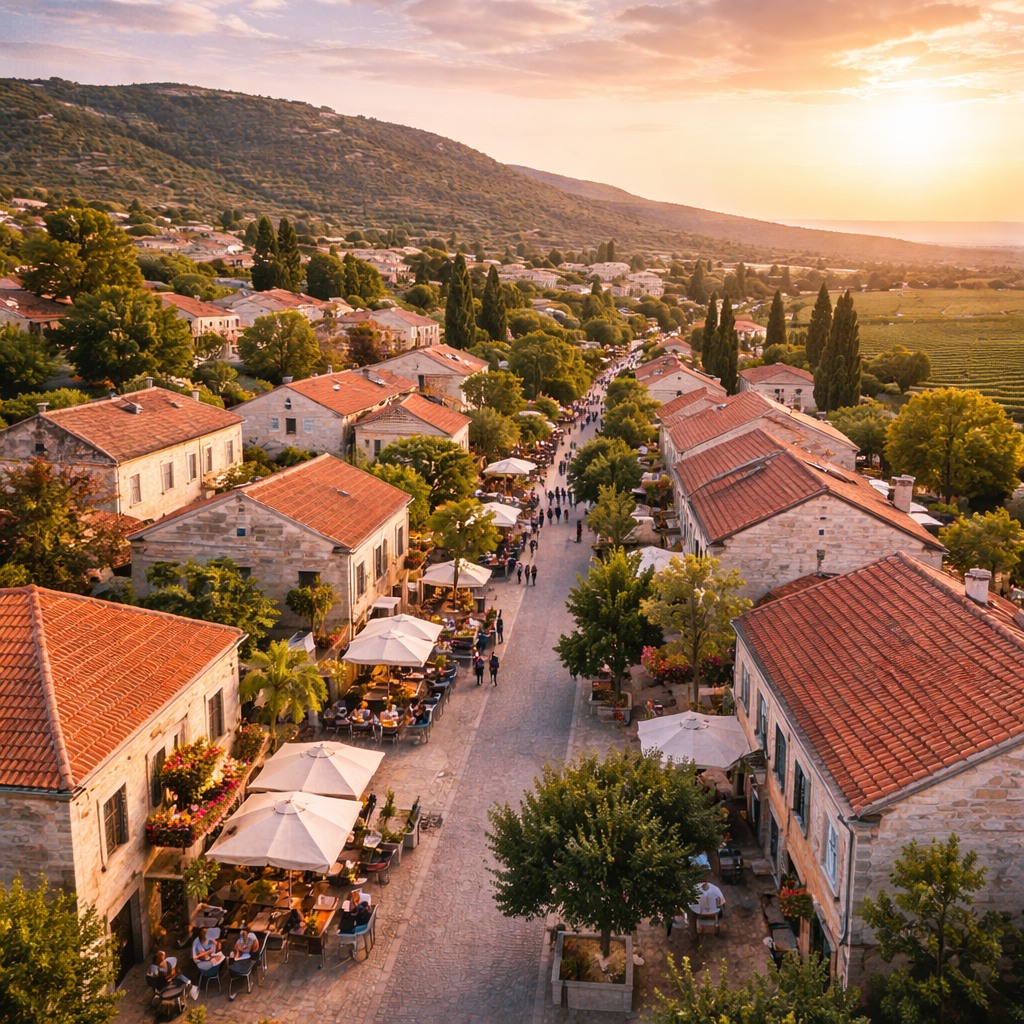
When you arrive in Zichron Yaakov and people talk about “the Moshava,” they’re referring to something far more than just another neighborhood. They’re speaking about the original settlement itself, the historic core that gave birth to this entire town perched high on the southern slopes of Mount Carmel. The word “moshava” means agricultural settlement in Hebrew, and this particular one has a story that stretches back to December 1882, when one hundred determined Romanian Jewish pioneers stepped onto this land with little more than hope and an unshakeable belief in returning to their ancestral homeland.
These pioneers were part of the Hibbat Zion movement, those early Zionist idealists who weren’t content to simply dream about a Jewish homeland but were willing to leave comfortable lives in Europe to create it with their own hands. They purchased two separate plots of land about five kilometers apart, one on Zamarin Hill containing six thousand dunams, and another smaller parcel of five hundred dunams in Tantura. The land they chose wasn’t particularly welcoming at first. There was a small spring on the mountainside, the settlers’ first water source, springing from an antique well with stone arches, but otherwise they faced tremendous challenges trying to establish agriculture in unfamiliar terrain.
The early years were desperately difficult. The Romanian settlers knew little about farming in this climate, and their initial attempts at agriculture ended in repeated failures. By 1883, the fledgling settlement was on the verge of collapse, its residents facing starvation and despair. Then came a turning point that would transform not just this settlement but Jewish agricultural development throughout the land. Baron Edmond James de Rothschild, the French Jewish banker whose philanthropic vision shaped early Zionist settlement, learned of their plight and decided to take the struggling community under his patronage.
The Baron did far more than simply provide financial assistance, though that alone would have been lifesaving. He sent planners from France who completely reimagined how the settlement should be organized. They designed and allotted housing lots along the main road specifically for the use of the farmers. Each lot followed a distinctive pattern that you can still observe today if you walk through the old section: a house facing the street, then a long interior courtyard stretching behind it, and finally a rear building for storing agricultural implements and tools. The architecture reflected French influences with its tiled roofs and painted wooden windows, giving the moshava a European character that blended with its Middle Eastern surroundings.
The Baron also renamed the settlement Zichron Yaakov, meaning “Memorial of Jacob,” in honor of his father, James Mayer de Rothschild. The Hebrew name for James is Yaakov, so this was both a family memorial and a way of connecting the settlement to the biblical patriarch Jacob. Each farmer was given a salary and placed under the direction of Elijah Shaid, who served as the Baron’s clerk and local administrator. This paternalistic system had its tensions, as settlers chafed under outside control, but it provided the stability and resources needed for survival.
Perhaps the Baron’s most transformative contribution came in agriculture itself. He brought vintners and agricultural experts from France to teach modern farming methods to the settlers. More importantly, he sent choice French grape vines and instructors to help establish what would become Israel’s wine industry. In 1885, Rothschild helped establish the first winery in the land at Zichron Yaakov, along with a bottling factory. This Carmel Winery became the moshava’s economic foundation and remains operational to this day, one of Israel’s major wine producers. The area around Zichron came to be known colloquially as “wine country,” and wine culture became inseparable from the town’s identity.
At the heart of the moshava, the Baron commissioned the construction of Ohel Yaakov Synagogue, named after his father, to serve as the spiritual center for the community. Sparing no expense, he ensured the edifice would be worthy of the settlement’s ambitions. The synagogue features a majestic ark made of white marble and was completed in 1886. Interestingly, it was positioned at the moshava’s historic intersection rather than at the highest point, which was the custom in other settlements. The building can seat one hundred and fifty men, with equal capacity in the women’s section. A Rosetta window originally set above the entrance door was later replaced by a clock with Hebrew letters, and a local artist created the menorah at the top of the building. Inside, you can still see an original brass Chanukah menorah from the Baron’s time. The synagogue has conducted daily prayer services continuously from 1886 to this very day, making it one of the most historically significant functioning synagogues in the country.
The main street that the Baron’s planners laid out became known as HaMeyasdim Street, meaning “the Founders’ Street,” and it forms the spine of the historic moshava. Part of this street has been converted into a pedestrian mall, creating what locals call the Midrachov. Walking along it today, you’re literally walking through living history. Stone pavement covers the ground, and the street passes between the moshava’s original houses, some reconstructed, some preserved. Many of these buildings have plaques outside that tell their stories and display photographs of significant historical figures who lived there. Each courtyard that branches off from the main street offers glimpses into how life was organized in those early days, when the area behind each house served as a working farmyard with chickens and agricultural equipment.
The street now bustles with cafes, restaurants, boutique shops selling locally made crafts and jewelry, art galleries, and artists’ studios. But underneath the commercial vibrancy, the historic character remains palpable. The original courtyard layout is still visible, and descendants of the founding families often live in these same properties or nearby, maintaining multi-generational connections to the land their ancestors worked. There’s a palpable sense that you’re not in a museum but in a living community that honors its past while continuing to evolve.
Another crucial piece of infrastructure that the Baron funded was Benjamin’s Pool, or the Binyamin Pool, named after the Baron himself. Built in 1891, it was the first waterworks of its kind in the land and was considered wondrous for both its advanced engineering and architectural beauty. A twelve-horsepower steam engine brought water up from the well below through underground pipes, then gravity piped it to public drinking fountains and to the reflection pool in the center of the moshava. The steam-powered pump marked the beginning of a new era in the country’s development, showing that modern technology could be adapted to meet the needs of agricultural settlement. You can still see this historic water tower at number forty-four HaMeyasdim Street, standing as a testament to the Baron’s commitment to providing modern infrastructure.
The garden in the moshava, known as Tiyul Garden, also came from the Baron’s initiative and represents the first ornamental garden in modern Israel. His clerks began planting it in 1886, starting with trees around the gardener’s house and gradually expanding the area with more trees, shrubs, and flower beds. They dug an ornamental pool in the center and brought goldfish to beautify it. With the Baron’s encouragement, the garden was expanded further and opened to the settlers for their relaxation and pleasure, providing a green oasis amid their hard work.
The moshava wasn’t just about agriculture and peaceful development. It played a crucial role in one of the most dramatic episodes of World War One. This is where Aaron Aaronsohn, a brilliant botanist and agronomist, lived with his family at number forty HaMeyasdim Street. During the war, Aaronsohn, along with his sister Sarah, his brother Alex, and their friend Avshalom Feinberg, founded the Nili spy ring, a Jewish intelligence network that volunteered to spy on Ottoman positions and report them to British agents offshore. The name Nili comes from a Hebrew acronym meaning “the Eternal One of Israel will not lie.”
The Aaronsohn house, now preserved as the Nili Museum, reveals this fascinating chapter of clandestine resistance. Aaron was fighting crop-destroying locust plagues while simultaneously organizing and running his underground intelligence network. In September 1917, the Ottomans caught one of Sarah’s carrier pigeons and cracked the Nili code. They surrounded Zichron Yaakov in October and arrested Sarah and several others. After four days of torture, as they prepared to transport her elsewhere, Sarah requested to be taken home to change her clothes. Once there, she shot herself with a pistol hidden in her bathroom, dying after several days of agony. She had shot herself in the throat, leaving herself unable to speak, to avoid revealing classified information even under further torture. The story of the Nili network and Sarah’s heroism became central to Zichron Yaakov’s identity and remains a powerful narrative of Jewish resistance during the war years.
Another historical figure connected to the moshava was Dr. Hillel Yaffe, whose hospital operated in Zichron Yaakov between 1907 and 1919 and was the only Jewish hospital north of Jaffa during those years. According to his wishes, when he died in 1936, he was buried in Zichron Yaakov. David Ben-Gurion, who would become Israel’s first prime minister, worked as a farm laborer in the moshava for several months in 1910. He noted that at that time, he found several Arab families living in the yards of almost every farmer, reflecting the complex social reality of the period.
Today, when English-speaking immigrants, particularly those following the Dati Leumi or Modern Orthodox path, choose to live in Zichron Yaakov, they often gravitate toward the Moshava neighborhood. This makes sense for several reasons. The area is closest to Ohel Yaakov, the main historic synagogue that still serves as a spiritual center. There’s also Moed synagogue in the area, which has become known as mostly an Anglo Dati Leumi congregation, making it particularly attractive for English-speaking religious Zionist families. Older Dati Leumi immigrants, those averaging around sixty years old, often prefer to live in or near the adjacent Neve Remez neighborhood, also for proximity to these same synagogues.
What makes the Moshava unique as a residential area is how it balances historic preservation with practical living. You’re close to everything you need for daily life: shopping, cafes, synagogues, medical facilities, and the pedestrian mall. Public transportation within Zichron and to surrounding areas is readily available from the center of town. Housing options range from freestanding historic houses to multi-family condominium developments, giving people choices based on their needs and budgets. You can walk almost everywhere you need to go, which appeals to people who value a walkable lifestyle or don’t want to depend entirely on cars.
The neighborhood also includes areas that technically fall within the historic Moshava designation but have their own distinct characters. Neve Remez, for instance, was home to immigrants from Romania, Poland, Morocco, Turkey, Iraq, and Libya, along with old-timers who’d been living in the original moshava. It’s now one of the most desired locations in Zichron, though it began as what was literally a swampland when Yemenite immigrants first settled there in the 1950s. It’s culturally diverse, features a variety of synagogues and parks, and has an abundance of private freestanding homes. Multi-generational families often live together or in houses on connected plots of land, maintaining that sense of continuity with the past.
The Moshava remains culturally diverse, with secular and religious Jews living side by side in harmony. While the majority of Zichron’s citizens would define themselves as secular, there’s a sizable religious Jewish community that includes Haredi members of the Ohr Yaakov Yeshiva, a Chabad-Lubavitch community that even built a replica of 770 Eastern Parkway, and several religious Zionist synagogues. Uniquely, Zichron also has Progressive and Conservative Jewish communities and synagogues, making it unusual among Israeli towns in its religious pluralism.
Walking through the Moshava today, especially along the restored HaMeyasdim Street and Ha-Nadiv Street that intersect at the historic center, you experience layers of time simultaneously. The stone pavement beneath your feet, the century-old buildings, the working synagogue with its marble ark, the courtyards branching off the main street, the Nili Museum with its preserved rooms, the water tower, the garden, the winery at the bottom of Ha-Nadiv Street—all of these speak to the vision of those Romanian pioneers and the French Baron who believed their partnership could create something lasting.
The atmosphere is what people often comment on first. There’s a special quality to the light filtering through the old streets, to the way history feels present rather than merely commemorated. Modern restaurants and boutique shops inhabit historic buildings without diminishing their character. Artists have their studios in renovated spaces, creating contemporary work in buildings where farmers once stored their tools. Families gather at cafes on Friday afternoons as Shabbat approaches, continuing a weekly rhythm that stretches back more than a century.
For English-speaking immigrants choosing the Moshava, they’re not just selecting a neighborhood for its convenience or amenities, though it offers both. They’re choosing to become part of an ongoing story that began with those one hundred Romanian pioneers in 1882, that was shaped by Baron Rothschild’s vision and resources, that witnessed the heroism of the Nili fighters, and that continues to evolve with each generation. The Moshava isn’t frozen in time—it’s a living community where contemporary life unfolds against a backdrop of profound historical significance, where the struggles and triumphs of early Zionist settlement remain tangible and relevant to daily experience.
This is what makes the Moshava more than just the historic center of Zichron Yaakov. It’s the beating heart of the town, the place where the founding dream became reality, where wine culture took root in the modern land of Israel, where Jewish resistance to Ottoman rule found its most dramatic expression, and where today’s residents continue building their lives on foundations laid by those who came before them with nothing but determination and hope.