Shvatim-Moriah | Anglo Community
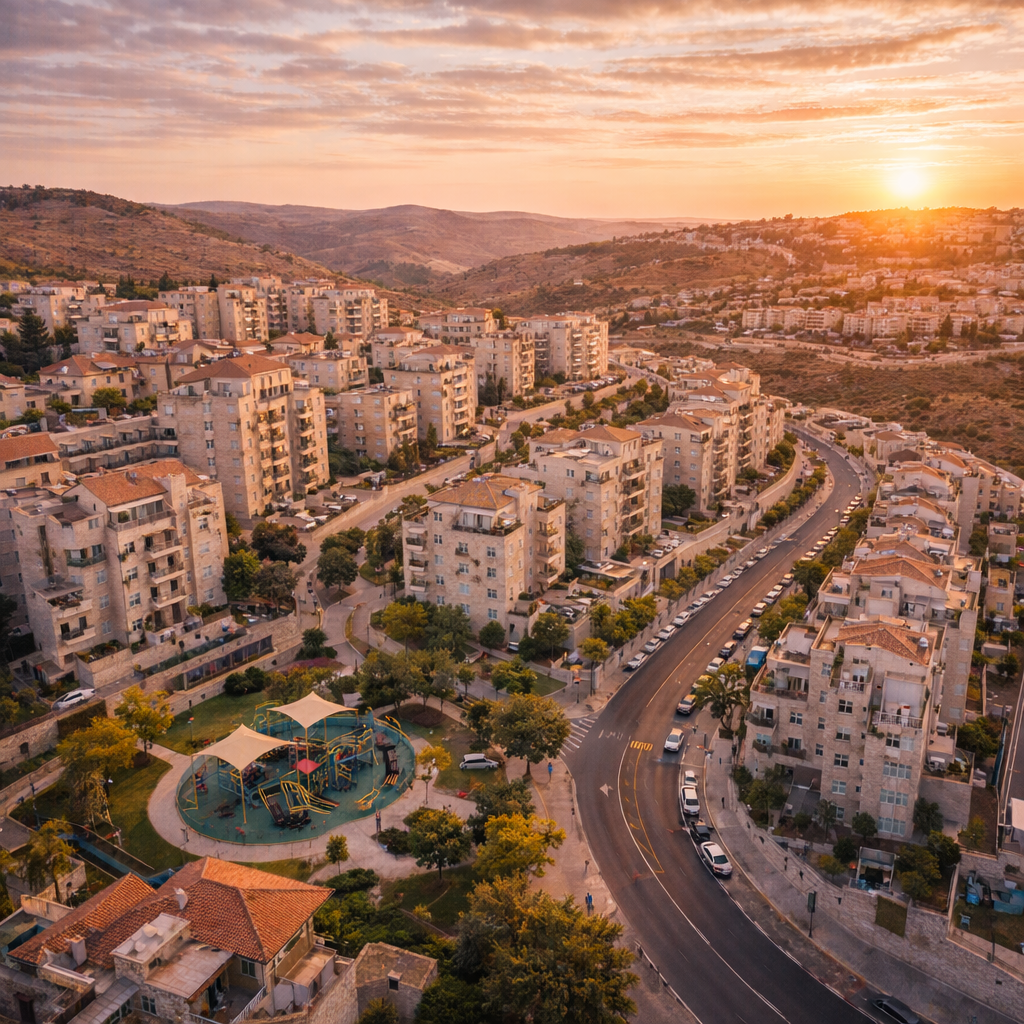
There’s a fascinating quirk about one of Modiin’s most popular Anglo neighborhoods: it has three names, and which one you use tells a story. Officially, it’s two separate neighborhoods—HaShvatim, meaning “The Tribes,” in the north, and Moriah, named after ancient Jewish women and the biblical mount, in the south. Colloquially, Israelis and long-time residents call it “Buchman,” after the architect who planned it. But increasingly, especially among newer Anglo olim, you’ll hear people distinguish between them: “We’re in Shvatim,” they’ll say, or “We’re looking in Moriah.” But here’s what’s interesting: despite the technical distinctions, this area functions as one integrated neighborhood. When people talk about “Buchman,” they’re usually referring to this southern section of Modiin where Shvatim and Moriah blend together—where the Anglo presence is strongest, where the commercial infrastructure is most developed, and where thousands of English-speaking families have built their Israeli lives. Today, we’re going to explore Shvatim-Moriah in depth—understanding its unique character, discovering what makes it tick, and helping you decide whether this might be the right place for your own aliyah journey.
Let me start by clearing up the confusion about the names, because understanding the geography helps explain the neighborhood’s character. Shvatim, the northern section, was planned with streets named after the twelve tribes of Israel—Yehudah, Binyamin, Yosef, and so on. It’s a beautiful concept, connecting the modern neighborhood to ancient Jewish identity. Moriah, the southern section, has streets named after important women from Jewish history and biblical times. The name “Moriah” itself evokes Mount Moriah in Jerusalem, adding layers of spiritual significance.
Together, Shvatim-Moriah forms the southernmost residential area of Modiin proper. If you’re looking at a map, you’re at the bottom of the city, close to the border with the Maccabim neighborhood. This southern position has both advantages and challenges, which we’ll explore. The neighborhood is characterized by something relatively unique in Israeli urban planning: a mix of housing types. Unlike some neighborhoods that are exclusively apartment buildings or exclusively private homes, Shvatim-Moriah has both. You’ll find ground-level private homes and condos—what Israelis call “kotej” or cottage-style housing—alongside low-rise apartment buildings. This architectural variety creates a more varied streetscape and appeals to different types of families with different needs and budgets.
Most buildings are relatively low-rise—four to six stories—which maintains a more residential, less urban feel. When you walk through Shvatim-Moriah, you’re not overwhelmed by towering apartment blocks. There’s sky, there’s breathing room, and the scale feels manageable. The street layout is orderly and logical, reflecting the careful planning that went into Modiin’s development. Wide streets, sidewalks designed for strollers and pedestrians, designated parking areas, and green spaces interspersed throughout. This isn’t the chaotic organic growth you see in older Israeli cities—this is modern urban planning at work.
At the heart of the neighborhood sits the Moriah Center—a commercial hub that has become absolutely central to life in Shvatim-Moriah. This isn’t just a small collection of shops; it’s a proper commercial center with supermarkets, restaurants, services, health clinics, and all the infrastructure that makes daily life convenient. We’ll explore this in detail shortly, but understand that the Moriah Center is one of the key features that makes this neighborhood so attractive to families.
Now let’s address the elephant in the room: Shvatim-Moriah, particularly under its “Buchman” designation, has become synonymous with Anglo aliyah to Modiin. But why? How did this specific neighborhood become the go-to destination for English-speaking families? The answer is a combination of timing, infrastructure, and community momentum. When Modiin was first being developed in the late 1990s and early 2000s, it was marketed heavily to olim, particularly from North America. The vision was a modern, well-planned city that could offer Western-style amenities with Israeli identity. Shvatim-Moriah, being one of the earlier neighborhoods to be completed, became an entry point for these early Anglo pioneers.
Those first families—the ones who moved in during the mid-to-late 2000s—did something crucial: they built community infrastructure. They established synagogues with English-language components. They created support networks. They shared information about schools, doctors, bureaucracy navigation. And critically, they told their friends back in Teaneck, Riverdale, London, and Johannesburg about this great neighborhood they’d discovered. Word spreads quickly in the Anglo-Jewish world. When successful aliyah families are happy somewhere, when they’re thriving and not regretting the move, they become the best marketing possible. “Come to Buchman,” they’d tell friends considering aliyah. “There’s an established community here. You won’t be alone.”
And so the snowball effect began. Each wave of Anglo olim made it easier for the next wave. More English-language minyanim were established. More businesses catering to Anglo preferences opened. More WhatsApp groups were created. The infrastructure—both physical and social—grew stronger. By the early 2010s, Shvatim-Moriah had reached critical mass as an Anglo destination. The community wasn’t just viable—it was thriving. Families weren’t just surviving aliyah—they were building meaningful lives. Children were adjusting well to schools. Parents were finding employment or successfully working remotely. The experiment was working.
Today, estimates suggest that a significant portion of Shvatim-Moriah residents are English-speaking—exact percentages are hard to pin down, but walk through the neighborhood on any given day and you’ll hear as much English as Hebrew on the streets. Some areas have higher concentrations than others, with certain buildings and streets becoming particularly Anglo-heavy. This concentration creates what some people call “the Anglo bubble”—and it’s both the neighborhood’s greatest strength and its most significant critique. On the positive side, new immigrants have instant community, support networks, and the comfort of familiar language and culture. On the critical side, some argue that such heavy Anglo concentration can inhibit deep integration into Israeli society.
But here’s what’s interesting: the second generation is changing the dynamic. The children of those early Anglo pioneers are now teenagers and young adults. They’re native Hebrew speakers. They’ve served in the IDF or are preparing to. They’re dating Israelis. They’re Israeli in ways their parents never will be, even while maintaining connection to their parents’ Anglo heritage. So Shvatim-Moriah is evolving. It remains heavily Anglo, yes, but it’s becoming increasingly bicultural—a place where American-Israeli identity is the norm, where code-switching between English and Hebrew is natural, where families celebrate both Thanksgiving and Yom Ha’atzmaut with equal enthusiasm.
Let me take you through a typical day in Shvatim-Moriah, because understanding the rhythms of daily life helps illuminate what it’s actually like to live here. Morning in Shvatim-Moriah starts early, as it does everywhere in Israel. By 7:00 AM, the streets are alive with families getting kids ready for school. You’ll see parents walking children to nearby schools—the neighborhood has several educational institutions within walking distance. The early morning is a mix of Hebrew and English conversations, Israeli families and Anglo families all participating in the universal morning rush.
The Moriah Center comes alive around 8:00 AM. The Mega supermarket opens, and you’ll see people stopping by for last-minute items or doing their morning shopping. One of the great advantages of Shvatim-Moriah is this commercial infrastructure—you can accomplish most of your daily errands within a ten-minute walk from your apartment. In the Moriah Center, you’ll find an impressive array of services. Beyond the supermarket, there are several restaurants—dairy and meat options, pizza shops, cafes. There’s a pharmacy with English-speaking staff. There are clothing stores, electronics repair shops, a toy store, and various other retail options. There are also professional services—insurance agents, real estate offices, and small businesses catering to the community’s needs.
What’s particularly noteworthy is how many of these businesses have English-speaking staff or signage. This isn’t accidental—the business owners recognize their customer base. You can usually conduct transactions in English without difficulty, which is enormously helpful for new immigrants still building Hebrew confidence. The neighborhood also has excellent medical infrastructure. There are local health clinics, kupot cholim, representing the major Israeli health funds. These clinics often have English-speaking doctors and staff, again reflecting the demographic reality. For new olim dealing with health issues, having medical care available in English can be a significant relief.
By mid-morning, the neighborhood takes on a different character. The workers have commuted out—many to the Modiin Central train station, heading to jobs in Tel Aviv or Jerusalem. Others work locally in Modiin or from home. The cafes in the Moriah Center fill with a different crowd: mothers with young children, retirees, freelancers working on laptops, people meeting for business discussions. The parks and playgrounds become active. Shvatim-Moriah has several green spaces where you’ll find children playing, parents chatting, and that distinctive mix of Hebrew and English conversation that characterizes the neighborhood. The playgrounds are well-maintained, and they become social hubs where both community connections and friendships form.
Afternoons bring school dismissals and the after-school activity rush. Kids stream out of schools, heading home or to various activities—sports, music lessons, tutoring. The streets fill again with family energy. The Moriah Center sees another busy period as people stop by for shopping on their way home or grab quick dinner options. The synagogue life in Shvatim-Moriah is particularly rich and deserves specific mention. The neighborhood is home to multiple shuls representing different styles and communities. There’s KSYM—Kehillat Shaarei Yonah Menachem—which has become particularly popular with Anglo families. It offers English-language services, shiurim, and community programming. But there are also Sephardic shuls, Israeli Ashkenazi communities, and other options, creating religious diversity within the neighborhood.
This synagogue infrastructure matters enormously for religious families. Having multiple minyan options within walking distance means you can find a community that fits your style—whether you want the familiar Anglo davening you grew up with or you’re ready to stretch into more Israeli religious experiences. Evenings in Shvatim-Moriah are family-focused. Dinner, homework, bedtime routines—the universal rhythms of family life. But there are also evening shiurim, community lectures, women’s groups, and other social activities. The community is active, and there are always opportunities for learning and connection if you seek them out.
On Shabbat, the neighborhood transforms. The Moriah Center closes, the streets quiet, though you’ll still see families walking to and from shul, and a peaceful atmosphere descends. Multiple minyanim means families can choose where to daven, and the Shabbat meal invitations flow freely. For new immigrants, being invited to established families’ Shabbat tables provides both hospitality and crucial social integration.
Now let’s talk about what everyone wants to know: What does it actually cost to live in Shvatim-Moriah? As mentioned in our earlier discussion, Shvatim-Moriah, under the Buchman designation, represents premium real estate in Modiin. As of late 2025, average apartment prices hover around 4.4 million shekels for a typical four-room apartment, that’s three bedrooms plus living room, of approximately 110-120 square meters. At current exchange rates, that’s roughly $1.2 million. For rentals, you’re looking at approximately 7,200 shekels per month, around $1,950, for a similar-sized apartment, though prices vary based on condition, floor, building amenities, and exact location within the neighborhood.
These are not entry-level prices. You’re paying a premium for several factors. First, the established community. Unlike buying into a new development where you’re gambling on whether the promised infrastructure will actually materialize and whether enough families will move in to create community, in Shvatim-Moriah everything is proven and operational. Second, the Anglo infrastructure. The concentration of English-speaking families, businesses, synagogues, and support networks has real value, particularly for families in their first years after aliyah when everything feels overwhelming. Third, the location and amenities. The Moriah Center provides convenience that translates to quality of life. Medical care, shopping, services—it’s all accessible without needing to drive. Fourth, the housing variety. The option to buy either a private home or an apartment means families can find something that fits their lifestyle and budget within the overall premium price range.
The housing types affect pricing significantly. Private homes, kotej-style, command higher prices—you might be looking at 5-6 million shekels or more for a detached or semi-detached home with a small yard. These appeal particularly to families wanting more space, outdoor areas, or coming from American suburban backgrounds where houses feel normal. Apartments, while still expensive, offer more accessibility to families without unlimited budgets. Within the apartment category, prices vary by floor, view, condition, parking availability, and building amenities.
What are you actually getting for this investment? Typically, modern Israeli construction with the standard features—mamad or safe room, balconies, often succah-capable, parking though not always, and reasonable build quality. These aren’t luxury apartments in the high-end sense, but they’re solid, functional, and well-maintained. The resale market in Shvatim-Moriah is relatively strong because demand remains consistent. Anglo families continue moving to Modiin, and Buchman remains the top destination for many. This means if you buy here and later decide to sell—whether to upgrade, relocate, or return to your country of origin—you’re likely to find buyers, though prices fluctuate with overall market conditions.
What truly distinguishes Shvatim-Moriah from other neighborhoods isn’t the buildings or the commercial center—it’s the community networks that have developed over years of Anglo settlement. The WhatsApp ecosystem alone is remarkable. There are neighborhood-wide groups, building-specific groups, groups for specific interests like babysitting, recommendations, buy-and-sell, groups for specific communities like KSYM members, groups for women, groups for new olim—the network is extensive and active.
These digital communities serve crucial functions. Need a pediatrician who speaks English? Post in the group and you’ll have recommendations within minutes, complete with personal experiences and phone numbers. Confused about how to pay a municipal bill? Someone will walk you through it. Looking for a babysitter, a contractor, a tutor? The community responds. But the support goes beyond digital. There are formal community organizations that provide services—everything from welcoming new olim with information packets to organizing community events to providing assistance during difficult times.
The chesed networks are particularly impressive. When families face challenges—medical emergencies, new babies, personal crises—the community mobilizes. Meal trains materialize. Babysitting help appears. Financial assistance can be arranged discreetly. This is kehillah at its best—community taking care of its members. For new immigrants, this support structure is invaluable. Aliyah is hard. Even in the best circumstances, it’s disorienting, exhausting, and overwhelming. Having a community that understands this, that has been through it, and that actively helps newcomers navigate the challenges makes an enormous difference.
The social calendar is full of community events. There are community-wide Purim celebrations, Lag B’Omer bonfires, holiday programs, lecture series, and social gatherings. These events strengthen community bonds and provide entry points for new families to integrate. For women, there are particularly active networks—tehillim groups, learning opportunities, social gatherings, and support systems that address the specific challenges women face in aliyah, from career disruption to social isolation to child-rearing in a new culture.
For children, the neighborhood provides both organized activities and the informal social world that’s so important. Kids form friendships at school, in youth groups, in the parks, and through family connections. Many children of the early Anglo pioneers are now teenagers and young adults who’ve grown up together, creating a second-generation community that’s deeply rooted.
This brings us to the most debated aspect of Shvatim-Moriah: the question of integration. With such a heavy concentration of English-speaking families, is it possible to truly integrate into Israeli society while living here? Or does the neighborhood create a bubble that insulates residents from authentic Israeli life? Honest answers vary based on who you ask and what they prioritize.
Some residents embrace the Anglo concentration. They argue that having community support in their native language allows them to maintain stability while gradually adapting to Israeli life. They point out that their children are in Israeli schools, speaking Hebrew fluently, serving in the IDF, and becoming fully Israeli regardless of what language their parents speak at home. Others express concern about the bubble effect. They worry that being surrounded by other English speakers reduces the pressure to learn Hebrew fluently. They note that it’s possible to shop, socialize, and even access medical care primarily in English, which can slow language acquisition and cultural integration.
The reality is probably that Shvatim-Moriah offers what you make of it. If you intentionally push yourself to speak Hebrew, build Israeli friendships, participate in Israeli-dominated activities, and engage with the broader Israeli society beyond the neighborhood, you can integrate deeply even while enjoying Anglo community support. If, however, you retreat entirely into the English-speaking world—shopping only at businesses with English speakers, socializing only with other Anglos, davening only at English-language minyanim—you can indeed create a bubble that insulates you from Israeli integration. Different families find different balance points, and what works for one might not work for another. The key is being intentional about your choices and honest about your integration goals.
Based on years of observation and countless conversations with residents, certain profiles tend to thrive in Shvatim-Moriah. Religious families from North America, particularly those from Modern Orthodox communities, tend to do exceptionally well. They find familiar religious culture, English-language Torah learning, and community support that eases the transition while their children become fully Israeli. Families with professional careers who can afford the premium housing costs, particularly those working in high-tech or other fields where remote or flexible work is possible, find the infrastructure and commute options manageable.
Families who value community over urban energy—people who want suburban-style living with good schools and family-friendly environment rather than the cosmopolitan excitement of Tel Aviv or Jerusalem—appreciate what Shvatim-Moriah offers. Families in their prime child-rearing years, with kids ranging from toddlers through teenagers, benefit most from the community resources, schools, and support networks. People who struggle here tend to be those who either can’t afford the premium costs, find the Anglo concentration stifling rather than supportive, or whose priorities lean toward either full Israeli immersion, in which case less Anglo neighborhoods might suit better, or urban sophistication, in which case Jerusalem or Tel Aviv might be preferable.
Every neighborhood has challenges, and it’s important to be realistic about Shvatim-Moriah’s. The cost barrier is real and excludes many families who might otherwise thrive here. Not everyone can afford million-dollar apartments and $2,000 monthly rents. The commute to major employment centers requires either a car or reliance on public transportation. The train to Tel Aviv or Jerusalem takes 35-45 minutes from Modiin Central station, plus travel time from your apartment to the station and from the destination station to your workplace. For dual-career families, logistics can be exhausting.
The southern location within Modiin means you’re somewhat removed from the city center and other neighborhoods. While the Moriah Center provides good local services, for certain amenities or activities you’ll need to travel to other parts of Modiin or beyond. Parking can be frustrating, particularly in older buildings or on Shabbat when everyone’s home. This is a common Israeli urban challenge, but it’s worth considering. The Anglo bubble, as discussed, can be both positive and negative depending on your integration priorities.
As we conclude our exploration of Shvatim-Moriah, the fundamental question remains: Is this the right place for your family? Only you can answer that, but here’s how to think about it. Shvatim-Moriah—whether you call it Buchman, Shvatim, Moriah, or simply “that Anglo neighborhood in Modiin”—offers something specific: established Anglo community infrastructure in a modern, planned Israeli city with good quality of life and strong family orientation.
If that combination appeals to you, if you value community support during aliyah, if you want your children to grow up Israeli while maintaining connection to your Anglo heritage, if you can afford the premium costs, then Shvatim-Moriah deserves serious consideration. But visit first. Spend real time here. Walk the streets, shop in the Moriah Center, attend services at KSYM or another shul, talk to residents, ask hard questions about both the positives and the challenges.
Because making aliyah and choosing where to live in Israel is one of the most consequential decisions you’ll make. Getting it right—finding the place where you and your family can truly flourish—is worth the investment of time and research. For many families, Shvatim-Moriah has been exactly that place—the community where they’ve built meaningful Israeli lives. Perhaps it will be for you too. Thank you for joining us on this tour through Shvatim-Moriah. May your aliyah journey, wherever it leads, bring you to the place where you can contribute to and benefit from the remarkable ongoing story of the Jewish people returning to their homeland. B’hatzlacha, and perhaps we’ll see you in Shvatim-Moriah soon.