Sheinfeld | Anglo Community
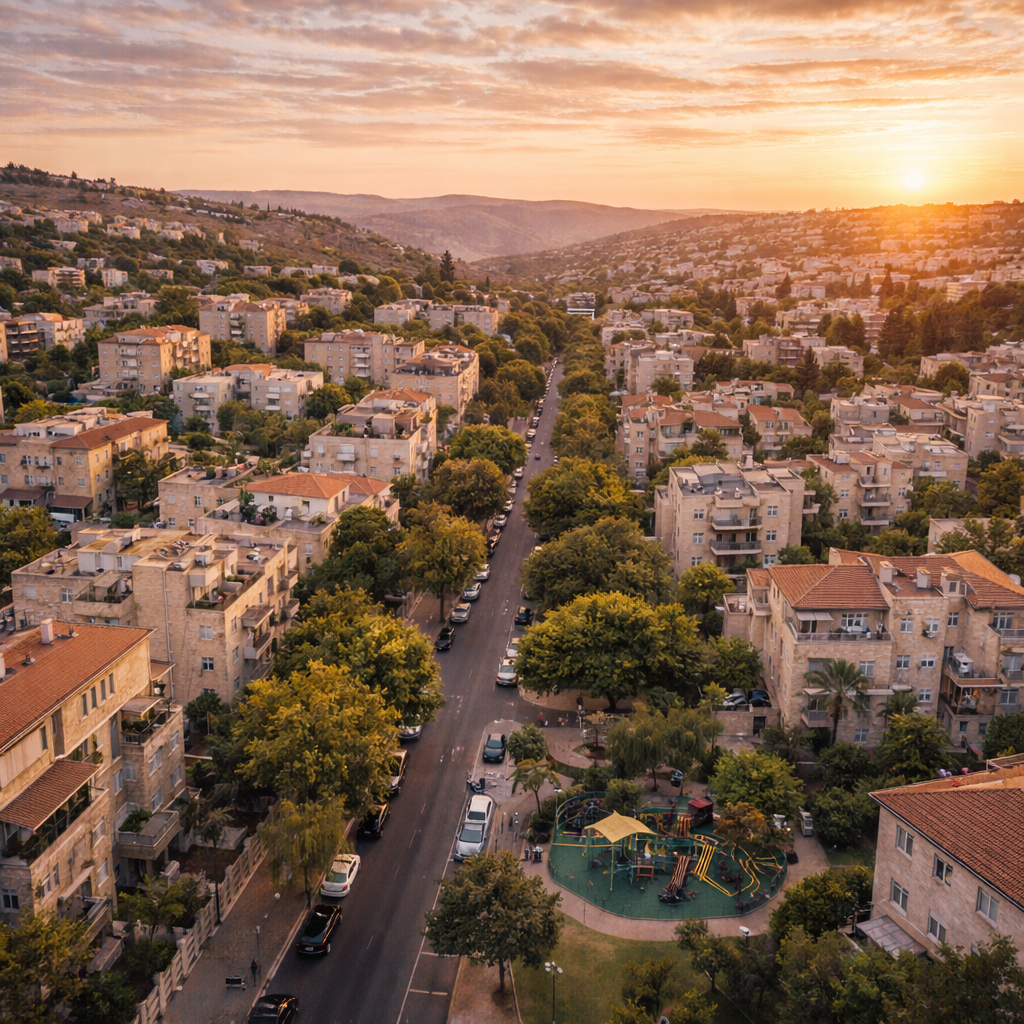
In the early 1990s, when Beit Shemesh was still a sleepy development town of less than thirty thousand people, mostly Sephardic families from North Africa with limited economic opportunities, something remarkable happened that would transform not just one neighborhood but the entire trajectory of Anglo aliyah to Israel. A real estate agent named Shelly Levine approached a developer named Arie Sheinfeld with an innovative proposal: to build a neighborhood specifically targeting the English-speaking market. The idea was revolutionary for its time, creating what would become known as an “Anglo” community where religious Zionist families from America, Great Britain, Australia, and South Africa could have an easier absorption among a larger Israeli population. That neighborhood, named after its builder, became Sheinfeld, and it would go on to become one of the most successful and influential Anglo communities in Israel, the pioneer that proved the concept could work and paved the way for the massive Anglo expansion into Beit Shemesh that followed.
The timing was perfect. In 1991, the first English-speaking residents moved into Sheinfeld, arriving at a moment of tremendous change in Israeli society. The influx of Russian immigrants was beginning, the hi-tech boom was starting to transform the economy, and growing oranges, which had been a major industry in the area, was fading. Many young couples had one spouse employed in Tel Aviv or Ramat Gan and the other in Jerusalem, and Beit Shemesh’s location, roughly thirty kilometers from Jerusalem and forty-five kilometers from Tel Aviv, made it an ideal bedroom community for these dual-income families. English-speaking aliyah was stirring toward what would become a growth spurt, eventually catalyzed by Nefesh B’Nefesh starting in 2002. Into this environment of change, Sheinfeld emerged as a carefully planned experiment in community building.
The neighborhood was designed with American-style housing and amenities from the beginning. The emphasis in Sheinfeld is on larger dwellings, with houses, semi-attached cottages, apartments of varying sizes, and townhouses. The developers understood that Anglo families, particularly those from the United States, valued space, privacy, and quality construction in ways that differed from typical Israeli housing preferences. The neighborhood was laid out with a central U-shaped block at its center, Rechov HaArazim, which became a defining architectural feature. This thoughtful planning created a sense of coherence and community identity that distinguished Sheinfeld from more haphazard developments.
The location of Sheinfeld is both central and transitional. It sits between Old Beit Shemesh and Ramat Beit Shemesh, in an area called Givat Sharett, which itself was an earlier extension of the city built on a hill directly south of the original town. The neighborhood is centered around streets with biblical names: Reuven, Shimon, Gad, Asher, Rashi, Naftali, Ma’apilei Egoz, and Shivtei Yisrael. This positioning gives Sheinfeld residents the advantage of being within walking distance of multiple neighborhoods: Migdal Hamayim, Nofei Hashemesh, Nofei Aviv, the Kiryah Haredit, and the beginning of Ramat Beit Shemesh Bet. This connectivity has proven crucial to the neighborhood’s success, allowing residents to access the amenities and institutions of surrounding areas while maintaining their own distinct community identity.
From the beginning, Sheinfeld was conceived as a religious Zionist neighborhood, and this hashkafic orientation has remained its defining characteristic. While Ramat Beit Shemesh Aleph, which was built later in the mid to late 1990s, would attract many religiously right-of-center and Haredi families, Sheinfeld attracted a predominantly centrist population, what in Israeli terms is called dati leumi or modern Orthodox. This distinction is important because it created a community where people value both serious Torah learning and secular education, where men and women typically work in professional careers, where army service is normative, and where engagement with broader Israeli society is expected rather than avoided.
The community took off beyond anyone’s initial expectations. What was billed as an Anglo community in the early 1990s grew into many hundreds of families with half a dozen synagogues. In the last five years before 2007, thanks to Nefesh B’Nefesh and the large influx of Americans, the neighborhood became overwhelmingly Anglo, with some estimates suggesting about eighty percent of residents are English speakers. This created what some have called an “Anglo bubble,” a place where families could make aliyah without feeling like strangers, where their children could attend schools with other English-speaking kids, where synagogues operated with American-style rabbinic leadership, and where the challenges of absorption were mitigated by the presence of a critical mass of people going through similar experiences.
The four main synagogues in Sheinfeld each cater to slightly different tastes and hashkafic orientations within the modern Orthodox world, but all form their own communities with their own rabbis, shiurim, social events, and more. Ohel Yona Menachem, often called OYM, is one of the flagship shuls. Led by Rabbi Meir Lichtenstein, son of the legendary Rabbi Aharon Lichtenstein and grandson of Rabbi Joseph Soloveitchik, the shul attracts both English speakers and Israelis. Rabbi Lichtenstein speaks fluent English and Hebrew, and the community is around sixty to seventy percent English speaking. The previous rav, Rabbi Spector, was a major leader in building the community before he passed away in 2013. The large, bright, modern synagogue is directly located next to a park and playground where families gather after davening, and it includes a large and recently renovated social hall and adjacent beit midrash. The shul offers multiple daily minyanim and shiurim along with many social and communal activities.
Bet Midrash Torani Leumi, also based in Sheinfeld, is comprised of a dynamic group of over one hundred families. Members include native Israelis and immigrants from the United States, Canada, and England. The members, consisting of graduates of Hesder Yeshivot and other higher Torah education institutions, came to Beit Shemesh to create a vibrant Torah community that offers a unique setting for both adults and children to maintain and expand their commitment to Torah while reaching out to the larger community.
The kehilla of Etz Chaim represents another approach, truly reflecting the ingathering of the Diaspora. People from the four corners of the earth belong to this synagogue, where native Israelis blend with people from North America, Europe, Australia, Asia, and Africa. This diversity makes Etz Chaim unique not just in Sheinfeld but probably in all of Israel. The friendly congregation is involved in chesed activities both within the community and with the Beit Shemesh community at large, contributing time and money to charity events and engaging in social activism. At Etz Chaim, members are like family, supporting each other through challenges and celebrating together during times of joy, while also respecting each other’s privacy.
One of Sheinfeld’s great advantages is its excellent infrastructure and amenities. The neighborhood has its own shopping area in the center, including a very large minimarket that notably sells many American products, addressing one of the common complaints of new immigrants who miss familiar foods from home. There’s a pizza store, post office, shawarma store, bagel restaurant, café, and hairdresser, creating a self-contained commercial center where residents can handle daily errands without leaving the neighborhood. Beyond this, Sheinfeld is close to many of the main shopping areas in Beit Shemesh, including walking distance to the Naimi mall and large supermarket. The Sheinfeld shopping center itself has become a gathering place for the dati leumi community across Beit Shemesh, a place where, as one resident put it, you see people like yourself or to the left of you religiously, creating a comfortable social environment.
Education has been a major draw for families choosing Sheinfeld. As one family put it, “We chose Sheinfeld because of the schools, the shuls and our rabbi.” The neighborhood’s schools span the range of modern Orthodox education, and the proximity to schools in neighboring areas like Nofei Aviv and Nofei Hashemesh provides additional options. Parents appreciate that their children can receive quality education without the family having to sell their home to afford it, as the mayor of Beit Shemesh once quipped, contrasting the Israeli public education system with expensive American Jewish day schools.
The community atmosphere in Sheinfeld is often described as warm, welcoming, and tightly knit. For many Anglo families, especially those making aliyah in the 2000s and 2010s, Sheinfeld provided exactly what they needed: a place where they could live among people who could relate to the huge adjustments they were making. The shared experience of being olim, of navigating the challenges of learning Hebrew, finding employment, raising children in a different culture, dealing with Israeli bureaucracy, and building new lives, created strong bonds among neighbors. Many streets in Sheinfeld feel like extended families, with neighbors actively supporting each other through life’s challenges and celebrations.
This doesn’t mean the community is without complexity or challenges. Like anywhere, Sheinfeld has had to navigate questions about integration versus insularity. There has been ongoing debate within the community about whether living in an overwhelmingly Anglo neighborhood helps or hinders integration into Israeli society. Some worry that children growing up in the Anglo bubble struggle to learn Hebrew properly, don’t integrate well into Israeli society, and end up as perpetual outsiders in religious life. There are concerns about kids bouncing from school to school trying to find their fit, about some going off the derech, and about families ultimately returning to the United States because the integration never quite worked.
Others argue that the Anglo community provides essential support during the difficult absorption period and that children do learn Hebrew, do serve in the army, do find gainful employment, and do become contributing members of society as upstanding Torah Jews. Moreover, they bring something extra that only could have been gleaned from an Anglo oasis like Sheinfeld, some combination of values, approaches, and perspectives that enriches Israeli society. The debate continues, but the ongoing popularity of Sheinfeld and the success of many families who have made it their home suggest that for many people, the benefits of community support outweigh concerns about insularity.
The political dimension of life in Sheinfeld has also been significant. The neighborhood sits on the border between the primarily national-religious Sheinfeld area and the Haredi Ramat Beit Shemesh Bet, and this proximity became a flashpoint in 2011 when the Orot Banot national-religious girls’ school opened on this border. Groups of Haredi extremists protested in front of the school, leading to national and international headlines about religious conflict in Beit Shemesh. These incidents galvanized the modern Orthodox community in Sheinfeld and beyond, leading to the formation of groups like the Committee Against Violence and energizing political activism.
Rabbi Dov Lipman, who lived in Sheinfeld, became one of the leading voices for the modern Orthodox community during this period and eventually entered politics, serving in the Knesset representing Yesh Atid. Lipman’s perspective, expressed during the height of the tensions, was nuanced. He noted that some Haredim lived in the same buildings in Sheinfeld and were wonderful neighbors who were friendly and didn’t try to interfere with anyone’s lives. The issue, he argued, was with extreme Haredim who were interfering with people’s lives, not with the Haredi community as a whole. This distinction mattered to Lipman and to many in Sheinfeld who wanted peaceful coexistence with their more religious neighbors while standing firm against extremism.
The Anglos in Sheinfeld, according to multiple observers, have taken the lead on coexistence initiatives between the different communities in Beit Shemesh. The presence of a large English-speaking community on both the national religious and Haredi sides of the city has had a significant positive impact on relations, creating bridges and communication channels that might not exist otherwise. This mediating role has become part of Sheinfeld’s identity within the broader Beit Shemesh landscape.
Transportation and employment opportunities have been crucial to Sheinfeld’s success. The neighborhood has many public transport options, with buses running regularly to Jerusalem, Tel Aviv, and other employment centers. The thirty-five to sixty-minute commute to either Jerusalem or Tel Aviv is manageable for daily commuters, and many Sheinfeld residents work in high-tech, education, medical fields, and other professional occupations. The story of Jeff and Elyssa Aftel is fairly typical: Jeff came to Israel in 2005 with semichah from RIETS and a computer degree from Yeshiva University, having worked in Jewish education in the United States. He wanted to stay in education but couldn’t afford it, so he took a course in technical writing and found a job quickly with a major international computer hardware company. This pattern of professional retraining and adaptation, supported by the community network and proximity to employment centers, has enabled many families to establish themselves economically.
The real estate market in Sheinfeld reflects the neighborhood’s desirability and success. It’s among the higher-priced neighborhoods in Beit Shemesh, with rents and purchase prices trending above city averages. Four-room apartments can easily surpass 5,500 shekels in monthly rent, while larger cottages climb above 8,000 shekels. Purchase prices have also risen significantly since the neighborhood’s founding, with the stable, close-knit community and ongoing popularity among Anglos making Sheinfeld a reliable investment. The high-quality homes, modern amenities, peaceful environment, and strong sense of community continue to attract families prioritizing quality education and communal engagement.
Housing in Sheinfeld includes houses, apartments of varying sizes, semi-attached cottages, and townhouses. There are properties with gardens, offering families that sought-after private outdoor space that’s harder to find in high-rise apartment buildings. The emphasis on larger dwellings means that families with multiple children can find accommodation that suits their needs without feeling cramped. New projects of houses continue to be built, expanding the neighborhood’s capacity while maintaining its character.
Looking back over more than three decades since those first English-speaking residents arrived in 1991, Sheinfeld’s impact extends far beyond its own boundaries. It proved that the concept of an Anglo neighborhood in Israel could work, that there was demand for communities that balanced Israeli integration with Anglo cultural continuity, and that religious Zionist families from English-speaking countries could successfully build lives in Israel when provided with appropriate support structures. The success of Sheinfeld directly enabled the development of Nofei Aviv, Ramat Beit Shemesh Aleph, and the explosion of Anglo aliyah that has characterized the 2000s and 2010s.
The neighborhood has also contributed significantly to Beit Shemesh’s transformation from a struggling development town into one of Israel’s fastest-growing cities with a highly educated, professionally employed population. The Anglos of Sheinfeld and other neighborhoods have become significant players in local commerce, politics, and volunteering, helping to build institutions and advocate for quality of life improvements that benefit all residents.
For the families who live there, Sheinfeld represents something more than just a neighborhood. It’s a community in the fullest sense, a place where schools and shuls create structure and meaning, where neighbors become friends and extended family, where the challenges of aliyah are shared and supported, and where the dream of living as observant Jews in the land of Israel while maintaining professional careers and modern lifestyles becomes reality. It’s a place where children grow up speaking both English and Hebrew, where Shabbat tables might feature both American and Israeli dishes, where the Fourth of July and Yom HaAtzmaut are both celebrated, and where being both American and Israeli, both modern and Orthodox, both engaged with the world and committed to Torah, feels not contradictory but natural.
The story of Sheinfeld is ultimately the story of a successful experiment in community building, an experiment that showed that Anglo immigrants could create vibrant, sustainable communities in Israel that enriched both the immigrants themselves and Israeli society as a whole. As Beit Shemesh continues to grow and evolve, with new neighborhoods being built and demographic patterns shifting, Sheinfeld remains the pioneering community that started it all, the proof of concept that inspired thousands of families to take the leap and make Israel their home.