Ramat Poleg | Anglo Community
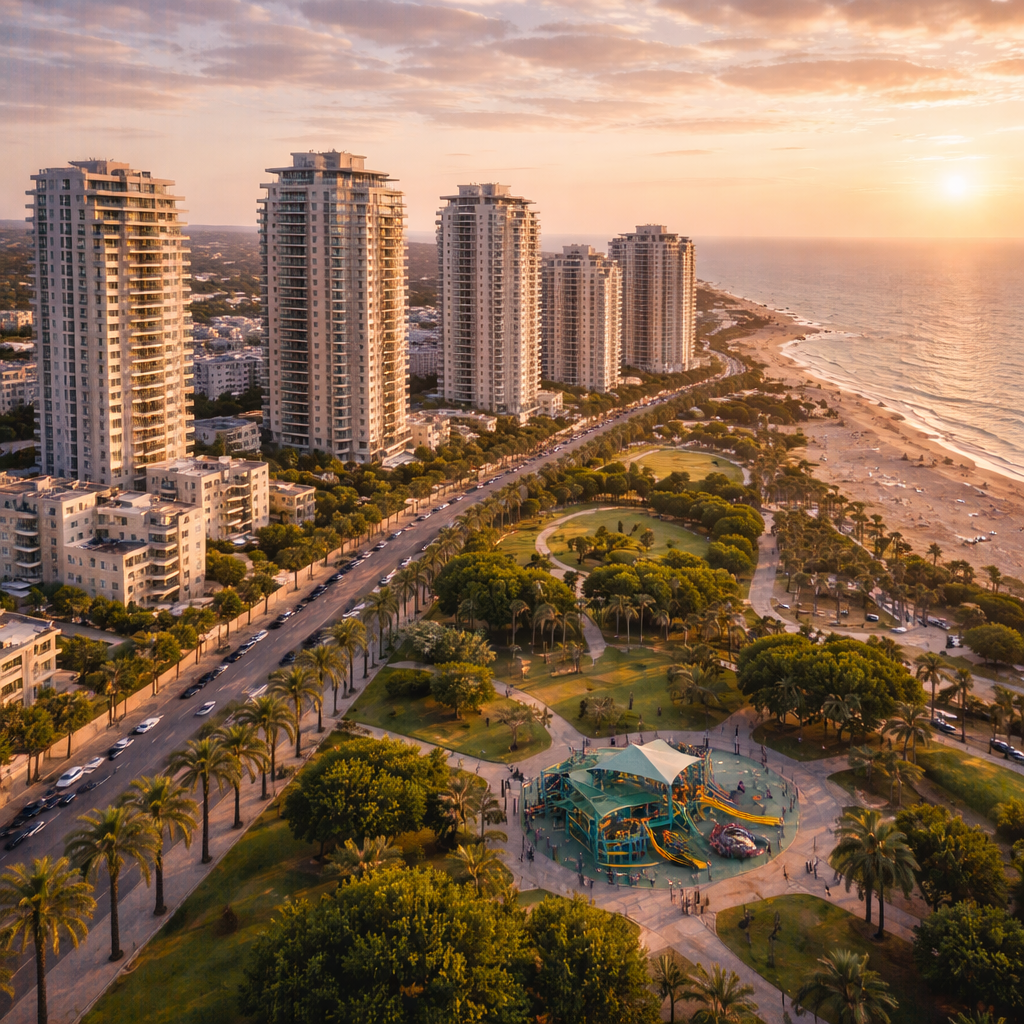
There’s something distinctly different about Ramat Poleg that you notice immediately when you drive through its tree-lined streets. While newer neighborhoods like Ir Yamim announce themselves with soaring glass towers and modern architectural statements, Ramat Poleg feels more settled, more rooted, more like a place that’s been home to families for decades rather than years. And that’s exactly what it is. This neighborhood in southern Netanya, built primarily in the late nineteen seventies, represents a different era of Israeli development and a different approach to coastal living. It’s not trying to be flashy or trendy. It’s simply being what it’s always been: one of the most prestigious and sought-after addresses in the entire Sharon region.
The story of Ramat Poleg begins with its original purpose and the people it was meant to serve. When the neighborhood was first established in the late seventies, many of the houses were built specifically for permanent soldiers and military invalids, families who had given significant service to the country and deserved comfortable homes in beautiful locations. This military connection gave the neighborhood a certain character from the start, a sense of stability and patriotism, of people who were invested in Israel’s future and wanted to build lasting homes. But over the years, as property values rose and the neighborhood’s reputation grew, Ramat Poleg began attracting a broader demographic: successful professionals, wealthy families, international buyers, and eventually, significant numbers of immigrants from France, England, and other countries looking for that rare combination of established community, beach proximity, and relatively quiet suburban living.
What distinguishes Ramat Poleg most clearly from newer developments is its housing stock. The neighborhood was originally built primarily with private houses, detached and semi-detached villas on individual plots of land. Walk through the older sections, what locals call Old Ramat Poleg, and you’ll see three-story family homes sitting on plots ranging from two hundred and fifty to four hundred square meters or more. These aren’t cookie-cutter developments. Many of these houses were custom-designed or significantly modified over the years by their owners. You’ll find Mediterranean-style villas with terracotta roof tiles and arched windows, modern minimalist homes with clean lines and large glass panels, traditional Israeli construction with Jerusalem stone facades, and everything in between. Front gardens are landscaped with care, palm trees and fruit trees provide shade, and there’s a genuine sense of permanence that comes from homes that have been lived in and loved for decades.
In later years, as land became scarcer and demand increased, developers began building higher-density projects within Ramat Poleg. High-rise apartment buildings started appearing, offering a different housing option while still maintaining the neighborhood’s upscale character. Projects like the Wingate Towers became landmark addresses, luxury apartment buildings with sea views, modern amenities, and the kind of finishes that attract affluent buyers. These newer buildings integrate into the neighborhood’s fabric, providing options for people who want the Ramat Poleg address and lifestyle but prefer apartment living to house maintenance. The result is a genuinely mixed neighborhood where private villas and modern apartment towers coexist, creating housing options at various price points though all remaining firmly in the premium category.
The real estate prices in Ramat Poleg reflect its prestigious status and coastal location. Private houses on good-sized plots, especially those near the beach or with sea views, can range from four to eight million shekels or more, depending on the property’s size, condition, and specific location. Some of the most desirable streets, like Hadalyot Street which offers particularly good proximity to both the beach and the Ramat Poleg Country Club, command premium prices. Four-bedroom apartments in the newer buildings typically range from two point five to four point five million shekels, though this can vary significantly based on factors like floor level, view, building amenities, and whether the property has been upgraded. For context, you’re paying more here than you would in many other Netanya neighborhoods, but significantly less than comparable properties in central Tel Aviv, certain Jerusalem areas, or Herzliya Pituach, while arguably getting better value in terms of space, access to nature, and quality of life.
One of the defining features of Ramat Poleg is its exceptional location. The neighborhood occupies the southernmost position in Netanya proper, positioned between the Mediterranean Sea to the west and the newer Ir Yamim development to the east. This strategic location provides multiple benefits. To the south lies Poleg Beach, one of Netanya’s most beautiful and accessible stretches of coastline. Unlike the cliffs that characterize much of Netanya’s northern areas, Poleg Beach offers flat, easy access to wide expanses of golden sand. From many homes in Ramat Poleg, particularly those in the western sections, you can walk to the beach in five to ten minutes. Some properties on the most coveted streets have what residents describe as direct exits to the beach, meaning you can literally step out your door and within a few hundred meters be feeling sand between your toes.
Poleg Beach itself has developed its own reputation and culture over the years. It’s become a favorite spot for surfers who appreciate the consistent Mediterranean waves and the relatively uncrowded conditions compared to beaches further north. On any given day, you’ll see experienced surfers paddling out, surf schools teaching beginners the basics, and locals who’ve made morning or evening sessions part of their daily routine. The beach has proper facilities including lifeguards during the summer season, showers and changing rooms, and several beachside cafés where you can grab breakfast after a morning swim or watch the sunset with a cold drink in hand. The promenade that runs along the beach has been developed with walking and cycling paths, creating a continuous coastal route that residents use for exercise, recreation, and simply enjoying the Mediterranean environment.
But what might be Ramat Poleg’s crown jewel, the amenity that residents mention most frequently and with the most pride, is the Ramat Poleg Country Club. Established in nineteen eighty-four by the residents of Old Ramat Poleg themselves, this independent sports club was designed specifically to serve the neighborhood and has become central to community life in ways that are difficult to overstate. The country club sits on beautifully maintained grounds with green lawns overlooking the Mediterranean Sea, giving it a pastoral, almost resort-like atmosphere year-round. When you drive past and see families gathered there on a Friday afternoon or weekday evening, you understand immediately why this facility has become such a draw for people considering moving to Ramat Poleg.
The facilities at the country club are extensive and well-maintained. There’s a luxurious, sophisticated gym with modern equipment and floor-to-ceiling windows that overlook the outdoor pool, making workouts considerably more pleasant when you’re gazing at palm trees and blue sky rather than blank walls. The club features both outdoor and indoor swimming pools, with the indoor pool being particularly valuable during Israel’s cooler months when outdoor swimming becomes less appealing. Adjacent to the indoor pool are spa facilities including a wet sauna, dry sauna, and jacuzzi, creating a wellness complex that rivals what you’d find at high-end hotels. There are tennis courts for those who enjoy racquet sports, and a full-sized basketball hall for both organized games and casual play. The outdoor facilities include football fields, additional sports areas, and plenty of green space where children can run and play safely.
But the country club is more than just its physical amenities. It functions as a social hub, a second home for many members and their families. There’s a restaurant where residents gather for meals and social events. Professional instructors run classes in swimming, tennis, fitness, and various other activities, creating programming for all ages from young children learning to swim to seniors maintaining their health through exercise. The club organizes leagues and tournaments, creating opportunities for friendly competition and community bonding. On weekends and holidays, you’ll see multiple generations of families there together, grandparents watching grandchildren at swimming lessons, parents meeting friends for coffee while kids play basketball, teenagers hanging out at the pool. This kind of community infrastructure, owned and operated by the neighborhood itself rather than by a commercial entity, creates a genuine sense of belonging that’s increasingly rare in modern Israeli cities.
The club has also made significant efforts regarding accessibility, working with accessibility consultants to ensure that people with disabilities can participate fully in its offerings. There are accessible changing rooms, showers, and toilets near the pools. A mechanical chair allows those with mobility challenges to be lowered into the indoor pool safely. Ramps and accessible paths provide entry to various facilities. This attention to inclusion reflects the values of a mature community that thinks about all its members.
Beyond the beach and country club, Ramat Poleg’s infrastructure reflects its status as an established, well-planned neighborhood. The streets are quiet and tree-lined, with mature landscaping that provides shade and creates a pleasant walking environment. There are multiple parks and playgrounds scattered throughout the neighborhood, giving families with young children safe spaces to gather and play. The neighborhood was planned with cultural facilities in mind: there are libraries, community centers, and spaces for cultural events. Multiple synagogues serve different streams of Judaism, from modern Orthodox to more traditional congregations, accommodating the religiously diverse population. Schools and kindergartens are located within the neighborhood, meaning children can often walk to school rather than requiring long bus rides.
Shopping and services are conveniently accessible. While Ramat Poleg doesn’t have a major mall within its borders, the Ir Yamim Mall is just a short drive or even a pleasant walk away, providing everything from supermarkets to specialty stores, restaurants to cinemas. The Piano shopping complex, another modern retail center, is similarly close. Within the neighborhood itself, there are smaller shops, convenience stores, and local businesses that handle day-to-day needs. Medical services are easily accessible, with clinics from all the major health funds operating in or near the area, and pharmacies readily available. The proximity to Highway Two means that residents can reach Tel Aviv in thirty to forty minutes by car, making it practical for people who work in the central business district while preferring to live in Netanya’s calmer coastal environment.
The community character of Ramat Poleg is worth examining because it differs from what you find in brand-new developments. This is a neighborhood with history, with families who’ve lived here for twenty, thirty, even forty years. There’s institutional memory, neighborhood traditions, established social networks. Long-time residents know their neighbors, participate in community events, and have invested not just financially but emotionally in making this a good place to live. This creates a stability that newcomers often find appealing. When you move to Ramat Poleg, you’re not joining an experiment or a work in progress; you’re becoming part of something that’s proven itself over decades.
The immigrant population in Ramat Poleg is significant and adds to the neighborhood’s character. French speakers represent a substantial portion of residents, part of the broader French immigration to Netanya that’s earned the city its nickname as the Israeli Riviera. You’ll hear French at the country club, at the beach, in the local shops. English speakers, while perhaps not as concentrated as in Ra’anana or certain Jerusalem neighborhoods, are definitely present and active. There’s the Chabad for English Speakers of Ir Yamim and Ramat Poleg, which serves both neighborhoods and provides Torah classes, Shabbat services, and community programming specifically for Anglos. The international character means that even if your Hebrew is limited, you can usually find services, doctors, and social connections in English or French, easing the transition for recent immigrants.
The daily rhythm of life in Ramat Poleg reflects its suburban coastal character. Early mornings see joggers and dog walkers heading to the beach, members arriving at the country club for pre-work swims, parents walking children to school or kindergarten. Midday quiets down as people are at work or school, though you’ll find retirees at the country club or sitting in cafés, enjoying the Mediterranean climate. Afternoons bring children home from school, playgrounds fill with laughter, and the country club sees an after-school rush of kids and teens. Evenings are family time, with many residents taking walks to the beach to watch the sunset, or gathering at the country club for dinner and socializing. Friday afternoons have their own special energy as families prepare for Shabbat, and you’ll see people walking to synagogue services at various locations throughout the neighborhood.
The safety profile of Ramat Poleg is consistently mentioned as one of its major advantages. The neighborhood is widely considered one of the safest areas in Netanya, which makes it particularly attractive to families with children and to anyone who values security and peace of mind. The combination of an established, stable community, private houses where neighbors know each other, and generally affluent residents creates an environment where crime rates are low and children can grow up with considerable freedom and independence. Many families mention that their kids ride bikes through the neighborhood, walk to friends’ houses, and go to the beach without constant parental supervision, recapturing a kind of childhood freedom that’s increasingly rare in modern urban environments.
For families considering Ramat Poleg, the lifestyle proposition is compelling. Imagine waking up in your private house or spacious apartment, having coffee on a balcony or in a garden, then walking your children to school through quiet tree-lined streets. After dropping them off, you might head to the country club for a morning workout or swim, perhaps meeting neighbors and friends there. Your work might be in Netanya itself, or you might commute to Tel Aviv or another city, knowing you’re returning to a peaceful coastal environment at the end of the day. Afternoons could involve taking your children to the beach, letting them play in the Mediterranean while you read or socialize with other parents. Evenings might mean family dinners at home, or gathering with friends at the country club restaurant, or simply walking along the promenade as the sun sets over the sea. Weekends offer the full range of beach activities, country club sports and recreation, or easy drives to destinations throughout the Sharon region and beyond.
The demographic mix in Ramat Poleg skews toward families and retirees, though there’s certainly diversity. Young professional couples and families are drawn by the proximity to beaches, the quality schools, and the country club amenities that make family life pleasant. Established families, often Israelis who’ve achieved financial success in business or professions, appreciate the prestige of the address and the quality of the housing stock. Retirees and empty-nesters find the neighborhood appealing because the houses and apartments are manageable in size, the country club provides social opportunities and helps maintain health and fitness, the beach offers daily recreation, and there’s excellent access to medical services. The French and Anglo immigrants span all these categories, from young families making aliyah and seeking coastal living, to retirees selling properties abroad and settling into comfortable Ramat Poleg homes.
The relationship between Ramat Poleg and the adjacent Ir Yamim neighborhood is interesting and generally complementary rather than competitive. Ir Yamim provides the large shopping mall, many of the newest residential towers, and a somewhat more modern, international feel. Ramat Poleg offers the established community, the country club, the private houses, and a quieter suburban atmosphere. Many residents of both neighborhoods interact freely, shopping at the same mall, using the same beaches, and sometimes participating in the same community organizations. Some families even describe their location as being in both areas, reflecting the blurred boundaries and integrated nature of southern Netanya’s coastal neighborhoods.
For investors, Ramat Poleg presents a different profile than newer developments. The private houses appreciate steadily over time and represent solid long-term investments, though they don’t typically see the dramatic price jumps that brand-new construction projects sometimes experience. The rental market for houses is strong, with demand from diplomatic families, expat professionals, and affluent Israelis who want to rent before buying. Apartments in the newer buildings can generate good rental income, particularly from long-term tenants who value the neighborhood’s stability and amenities. The location near the beach makes properties attractive for vacation rentals during summer months, though the family-oriented character of the neighborhood means it’s not as party-focused as some other beach areas.
One aspect of Ramat Poleg that deserves mention is how it handles the balance between preservation and development. As one of Netanya’s established prestigious neighborhoods, there’s natural tension between those who want to maintain the character of Old Ramat Poleg with its private houses and quiet streets, and those who see opportunities for denser development that could bring more residents and amenities. The neighborhood has generally managed this tension reasonably well, allowing some high-rise development while preserving significant portions of the original low-density character. New projects tend to be carefully designed and positioned to minimize impact on existing residents, and there’s active community involvement in planning decisions. This isn’t always easy or conflict-free, but it reflects a community that cares deeply about maintaining what makes Ramat Poleg special.
The seasonal character of life in Ramat Poleg follows Israel’s climate patterns. Summer is peak season, with the beach becoming the center of daily life. The country club’s outdoor pool sees constant use, and the neighborhood fills with the sounds of children on summer vacation. Many families spend significant portions of each day at the beach, and the evening promenade walks become rituals that seemingly everyone participates in. Fall and spring are perhaps the most pleasant times, with mild temperatures perfect for outdoor activities, whether beach walking, country club sports, or simply enjoying the Mediterranean climate. Winter, while considerably milder than northern climates, sees less beach activity and more use of the country club’s indoor facilities. Rainy days become opportunities for indoor gym workouts, indoor pool swimming, and gathering at the club’s restaurant with friends.
Looking toward the future, Ramat Poleg’s trajectory seems likely to remain stable with gradual appreciation rather than dramatic transformation. The neighborhood’s appeal is based on qualities that don’t change quickly: beach proximity, established infrastructure, community stability, and quality of life. As Netanya continues growing and developing, as property values in Tel Aviv and other major cities keep rising, and as more people discover the advantages of coastal Sharon living, Ramat Poleg will likely continue attracting buyers who can afford its premium prices and value what it offers. New boutique projects will probably continue appearing, carefully integrated into the existing fabric. The country club will remain central to community life, perhaps adding new facilities and programs to serve evolving resident needs. The French and Anglo communities will likely keep growing as immigrants seek established neighborhoods with international populations.
For English-speaking immigrants specifically, Ramat Poleg represents a particular kind of opportunity. It’s not an Anglo enclave like certain other Israeli neighborhoods where you can live almost entirely in English. You’ll need to learn Hebrew for full integration, your children will attend primarily Hebrew-speaking schools, and you’ll be part of a genuinely Israeli neighborhood rather than an expat bubble. But there’s enough international presence, enough English and French speakers, enough services available in multiple languages, that the transition is manageable. The country club provides immediate social opportunities and a way to meet neighbors and make friends. The proximity to Ir Yamim means you’re near other English speakers and Anglo-friendly services. The beach creates natural meeting points and conversation starters. And the overall quality of life, the access to nature, the recreational opportunities, the relative affordability compared to other premium Israeli neighborhoods, all combine to make Ramat Poleg an attractive choice for families and individuals making aliyah who want coastal living in an established, safe, high-quality community.
When residents talk about why they chose Ramat Poleg and why they stay, certain themes emerge consistently. They talk about the balance between suburban tranquility and urban accessibility, being able to enjoy quiet streets and beach walks while having Tel Aviv just thirty minutes away. They mention the country club repeatedly, often describing it as the decision-making factor, the amenity that sets Ramat Poleg apart from other beach neighborhoods. They appreciate the established nature of the community, the sense that they’re joining something proven rather than gambling on a new development. They value the private houses and gardens, the ability to have outdoor space and parking in a coastal location. They speak about safety, about letting their children grow up with freedom and independence. And they consistently mention the beach, the Mediterranean access, the ability to live where others vacation, to have sea and sand as part of their daily environment rather than occasional treats.
Ramat Poleg isn’t perfect, and it’s important to acknowledge the considerations and trade-offs. The housing costs are high, even if lower than some alternatives. The private houses require maintenance that apartment living doesn’t. The neighborhood doesn’t have the cutting-edge modernity of brand-new developments, and some of the housing stock shows its age even when well-maintained. Public transportation within the neighborhood isn’t as developed as in more urban areas, making a car basically essential. And for those who want intensive Anglo infrastructure like dedicated English-speaking schools or large organized communities of English speakers, Ramat Poleg doesn’t provide that at the same level as places like Ra’anana or certain Jerusalem neighborhoods.
But for many people, particularly those seeking established coastal elegance rather than urban excitement or religious community, Ramat Poleg offers something genuinely special. It’s a neighborhood that’s proven itself over decades, that’s built institutions like the country club that enhance daily life in tangible ways, that’s maintained its character and quality while accommodating growth and change. It represents a particular vision of Israeli life: comfortable, cultured, connected to nature, family-oriented, and sophisticated. Walking through Ramat Poleg on a pleasant evening, seeing families gathered at the country club, hearing the sound of tennis balls and children’s laughter mixing with the distant crash of Mediterranean waves, you understand immediately why this neighborhood has maintained its prestigious status for so long and why it continues attracting people who want to live well in one of Israel’s most beautiful coastal settings.