Ra'anana Park Area | Anglo Community
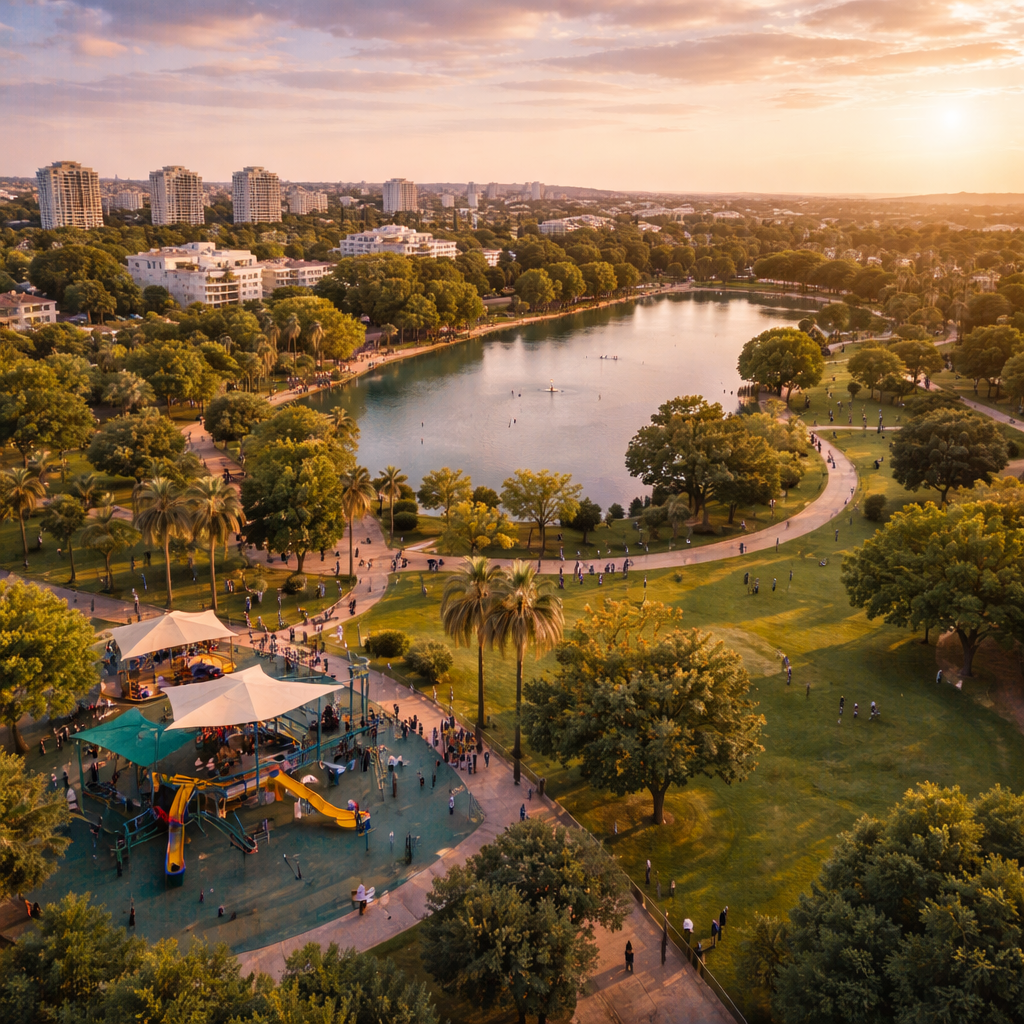
Picture yourself standing at the edge of Ra’anana Park on a Friday afternoon in late spring, when the sun angles through the trees and families are beginning to gather for the weekend. This sixty-acre expanse of green sits at the geographic and social heart of the city, and the neighborhoods that surround it represent some of the most desirable real estate not just in Ra’anana, but in all of central Israel. The Park Area isn’t just a location, it’s a lifestyle statement, a collection of streets where mature trees arch overhead, where the buildings tend to be a bit newer or better maintained, and where the sense of space and tranquility feels almost suburban despite being firmly urban.
The appeal of living near Ra’anana Park begins with the park itself, which functions as an extension of your living space in a way that transforms daily life. Early morning joggers make their circuits around the perimeter paths as the sun rises, returning home for breakfast with that satisfied glow of having started the day productively. Parents with young children know every playground by heart, each one designed for different age groups, strategically placed throughout the park so you can choose your destination based on whether you’re meeting friends or seeking a quiet morning out. The artificial lake attracts ducks and geese that children delight in feeding, despite the signs discouraging it, and the grassy areas near the water become prime picnic territory on Shabbat afternoons when extended families spread out blankets and spend hours in conversation while kids run freely between groups.
The residential streets radiating out from the park carry a sense of prestige that’s reflected in everything from the condition of the buildings to the cars parked outside. You’ll find a mix of architectural styles here, from apartment buildings constructed in the past decade with modern amenities to older villas that have been lovingly maintained and renovated. Many of these properties feature private gardens, rare commodities in Israeli urban living, where families can cultivate small outdoor spaces with fruit trees, herb gardens, and sitting areas for entertaining. The buildings themselves often include thoughtful details that distinguish them from standard Israeli construction: higher ceilings, larger balconies, better sound insulation, and parking arrangements that actually accommodate the reality of families with multiple vehicles.
For Anglo families, the Park Area holds particular appeal because it combines that Western suburban aesthetic with the convenience of urban living. You’re within walking distance of excellent schools, synagogues, and shopping, but when you step out your door, you’re not immediately confronted with traffic and concrete. The streets here are quieter, with less through traffic, and the neighborhood has attracted families who value that balance between accessibility and tranquility. It’s not uncommon to hear English being spoken on these streets, with conversations drifting from balconies about everything from school choices to weekend plans, from discussions about Torah portions to debates about the latest political developments back in America or Britain.
The demographic composition of the Park Area skews toward affluent professionals, often families where both parents work in high-paying fields like high-tech, finance, medicine, or law. Many are bi-national couples where one spouse is Israeli and the other is Anglo, bringing together Israeli roots and international experience. You’ll also find successful entrepreneurs who’ve either built businesses in Israel or continue to run operations abroad while living here. This economic profile means the area attracts people who can afford to prioritize quality of life over cost considerations, who want their children growing up in an environment that feels safe, green, and wholesome, and who appreciate the investment potential of prime real estate near a central amenity.
The real estate prices in the Park Area reflect this desirability with numbers that can induce sticker shock even for people coming from expensive cities abroad. A spacious four-bedroom apartment in a newer building near the park might command anywhere from three to five million shekels, sometimes more for penthouses or units with particularly desirable features like large terraces overlooking the green space. Even older apartments in need of renovation sell quickly here, with buyers recognizing that the location itself holds intrinsic value that transcends the condition of any particular unit. The rental market is equally robust, with families willing to pay ten thousand shekels or more per month for the privilege of living in this area, viewing it as an investment in their quality of life and their children’s environment.
What transforms the Park Area from simply expensive real estate into a genuine community is the way the park itself facilitates social connections. You see the same families weekend after weekend, establishing informal friendships through repeated encounters. Children recognize each other from school and arrange to meet at the park after classes. Parents exchange phone numbers and coordinate playdates. The amphitheater within the park hosts concerts and cultural events throughout the year, drawing residents together for shared experiences under the stars. During Israeli holidays, the park becomes a gathering place for community celebrations, with families setting up elaborate picnics for Sukkot, lighting candles during Hanukkah, or celebrating Independence Day with barbecues and music.
The synagogue options within easy reach of the Park Area cater to the diverse religious expressions found among Anglo immigrants. You’ll find Modern Orthodox congregations with dynamic rabbis who deliver divrei Torah in English, incorporating contemporary issues and American cultural references that resonate with their congregants. There are also more traditional minyanim where davening happens primarily in Hebrew but the community includes many English speakers who appreciate the authenticity of Israeli prayer styles while still finding social connection with others who share their background. Some families rotate between different synagogues, attending whichever fits their schedule or mood on any given Shabbat, taking advantage of the density of options that a community like this provides.
For families with children, the Park Area offers proximity to some of Ra’anana’s best educational institutions. Several highly regarded elementary schools sit within walking distance, and parents often choose apartments specifically to fall within the catchment area of their preferred school. The schools themselves have adapted to serve significant numbers of English-speaking children, with many teachers experienced in helping kids transition from English to Hebrew instruction, and support systems in place for families navigating the Israeli educational system for the first time. Beyond formal schooling, the area attracts private tutors, music teachers, and coaches who serve the Anglo community, often advertising through word-of-mouth networks or community Facebook groups.
Daily life in the Park Area takes on a rhythm shaped by the park itself. Summer evenings see families migrating toward the green space as temperatures cool, with children on bicycles and scooters, parents walking dogs, and groups of teenagers claiming particular benches as their social territory. The park’s facilities include sports areas where pickup basketball games form spontaneously, tennis courts that require advance booking during prime hours, and open fields where kids practice soccer or ultimate frisbee. During the hot months, the lake area provides psychological relief if not actual cooling, and the shade trees throughout the park offer respite from the intense Israeli sun.
The commercial infrastructure serving the Park Area includes several small shopping centers within easy reach, though many residents drive to larger malls in Ra’anana or nearby cities for major shopping trips. What you’ll find locally are the essential services: quality supermarkets that stock both standard Israeli products and international items, pharmacies, some specialty food shops, and clusters of restaurants ranging from casual pizza places to nicer establishments for date nights or celebrations. The focus here is less on creating a pedestrian commercial district and more on ensuring that daily needs can be met without extensive travel, preserving the residential character that makes the area attractive.
One aspect of Park Area life that appeals particularly to Anglos is the sense of order and civic engagement. Residents here tend to be involved in municipal affairs, attending city council meetings, participating in neighborhood committees, and advocating for improvements to infrastructure and services. The Municipality of Ra’anana generally maintains the park and surrounding areas to high standards, with regular landscaping, prompt repair of facilities, and attention to safety concerns. This responsiveness creates a virtuous cycle where residents feel their taxes and efforts produce visible results, reinforcing their commitment to the community and their satisfaction with having chosen this location.
The Park Area also offers practical advantages for families maintaining connections abroad. The proximity to Highway 531 makes the drive to Ben-Gurion Airport relatively straightforward, important for people who travel frequently for work or family visits. The time zone positioning allows for reasonable overlap with both American East Coast business hours and European schedules, making it feasible to maintain professional relationships across continents. High-speed internet infrastructure throughout Ra’anana supports remote work arrangements, with many homes in the Park Area featuring dedicated office spaces where residents conduct video conferences, manage international projects, or run businesses spanning multiple countries.
Living near Ra’anana Park represents a particular vision of successful integration into Israeli life, one that doesn’t require abandoning Western expectations or comforts but rather finding ways to blend them with Israeli reality. It’s a choice that says you value green space and quality of life, that you’re willing to pay premium prices for an environment you believe will benefit your family, and that you see your future in Israel as something that can encompass both your immigrant identity and your growing Israeli roots. For many Anglo families, these neighborhoods around the park become the setting where they build the life they imagined when they decided to make aliyah, where their children grow up bilingual and bicultural, and where they create communities that honor both the traditions they brought with them and the new connections they’re forging in their adopted homeland.