Ir Yamim | Anglo Community
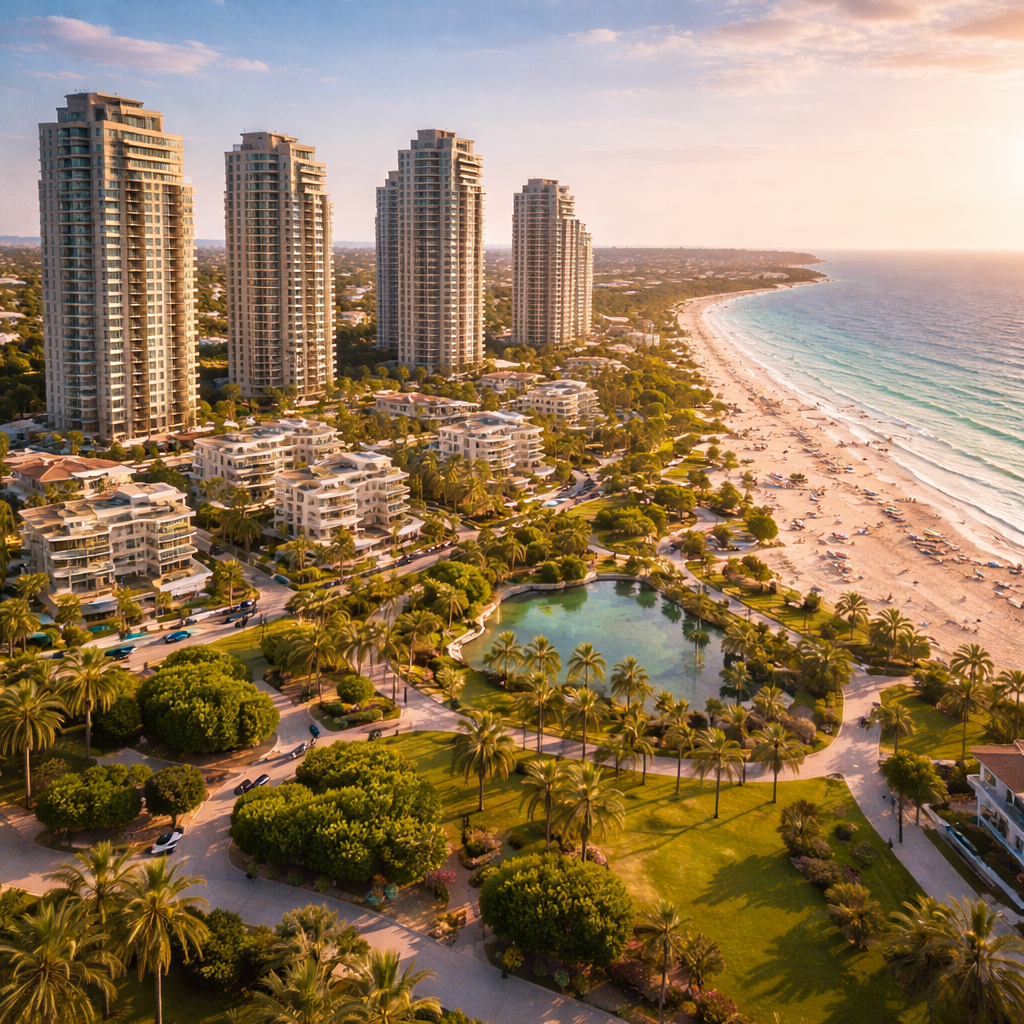
If you’re standing on a high-rise balcony in Ir Yamim watching the Mediterranean sunset paint the sky in shades of orange and pink, you might find yourself wondering how this neighborhood came to exist. The name Ir Yamim translates to City of the Seas, and while that might sound like marketing poetry, it’s actually an accurate description of what developers envisioned when they began transforming this stretch of southern Netanya coastline in the early two thousands. This wasn’t just another housing project. It was an ambitious attempt to create an entire lifestyle, a planned community that would blend luxury residential living with resort-style amenities and direct beach access, all within easy reach of Israel’s central corridor.
The story of Ir Yamim begins with location. The neighborhood sprawls across eleven hundred and forty dunams, that’s about two hundred and eighty acres, positioned along the Netanya coastline between two significant nature reserves. To the north sits the Irusim Reserve, also known as the Iris Reserve for the wild irises that bloom there each spring. To the south lies the Poleg Nature Reserve, where a seasonal stream creates wetland habitats for migratory birds. And stretching along the western edge is the Mediterranean Sea itself, offering two continuous kilometers of beach access without the dramatic sandstone cliffs that characterize much of Netanya’s northern coastline. This flat, accessible beach became one of Ir Yamim’s most valuable assets.
When planners sat down to design Ir Yamim, they had a clear vision: create a modern, self-contained neighborhood that would feel like a Mediterranean resort while functioning as a full-service residential community. The master plan called for forty-five hundred housing units, thirty-one hundred hotel rooms, and thirty-four thousand square meters of commercial space. But numbers alone don’t capture the ambition. They wanted wide boulevards lined with trees, parks and playgrounds integrated throughout the residential areas, dedicated bicycle paths connecting different parts of the neighborhood, and pedestrian walkways that would allow families to move around safely without constantly navigating traffic. They wanted this to feel like a place where people could genuinely live, not just own property.
The architectural signature of Ir Yamim is unmistakable: high-rise luxury towers reaching toward the sky, many between seventeen and thirty-four stories tall. These aren’t the modest apartment buildings you might find in older Israeli neighborhoods. These are statement structures with expansive glass facades, spacious balconies that often stretch twenty-five to thirty meters across, and floor-to-ceiling windows designed to maximize those Mediterranean views. Projects like the Briga Towers, the Reserve Towers, the Dimri Yama development, and dozens of others have transformed the skyline. From certain vantage points in Netanya, Ir Yamim looks like a miniature version of Tel Aviv’s luxury beachfront, but with more breathing room, more green space, and significantly lower prices.
Let’s talk about the Briga Towers for a moment, because they exemplify what Ir Yamim has become. These two thirty-four story towers were built by the Briga company, a family-run real estate firm that’s been developing properties since nineteen seventy-nine. When they designed these towers, they weren’t just creating apartment buildings. They created a lifestyle complex. Each tower sits on a plot of eight dunams, positioned between the Iris Reserve and Poleg Beach. The apartments inside range from three-and-a-half rooms to expansive penthouses with floor plans exceeding two hundred square meters plus enormous balconies. Many units on the higher floors offer what real estate agents call first-line sea views, meaning nothing obstructs your sight line to the Mediterranean.
But what really sets Briga Towers apart are the amenities that residents share. There’s a year-round indoor swimming pool, Olympic-sized, where you can swim laps on a January morning while rain falls outside. There’s a state-of-the-art fitness center with modern equipment and trainers available for those who want them. There’s a tennis court where residents organize regular games and impromptu tournaments. There’s a synagogue right in the building, which means observant families don’t need to walk far on Shabbat. There’s twenty-four-hour security with guards stationed at the entrance and underground parking that keeps cars safe and dry. And there’s a residents’ lounge, a communal space where neighbors gather for events, celebrations, or just casual conversation over coffee.
This model, the luxury tower with extensive shared amenities, has been replicated throughout Ir Yamim. The Reserve Towers offer similar features with their own architectural touches. The Dimri Yama project, one of the newer developments, features towers of seventeen and twenty-four floors with what developers call breathtaking panoramas of the sparkling Mediterranean. These projects attract a particular demographic: families who want modern construction, professionals who value convenience and quality, retirees who’ve sold properties in more expensive cities and want to upgrade their lifestyle, and investors, both Israeli and foreign, who recognize the potential for strong rental yields in a beach community with excellent amenities.
The typical Ir Yamim apartment reflects current Israeli construction standards at the higher end. You’ll find spacious rooms with high ceilings that create an airy, open feeling. Bedrooms often have large windows that flood the space with natural light. Kitchens tend to be modern and well-equipped, with quality finishes and often upgraded appliances. Many apartments come with safe rooms, the reinforced security rooms that Israeli building codes require in newer construction. Central air conditioning is standard, as are Shabbat elevators that stop automatically on every floor. Storage units in the basement and two parking spaces per apartment are common. The attention to detail extends to things like marble or high-quality tile flooring, upgraded bathroom fixtures, and sophisticated electrical systems.
Now, all this luxury comes with a price tag. In the first half of twenty twenty-five, the median apartment price in Netanya reached approximately two million seven hundred and fifty thousand shekels. In Ir Yamim specifically, apartments average around two point four four million shekels. But that’s for standard units. Sea-front penthouses in the premier buildings command six point eight two million shekels and can go as high as seven point eight two million for the most coveted cliffside units. These prices have been rising steadily, with year-over-year increases around twelve to seventeen percent depending on the specific property and location. For context, you’re paying significantly less here than you would for comparable properties in Tel Aviv’s beachfront neighborhoods, yet you’re getting more space, better amenities, and a lifestyle that many describe as more relaxed.
The rental market in Ir Yamim is equally robust. Four to five room apartments in projects like Hanan Mor or Briga Yam regularly rent for over eight thousand five hundred shekels per month for long-term tenants. Some of the newer complexes, like the Sea You project, offer turnkey rental management services for investors who live abroad or simply don’t want the hassle of managing their properties. This makes Ir Yamim attractive not just for people who want to live here, but for those who see it as an investment opportunity. The neighborhood also sees significant short-term vacation rental activity, especially during summer months when tourists from Europe and elsewhere flock to Netanya’s beaches.
At the heart of Ir Yamim sits the neighborhood’s crown jewel: the Ir Yamim Mall, which opened in twenty eleven and has become the largest shopping center in Netanya and one of the largest in the entire Sharon region. The mall encompasses seventy thousand square meters across fifty-eight dunams of land, positioned just off the coastal highway for easy access from surrounding areas. Inside, you’ll find international brands alongside Israeli chains, from clothing stores to electronics shops. There are supermarkets for daily shopping, pharmacies, and specialty stores selling everything from home goods to sporting equipment. The food court and restaurants offer diverse dining options, from quick falafel to sit-down meals featuring Mediterranean, Asian, or American cuisine.
But the mall is more than just retail space. It’s become a social hub for Ir Yamim residents and people from surrounding neighborhoods. There are cinemas showing the latest films in Hebrew and sometimes English. There’s a café culture where locals meet for coffee and conversation, where you’ll hear Hebrew mixing with French, English, Russian, and other languages reflecting Netanya’s diverse immigrant population. During hot summer days, the air-conditioned mall becomes a refuge, a place where families can spend hours shopping, dining, and entertaining children. On rainy winter days, it serves the same purpose. The mall has essentially become the neighborhood’s living room, a gathering place that helps create community among residents who might otherwise remain isolated in their individual towers.
Walking through Ir Yamim, you’ll notice the emphasis on green space and pedestrian infrastructure that the planners promised. There are two main walking routes that cross the neighborhood: a green route connecting the area between Poleg and the Irusim neighborhood, and a blue route leading from the beach inland to the Piano shopping complex. These paths are designed so pedestrians, especially children, can move around without constantly crossing roads. Wide sidewalks accommodate both walkers and the baby strollers that seem ubiquitous in this family-oriented neighborhood. Dedicated bicycle paths run alongside many streets, making it easy for residents to cycle to the beach, the mall, or neighboring areas. Parks are scattered throughout, with playgrounds where children gather after school and on weekends, their laughter mixing with the calls of birds from the nearby nature reserves.
The neighborhood’s proximity to the beach cannot be overstated. Unlike many parts of Netanya where you must navigate steep cliffs to reach the sand, Ir Yamim offers flat, easy access to Poleg Beach. From many of the residential towers, it’s a walk of just two to five minutes to reach the shore. Some residents joke that they can go to the beach with bare feet, walking directly from their apartment building to the sand without needing to put on shoes. This accessibility has profoundly shaped the neighborhood’s culture. Morning walks on the beach before work are common. Families spend weekend afternoons building sandcastles or swimming in the Mediterranean. Evening strolls along the promenade, watching the sunset, have become a ritual for many residents.
The beach itself is a destination. Ramat Poleg Beach, which borders Ir Yamim, has become popular with surfers who appreciate the consistent waves. You’ll see them paddling out early in the morning or catching the last light of evening, their silhouettes dark against the orange sky. The beach has lifeguards during the summer season, clean facilities including showers and changing rooms, and several beachside cafés where you can grab a coffee or cold drink. The promenade has been developed with walking paths and bicycle lanes, creating a continuous coastal route that connects Ir Yamim to neighboring areas. On a pleasant spring or fall evening, the promenade fills with joggers, cyclists, families pushing strollers, and couples enjoying the sea breeze.
Community infrastructure in Ir Yamim reflects the neighborhood’s maturity. Multiple schools serve the area, including both secular and religious options, accommodating the diverse population. Kindergartens are scattered throughout the neighborhood, positioned within walking distance of most residential towers. While Ir Yamim doesn’t have a dedicated Anglo private school like you might find in Ra’anana or Beit Shemesh, families here typically use the bilingual public schools and supplement with private tutoring, or they send children to international schools in nearby areas like Even Yehuda, which hosts the American International School. Several synagogues serve different communities: there are Ashkenazi minyanim, Sephardi communities, and modern Orthodox congregations. The Briga Towers have synagogues built right into the buildings, and there’s Tefilat Yamim, a Jewish community center that serves as a gathering point for religious activities and community events.
The English-speaking presence in Ir Yamim is significant and growing. While the neighborhood is certainly diverse, attracting Israelis, French immigrants who comprise a large portion of Netanya’s population, Russian speakers, and others, there’s a well-established Anglo community here. You’ll find English speakers at the cafés, in the synagogues, at the beach, and throughout the residential buildings. The Chabad for English Speakers of Ir Yamim and Ramat Poleg operates specifically to serve this community, offering Torah classes, Shabbat services, and social events where recent immigrants can connect with others navigating similar experiences. While you won’t hear quite as much English on the street as you might in certain Jerusalem neighborhoods or Ra’anana, there’s enough of a presence that newcomers can find their people and build community relatively easily.
Transportation connections make Ir Yamim practical for those who work outside Netanya. The neighborhood sits just off the coastal highway, Highway Two, which provides quick access north toward Haifa or south toward Tel Aviv. By car, you can reach Tel Aviv in about thirty to forty minutes depending on traffic, making it feasible for people to commute to jobs in the high-tech sector or other Tel Aviv industries while enjoying more affordable coastal living in Netanya. The Poleg Interchange provides easy entry and exit from the highway. For those who prefer not to drive, there’s bus service connecting Ir Yamim to the rest of Netanya and to Tel Aviv directly. While public transportation within the neighborhood itself isn’t as developed as in some other parts of the city, there are regular bus lines and connections to the Beit Yehoshua train station, where Israel Railways trains reach destinations throughout the country including Tel Aviv, Haifa, Ashkelon, and others.
One of the interesting aspects of Ir Yamim is its international character and how this influences daily life. The neighborhood attracts not just permanent residents but also families on temporary assignment in Israel. Diplomats, expats working for international companies, and foreign investors often choose Ir Yamim for its combination of modern amenities, security, and proximity to international schools. This creates a somewhat transient element within the community, but it also brings a cosmopolitan flavor. You might find yourself at a playground where parents are speaking five different languages, or at a Shabbat table where guests include a family from France, a couple from England, an Israeli family that lived abroad for years, and newcomers from South America.
The French influence in particular deserves mention because it’s so pronounced. Netanya has become known as the Israeli Riviera largely because of the estimated twenty thousand French speakers who’ve made the city their home, many concentrated in areas like Ir Yamim. This French presence manifests in multiple ways: authentic patisseries where you can buy croissants and pain au chocolat, bistros serving French cuisine, French-language medical practices, and French-speaking services from real estate agents to accountants. For English-speaking immigrants, this French presence can actually be beneficial because it creates a culture of multilingualism and accommodation for non-Hebrew speakers. If the French community can maintain its language and culture while integrating into Israeli life, it makes it easier for Anglos to imagine doing the same.
Healthcare services in the area are comprehensive. All four of Israel’s health maintenance organizations, the kupot cholim, have clinics in or near Ir Yamim. There are urgent care centers including Terem and Bikur Rofeh for situations that need immediate attention but aren’t quite emergencies. Laniado Hospital, which serves the broader Netanya region, is easily accessible and provides full hospital services. Many residents also mention the ease of finding English-speaking doctors, whether in general practice or various specialties, which removes one significant source of stress for immigrants still learning Hebrew.
The lifestyle that Ir Yamim offers appeals to specific demographics. Young professional couples and families appreciate the modern construction, the convenience of having shopping and services nearby, and the ability to enjoy beach living while maintaining careers. Retirees and empty-nesters find the neighborhood attractive because of the low-maintenance lifestyle, the security of managed buildings, the social opportunities, and the resort-like amenities that make daily life pleasant without requiring much effort. Investors see the strong rental market, the steady property appreciation, and the appeal to both long-term tenants and vacation renters. And recent immigrants from English-speaking countries often gravitate here because while it’s not as Anglo-heavy as certain other neighborhoods in Israel, it offers a good balance of integration into broader Israeli society while still maintaining enough English-speaking infrastructure to ease the transition.
That said, Ir Yamim isn’t without its considerations and trade-offs. The luxury comes with higher prices than you’d pay in older Netanya neighborhoods or in developing areas. While still significantly cheaper than Tel Aviv or certain Jerusalem neighborhoods, you’re paying a premium for the new construction, the amenities, and the location. The high-rise living won’t suit everyone; some people prefer houses with yards, and that’s not what Ir Yamim offers. The neighborhood, despite its planning and green spaces, can feel somewhat like a forest of towers, especially in the most densely developed sections. Public transportation, while functional, isn’t as robust as what you’d find in central Tel Aviv or Jerusalem. And there’s ongoing controversy about further development along Poleg Beach, with some residents concerned that additional hotel construction will harm the quality of life and destroy nature areas adjacent to the Iris Reserve.
For families with children, the school situation requires consideration. As mentioned, there’s no dedicated Anglo school in Ir Yamim itself. Religious families might find the options more limited than in places like Beit Shemesh or certain Jerusalem neighborhoods where there’s extensive Torah infrastructure specifically designed for English-speaking immigrants. Secular families generally have an easier time with the public school system, which while primarily Hebrew-speaking, is manageable especially when supplemented with private English tutoring. Some families opt for international schools in nearby communities, which means daily drives or bus rides but provides education in English or other languages.
The future of Ir Yamim looks bright based on current trends. The neighborhood continues to develop, with new residential projects breaking ground and existing areas becoming more established. The commercial infrastructure keeps expanding, with new restaurants, shops, and services opening to serve the growing population. Property values have shown consistent appreciation, suggesting strong ongoing demand. The city of Netanya has ambitious master plans extending to twenty thirty-five that envision massive increases in both residential units and office space, along with marina development and piers that would further enhance the coastal experience. The municipality explicitly wants Netanya to become a major tourist hub, an Israeli Riviera on the Mediterranean shore, and Ir Yamim sits at the center of this vision.
Environmental initiatives are also part of the neighborhood’s evolution. There’s increasing emphasis on sustainability and conservation, with programs aimed at protecting the adjacent nature reserves, enhancing green spaces, and promoting local biodiversity. The municipal conservatory has been extended into the area, bringing music and arts programs closer to residents. Cultural events, art galleries, and music festivals have become more frequent, creating a sense that Ir Yamim is becoming not just a residential neighborhood but a genuine cultural center within Netanya.
When you talk to people who’ve chosen to live in Ir Yamim, certain themes emerge repeatedly. They talk about the quality of life, waking up to sea views and falling asleep to the sound of waves. They mention the convenience of walking to the beach, the mall, restaurants, and services without needing a car for daily errands. They appreciate the security and modernity of the buildings, the comfort of knowing their children can play safely in parks or walk to friends’ apartments without crossing major roads. They value the diversity of the community, the mix of Israelis and immigrants that creates a cosmopolitan atmosphere. And they consistently mention affordability relative to other Israeli cities, the sense that they’re getting more for their money here than they would elsewhere.
Ir Yamim represents a particular vision of Israeli coastal living: modern, comfortable, convenient, and accessible. It’s not trying to be Tel Aviv with its nonstop energy and cultural intensity. It’s not trying to be Jerusalem with its deep historical and religious significance. It’s offering something different: a Mediterranean lifestyle where you can balance work and leisure, where beaches and nature reserves are part of your daily environment, where you can live in contemporary comfort without paying Tel Aviv prices, and where an emerging English-speaking community makes the transition to Israeli life a bit easier for newcomers. For many people, particularly those making aliyah in middle age or retirement, or young families seeking affordable coastal living, this formula proves irresistible. The neighborhood’s rapid growth and continued development suggest that Ir Yamim has found a successful model, one that’s likely to keep attracting residents for years to come as Netanya continues its transformation into Israel’s Mediterranean answer to cities further south.